Dortmund Faces Tough Test Against Hoffenheim
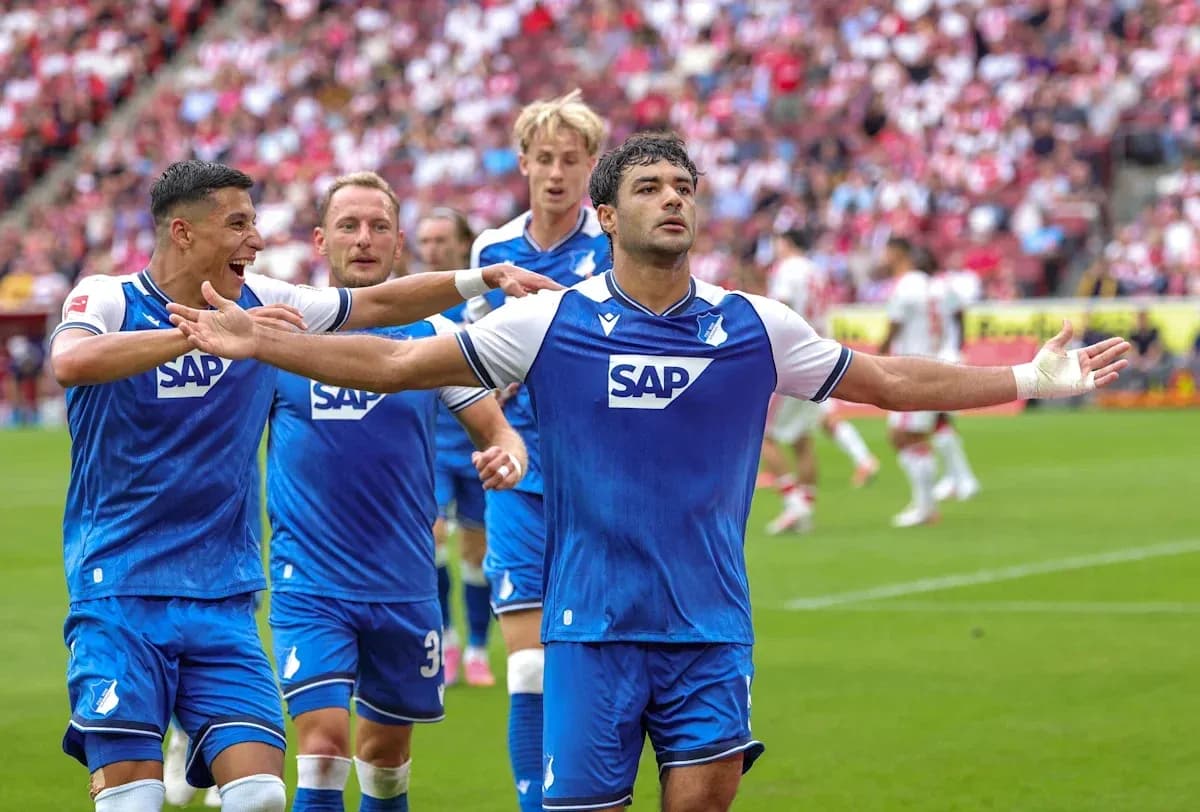
Borussia Dortmund’s transfer window is over. The noise, the rumours, the medicals – all boxed off. What’s left now is the part that actually counts: a serious early-season examination in Sinsheim.
They arrive with maximum points in the league and safe passage in the cup, but Hamburg and HEBC were gentle warm-ups. Hoffenheim are not.
Ilzer’s Hoffenheim, rebuilt and dangerous
Hoffenheim come into this season with the look of a side that has already survived its crisis and now wants more.
Christian Ilzer walked into a relegation fight in 2024/25, steadied the club, then turned survival into ambition by doubling their points tally last season. They finished just a single point shy of the Champions League places. That kind of near miss lingers. It shapes a dressing room.
The summer brought disruption as well as opportunity. Bazoumana Toure, the winger who stretched defences and carried so much of their dynamism, has gone. The club tried to bring in Fisnik Asllani from RB Leipzig, only for the move to collapse after he failed his medical. He remains injured and unavailable.
So Hoffenheim pivoted. Patrick Wimmer arrived from Wolfsburg to refill that wide threat. Two more names stand out, not just for their potential but for the sheer joy of reading the teamsheet: Mats Rots and Nathan De Cat. De Cat, a lively, two-way midfielder, is expected to slot into the engine room alongside Wouter Burger – a pairing as industrious as it is intriguingly named.
Only Wimmer featured in the 2–3 opening defeat to Köln, a game where Hoffenheim had the ball but not the result. They dominated possession with 59%, yet paid for lapses without it. Ilzer is unlikely to roll out the same XI against Dortmund. The stakes, and the opponent, demand tweaks.
Dortmund’s first real measuring stick
For Niko Kovac, this is where the season stops being theoretical.
Dortmund brushed aside Hamburg in the Bundesliga opener, racking up 20 shots on the day, and eased past HEBC in the cup. Across those two matches they out-shot their opponents 35–9 and enjoyed the bulk of the ball. It looked controlled, almost comfortable.
That comfort is over. Hoffenheim want the ball just as much.
Last season, Hoffenheim finished fourth in the league for possession, Dortmund sixth. Ilzer’s side again showed their appetite to dictate play against Köln. This time, Dortmund will not simply be handed territory and rhythm; they will have to seize it, or find a way to thrive without it.
That leads to two sharp questions for Kovac: who plays, and how?
A reshuffle behind Guirassy
The first problem is personnel. Konstantelias is out with an ACL injury. Samuele Inacio is suspended. The structure of Kovac’s attack – two players operating behind Serhou Guirassy – suddenly needs a new piece.
The options are clear enough. Marcel Sabitzer, Carney Chukwuemeka and the newly-signed Ethan Nwaneri are all candidates to step in alongside Karetsas. Sabitzer brings control and experience, Chukwuemeka more vertical running, Nwaneri raw talent and unpredictability. The expectation is that Kovac will trust Sabitzer for a game of this magnitude.
The second problem is identity. Does Dortmund insist on their own possession game against one of the league’s most ball-hungry sides? Or do they accept spells without it and turn those into ruthless counter-attacks?
Kovac experimented with a 4-3-3 in the cup against HEBC, but that looked like a one-off test rather than a new blueprint. For Hoffenheim away, the more familiar 3-4-2-1 should return.
Gregor Kobel comes back in goal after Meyer’s midweek outing. A back three of Gadou, Anton and Ryerson gives Dortmund mobility and aggression in the defensive line. Svensson and Beier are set to operate as wing-backs, asked to cover the full length of the pitch and help lock down the flanks where Wimmer will try to cause damage.
In midfield, Nmecha and Bellingham remain the trusted core, responsible for both screening and launching attacks. Ahead of them, Sabitzer is expected to join Karetsas as the dual creators behind Guirassy, who leads the line again after marking the league opener with a goal.
On paper, it’s balanced. On the pitch, it will be tested in ways Hamburg never managed.
Kramaric: Dortmund’s familiar tormentor
All of that tactical talk, and yet one name might still decide the night.
Andrej Kramaric is 35 now and no longer the automatic starter he once was. He is, increasingly, the super-sub. But he remains a specialist in one particular assignment: punishing Borussia Dortmund.
Only five players in Dortmund’s entire history have scored more goals against die Schwarzgelben than Kramaric. Four of those sit inside the Bundesliga’s all-time top ten scorers, the other is 15th. That is the company he keeps when the opponent is draped in black and yellow.
Eighteen matches against Dortmund. Eleven goals. Two of them came in this very fixture last season.
It would be no surprise to see him start on the bench, watching, waiting, then stepping into the game just as legs tire and spaces open. If Hoffenheim are still in it late on, the sight of Kramaric warming up will send a familiar shiver through the Dortmund back line.
A contest of control – and nerve
So the scene is set: Dortmund, unbeaten and confident, but untested at this level so far. Hoffenheim, bruised by a chaotic loss to Köln yet still brimming with structure and intent under Ilzer.
Dortmund must either win the midfield fight against a side that loves to dictate tempo, or prove they can be lethal on the break when the ball is not theirs. Hoffenheim must show that last season’s surge towards the top four was no one-off.
It feels like the kind of match that turns on small margins – a loose touch in midfield, a wing-back caught too high, a veteran striker stepping off the bench with a familiar target in his sights.
If Dortmund really mean to mount a serious campaign, this is exactly the sort of tight, tactical away game they have to learn to edge.