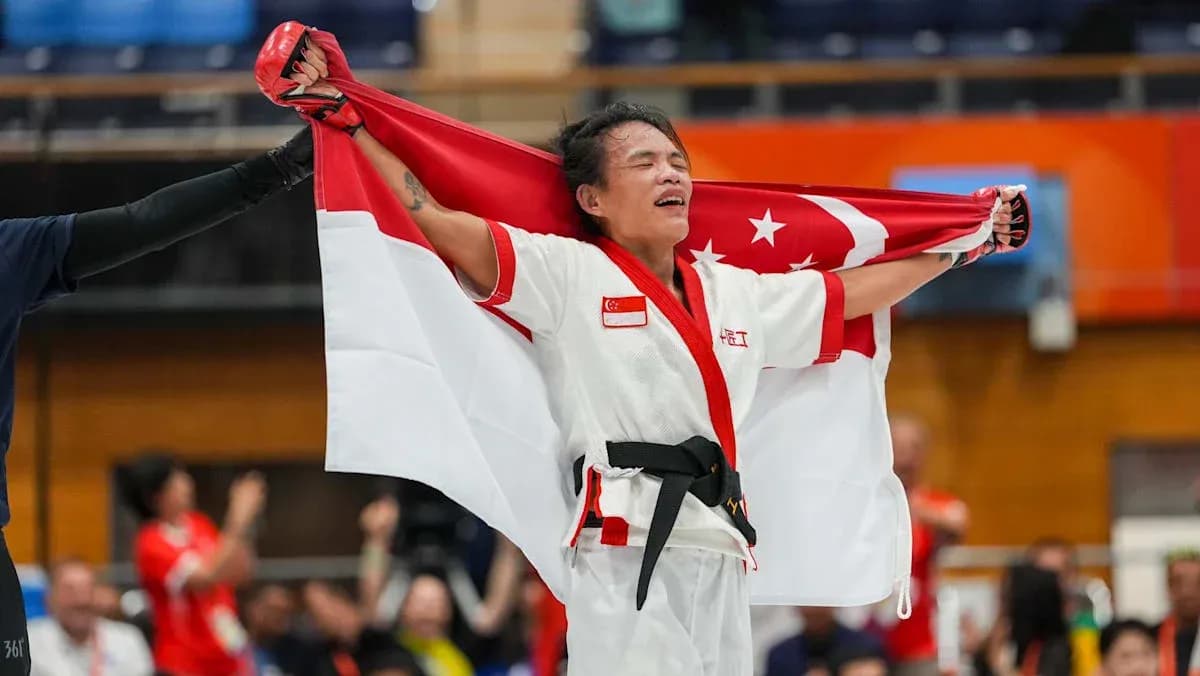
Different Arenas, Same Fight: Identity and Resolve in Episode 25

Some battles are fought with rifles and tanks. Others play out under fluorescent lights in courtrooms, in the echo chamber of social media, under TV spotlights, or on a surfboard chasing a clean line of swell.
Episode 25 of ALL CAPS, ynet Global’s weekly current affairs show, threaded all of those fronts together. In less than an hour, the panel moved from the halls of the U.S. Senate to the shifting politics of Latin America, from Hollywood activism to a kickboxing world champion and an IDF officer learning to surf again with one arm.
The theme was clear: different arenas, same fight over identity, memory and resolve.
Washington’s hearing, and who stayed away
The show opened in Washington, where Sen. Ted Cruz chaired a U.S. Senate hearing on the Muslim Brotherhood’s alleged network of influence in the United States. The facts of the hearing were not what stunned the panel. It was who chose not to show up.
Democratic senators declined to participate, leaving Republicans to dominate the room and the narrative. The panel dug into what that absence says about a deeper problem: a West so polarized that it struggles to confront extremist movements if doing so risks breaking party lines.
The question hanging over the discussion was blunt. When politics hardens into tribal loyalty, who is left to deal with groups like the Muslim Brotherhood?
Colombia’s turn away from Israel
From Washington, the camera and conversation swung south.
Colombia, once a reliable friend of Israel, has taken a sharply different course under new leadership. The panel explored how that shift could reshape Israel’s standing across Latin America, a region where political tides roll fast and hard.
Colombia, they argued, is a reminder that no alliance is guaranteed. Governments flip, foreign ministers change, and a country that seemed to be drifting away from Israel can, under another administration, drift back. Or it can keep going.
The stakes stretch beyond Bogotá. If Colombia’s change becomes a template for other capitals in the region, Israel could face a broader realignment in a part of the world where it once counted on quiet, steady support.
Hollywood, Barghouti and the battle over memory
From foreign ministries, the show jumped to movie sets and red carpets.
A group of actors has launched a campaign calling for the release of imprisoned Palestinian leader Marwan Barghouti. His supporters present him as a Palestinian Nelson Mandela, a political prisoner and symbol of resistance.
The panel pushed back hard.
They pointed to Barghouti’s convictions in Israel for involvement in attacks that killed civilians and argued that the Mandela comparison is not just misleading, but part of a wider struggle over language and historical memory. In that struggle, celebrity endorsements can bend public perception, no matter what the court files say.
“Read the indictment, read the verdict, see who you're dealing with,” host Nitsana Darshan-Leitner said, insisting that casting Barghouti as a nonviolent icon amounts to “whitewash[ing] terrorism with stardust.”
In that one line, she captured the show’s broader concern: that glitzy campaigns can rewrite the story while the facts gather dust.
Nili Block: a champion who refuses to shrink
Then the spotlight narrowed.
Nili Block, world champion kickboxer and Muay Thai fighter, joined the show. She has spent years walking into rings around the globe with the Israeli flag on her back and an opponent in front of her who rarely underestimates her for long.
Block started training at 10. Back then, she simply wanted to be a professional athlete. Being a multiple-time world champion wasn’t the dream. It became the reality.
Her path, she explained, was never just about belts and medals. She built her career inside a sport that still leans heavily male, where a woman in gloves and shin guards can be treated as a curiosity before she lands her first clean strike.
People doubted her. They dismissed her. They failed to see what she could become.
That, she said, only sharpened her edge.
“You say I can't do it, I'm going to prove you wrong,” Block told the panel.
That line could have been a slogan. For her, it’s a habit.
Competing as an Israeli has taken on new weight in recent years, especially as athletes from Israel face hostility and protests abroad. Block recalled French Jews approaching her to say thank you—not for a title, but for refusing to hide who she is.
“They were scared,” she said. Just seeing an Israeli athlete stand tall with her flag in an arena far from home gave them “a lot of hope.”
Her trophies haven’t changed how she says she sees herself. Champion or not, Block stressed, there is no excuse to stop learning, stop working or stop treating people with respect. The belts go on the wall. The work continues.
A new front line for IDF soldiers
From the ring, the show shifted to a different kind of fight—one with no bell, no referee and no clear end.
Since October 7, Israeli soldiers and reservists traveling overseas have increasingly run into legal complaints, investigations and attempts to detain them under universal-jurisdiction laws. The battlefield, for many, has followed them to passport control.
The episode highlighted organizations that scour social media, track Israeli soldiers, map their movements and then seek legal action in foreign courts. A post, a tag, a location check-in—suddenly becomes evidence.
In response, Shurat HaDin has launched Shakpatz, described on the show as a “legal flak jacket” for Israeli soldiers.
The concept is stark and simple. Soldiers wore body armor in Gaza or along the northern border. Now, they may need legal armor in European capitals and beyond.
Shakpatz offers reservists and veterans country-specific guidance before they travel, legal alerts and clear instructions on what to do if they are stopped, questioned or threatened with arrest abroad. Behind the app sits a network of lawyers ready to step in when an Israeli traveler finds that the war has followed them into a foreign police station.
“You protected us. Now we are protecting you,” the segment declared.
The line captured a new reality for Israeli servicemen and women: walking off the battlefield no longer guarantees that the fight is over.
From Jabalia to the open ocean
The final story belonged to one man and one board.
Tamir Dudi, 26, was badly wounded while fighting in Jabalia. He went through 17 surgeries. He lost his right arm.
For most people, that would be the defining moment of a life. The story would end there, in a hospital corridor.
Dudi wrote a different ending. He went back to surfing.
Today, the IDF officer is training for the World Adaptive Surfing Championship in California. His goal is not abstract. He wants to stand on the podium. He wants a medal.
The ALL CAPS panel could barely hide its admiration. Surfing is punishing even with two arms. Paddling out, popping up, holding a line on a fast, steep face—all of it demands balance, strength and timing. Dudi is relearning those movements with one arm and the same stubbornness that took him into battle.
It was a fitting close to what the show itself called an “episode of champions.”
Because Episode 25 linked people who rarely share a stage.
Nili Block fights in a ring, then steps out to face the political noise that comes with being an Israeli athlete on the road. IDF reservists discover that their next confrontation might not be with an enemy fighter, but with a prosecutor in a country they barely know. And Tamir Dudi, staring down a future reshaped by injury, chose not to be defined by what he lost, but by how he stands on a board cutting through the next wave.