Detroit Pistons: Navigating Offseason Moves and Jalen Duren's Future
The Detroit Pistons didn’t shake the league with a blockbuster this summer. They didn’t have to.
They’re coming off a 60-win season, a benchmark that changes expectations and narrows margins. You don’t overhaul that. You sharpen it.
A New Look Around a Familiar Core
This latest version of the Pistons walks into 2026-27 with a slightly different face but the same ambition.
John Collins is the headline addition, a veteran forward brought in to slide into the power forward spot vacated by Tobias Harris. Around him, the front office has layered in shooting and versatility with Isaiah Joe, Taurean Prince and Ebuka Okorie — names that won’t dominate national talk shows but could matter a lot on cold nights in January.
“Their biggest offseason acquisition was veteran forward John Collins, but Isaiah Joe, Taurean Prince and Ebuka Okorie are additional names for fans to familiarize themselves with,” The Athletic’s Hunter Patterson wrote, noting that Detroit will need time and tinkering to find the right combinations.
The plan, for now, is continuity. Assuming Jalen Duren returns, the starting lineup should look very familiar, with Collins sliding into Harris’ role and the rest of the structure intact. That’s the idea. The catch is Duren isn’t back yet.
The Duren Domino
Detroit’s summer has revolved around one question: how do they keep Jalen Duren?
Talks have stalled. The stalemate over his contract has lingered long enough to move from background noise to the central storyline of the offseason. Until it’s resolved, every other decision feels like it’s written in pencil.
If the Pistons lock Duren into a new deal, everything changes. Not stylistically — he’s already the anchor — but strategically. Certainty with their young big man would free Detroit to lean into the next phase: cashing in some of their preserved assets for a piece that can tilt a playoff series.
That’s where the trade board gets interesting.
A Swing at Derrick White?
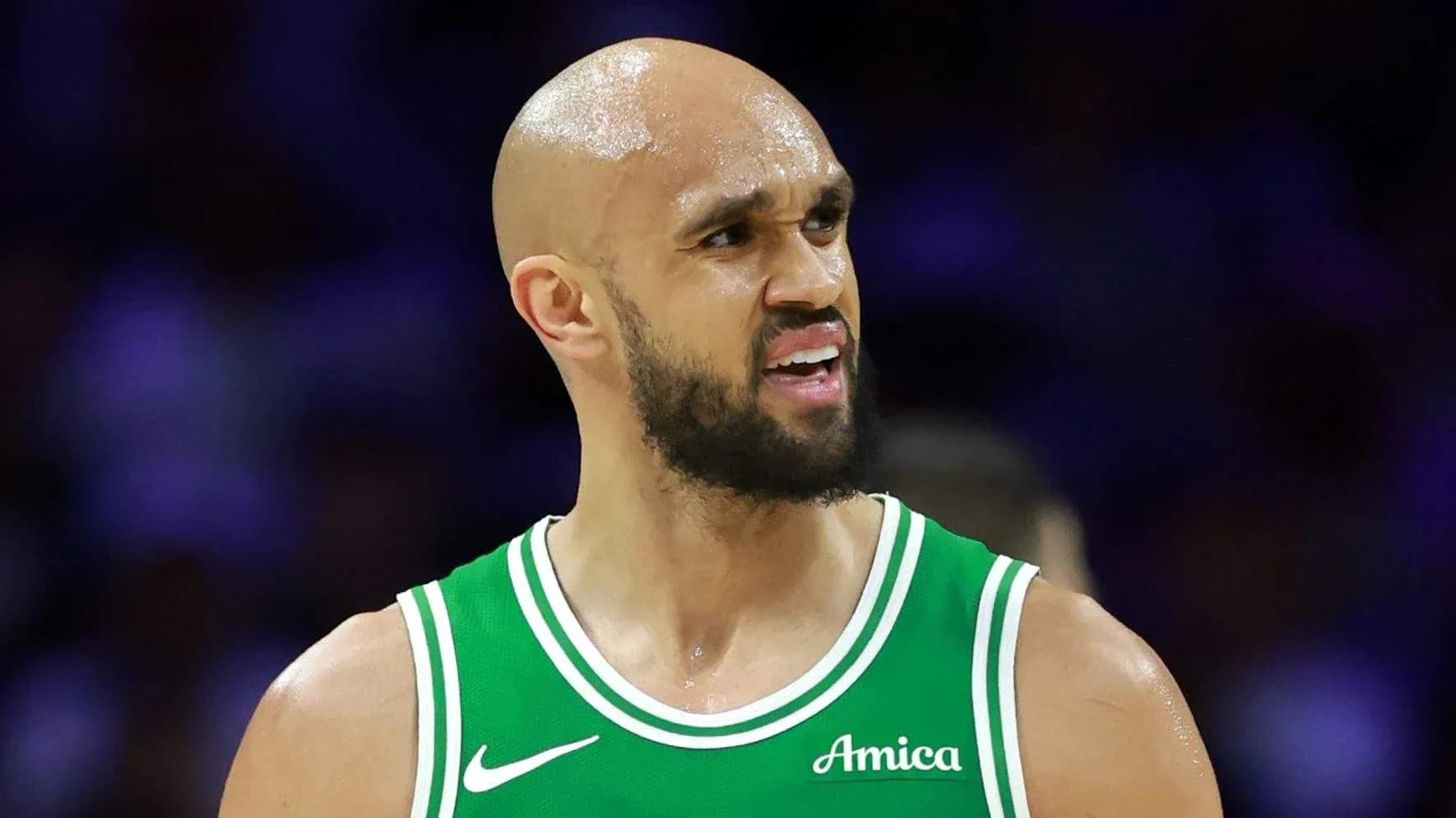
One potential path: pick up the phone and call Boston about Derrick White.
White is exactly the kind of guard teams chase when they’re trying to move from “dangerous” to “legit contender.” He defends at an elite level, guards up and down lineups, and usually hits enough threes to warp spacing. He’s already shown he can thrive on a championship team without needing the ball every possession.
If the Celtics are willing to listen — and that’s a sizable if given his importance to their title core — there’s a framework that could make sense for both sides:
- Pistons receive: Derrick White and second-round picks in 2028 and 2030
- Celtics receive: Duncan Robinson, Ron Holland II and a 2031 first-round pick
For Detroit, that’s a meaningful swing but not a reckless one. They’d be giving up Duncan Robinson’s shooting gravity and Ron Holland II’s defensive upside, plus a future first, to bring in a proven playoff guard.
They can at least withstand the shooting loss. The front office already added another deep-range specialist in Isaiah Joe, a move that gives them a bit more flexibility to part with Robinson’s elite perimeter threat if the right star-level fit emerges.
Holland is a tougher emotional hit. He’s a “terrific young defender,” the kind of on-ball stopper teams covet on cheap contracts. Sending that type of prospect to Boston and watching him grow into a staple of their perimeter defense would sting.
But White isn’t a projection. He’s a finished product at a championship level.
Would Boston Really Let White Go?
There have been whispers about White’s availability this offseason. The Minnesota Timberwolves reportedly showed interest before they landed LaMelo Ball from Charlotte, a sign that rival teams are circling, just in case Boston decides to shuffle the deck.
So far, the noise has stayed just that — noise.
White has become a central piece of the Celtics’ title-winning core, the kind of guard who glues together lineups and raises the floor on both ends. That status isn’t lost on the people around the team.
“As for White: It would also be a surprise, sources say, if the Celtics cut ties with him,” NBA insider Jake Fischer reported last month. “The 31-year-old is a beloved member of the organization on top of the fact that his two-way backcourt work has put him in annual All-Star contention as a Celtic.”
That’s the reality Detroit would be pushing against. Boston loves him. The locker room loves him. The numbers back him. You don’t easily pry that kind of player away.
Still, the hypothetical return isn’t soft. Robinson’s shooting would be a lethal addition to Boston’s offense, the kind of floor spacing that makes life easier for every star on the floor. Holland’s defensive ceiling lines up with what White already provides on the ball, just on a younger timeline and at a lower cost. Add in a 2031 first-round pick, and the Celtics would be staring at a package with both present value and future upside.
How Far Is Detroit Willing to Go?
For the Pistons, the question is more philosophical than financial.
They’ve resisted the urge to splash this summer, choosing instead to preserve their asset base after a 60-win campaign. No panic trades. No “we’re one piece away” delusions. Just incremental upgrades and patience.
A deal built around Robinson, Holland and a single future first isn’t a franchise-emptying gamble. It’s a calculated push. It’s the kind of move a team makes when it believes its window is starting to open and trusts that a battle-tested guard with championship pedigree can help it walk through.
First, though, Detroit has to settle the matter that underpins everything else.
Until Jalen Duren’s future is inked, Derrick White — or any other big swing — remains a theory. The moment that signature hits paper, the Pistons’ front office has a decision to make: stay conservative and ride internal growth, or finally cash in some of that carefully guarded capital for a player built for June.