DeMar DeRozan's Transition to Sixth Man in Denver
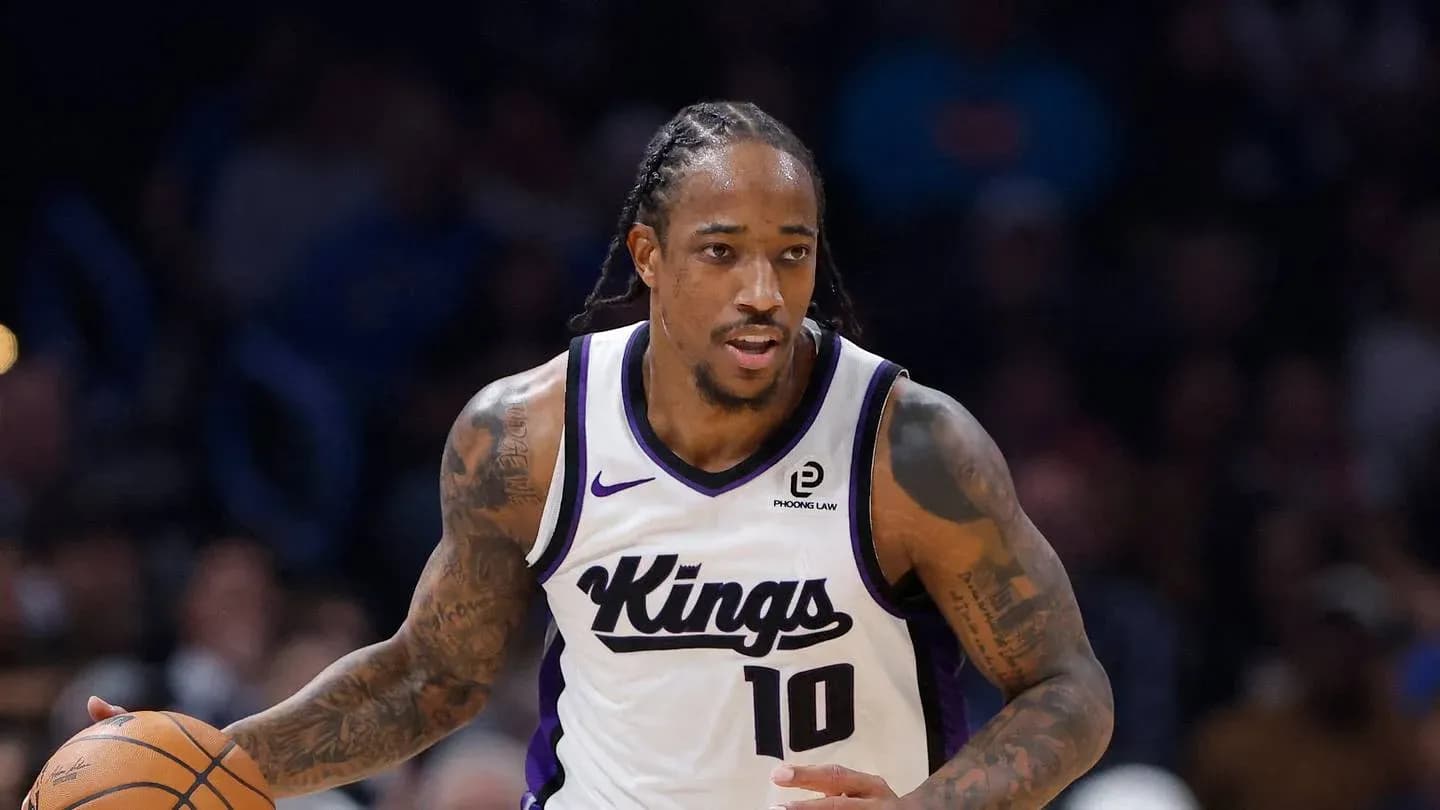
The Denver Nuggets lost pieces this summer. They didn’t just lose depth; they lost identities. Tim Hardaway Jr. walked. Peyton Watson, their energetic, defensive-minded wing, left for the Cleveland Cavaliers. For a contender built on continuity, that stung.
Then came the counterpunch: DeMar DeRozan.
A six-time All-Star, 37 years old, walking into Denver not as Nikola Jokic’s new co-star, but as something far more specific — the anchor of a second unit that badly needed a heartbeat.
A Starter for 1,199 Games, Now the Bench Boss
DeRozan has lived a starter’s life. Since his rookie season with the Toronto Raptors in 2009-10, he has opened every regular-season game he’s played. That’s 1,199 straight starts. An entire career built on hearing his name in the opening introductions.
That changes now.
For the first time in 16 years, DeRozan will come off the bench. On paper, it’s a demotion. In reality, it might be the role that stretches his career and reshapes Denver’s season.
Last year with the Sacramento Kings, he still produced like a top option: 18.4 points, 2.9 rebounds, 4.1 assists in 31.2 minutes per game. Efficient, composed, still lethal from the mid-range. Those are not the numbers of a fading star hanging on. Those are the numbers of a player who can still tilt games, especially against second units.
Sixth Man of the Year winners usually live in the 23–32 minute range. DeRozan probably won’t sit at the high end of that spectrum in Denver. With Jokic and Jamal Murray commanding heavy workloads, it’s reasonable to see him in the 26–28 minute window.
That might be enough.
The Odds Say Outside Shot. The Role Says Contender.
FanDuel Sportsbook has already weighed in on the 2026-27 NBA Sixth Man of the Year race. DeRozan opens as the fifth choice at +1800 (18/1). Ahead of him:
- Ajay Mitchell, OKC Thunder (+500)
- Dylan Harper, San Antonio Spurs (+700)
- Anfernee Simons, Philadelphia 76ers (+1500)
- Ayo Dosunmu, Minnesota Timberwolves (+1500)
- DeMar DeRozan, Denver Nuggets (+1800)
The market sees him as a threat, but not the favorite. That tracks with the reality: he’s older, he’s stepping into a smaller role, and he’s joining a title-caliber team where the spotlight belongs to Jokic.
Yet the role he’s taking on is built for awards buzz.
Denver’s bench lost scoring, shot creation, and a steady hand with Watson gone. DeRozan answers all three problems in one move. He will be the primary ball-handler with the second unit. He will be the first option. When the starters sit, the offense is his.
That’s exactly the profile voters look at when they circle a Sixth Man candidate.
Flaws, Fit, and the Nuggets’ Calculated Gamble
The weaknesses are no secret. DeRozan doesn’t space the floor from three. He’s never been a plus defender. At 37, he’s not suddenly turning into a stopper.
But Denver isn’t asking him to be that.
They’re betting that his strengths — craft, poise, and scoring from the mid-range — will outweigh the defensive concerns, especially against backups. With Jokic on the floor, the Nuggets often slice teams apart with ball movement and spacing. With DeRozan leading the bench, the attack will look different: more isolation, more pick-and-roll, more deliberate mid-range hunting.
It’s a stylistic shift, not a philosophical one. The goal stays the same: keep control of games when Jokic sits.
And don’t overlook this: DeRozan has been one of the league’s most reliable late-game scorers for years. He’s finished top-three in Clutch Player of the Year voting in two of the last four seasons. There will be nights when Michael Malone leaves him on the floor to close, even if he technically comes off the bench.
Those closing minutes matter to award voters. They remember who’s on the floor when it’s winning time.
Chasing History at 37
If DeRozan does manage to win Sixth Man of the Year, he’ll make history. At 37, he would become the oldest player ever to claim the award, passing Jamal Crawford, who won it at 36 in the 2015-16 season.
That context matters. He’s not a young gun putting up inflated numbers on a rebuilding roster. He’s a veteran willingly taking a lesser role on a contender, then turning that role into a weapon.
The minutes may dip. The touches may ebb when he shares the floor with Jokic or Murray. But the usage he gets with the second unit will be heavy, and the responsibility clear: stabilize, score, and punish weaker defensive units.
If he averages something close to last season’s production in slightly fewer minutes — say, high-teens in points with solid playmaking — on a Nuggets team near the top of the Western Conference, his candidacy will be impossible to ignore.
The Endgame in Denver
This move is not about nostalgia. It’s not a farewell tour. Denver didn’t sign DeRozan to sell jerseys or to give him a soft landing spot.
They brought him in to solve a real basketball problem: their bench needed a grown-up, a closer in the non-Jokic minutes, someone who could manufacture offense when plays break down.
DeRozan still does that as well as almost anyone.
He won’t be the favorite for Sixth Man of the Year when the season tips off. The odds say he’s chasing the pack. But if he turns Denver’s second unit from a question mark into a nightly advantage, those numbers will move.
And if he’s the one holding leads — or stealing games — while the MVP rests, how long before a “bench role” becomes one of the defining stories of the Nuggets’ season?