Curwood Addresses Blackburn Rovers' Chaotic Transfer Window
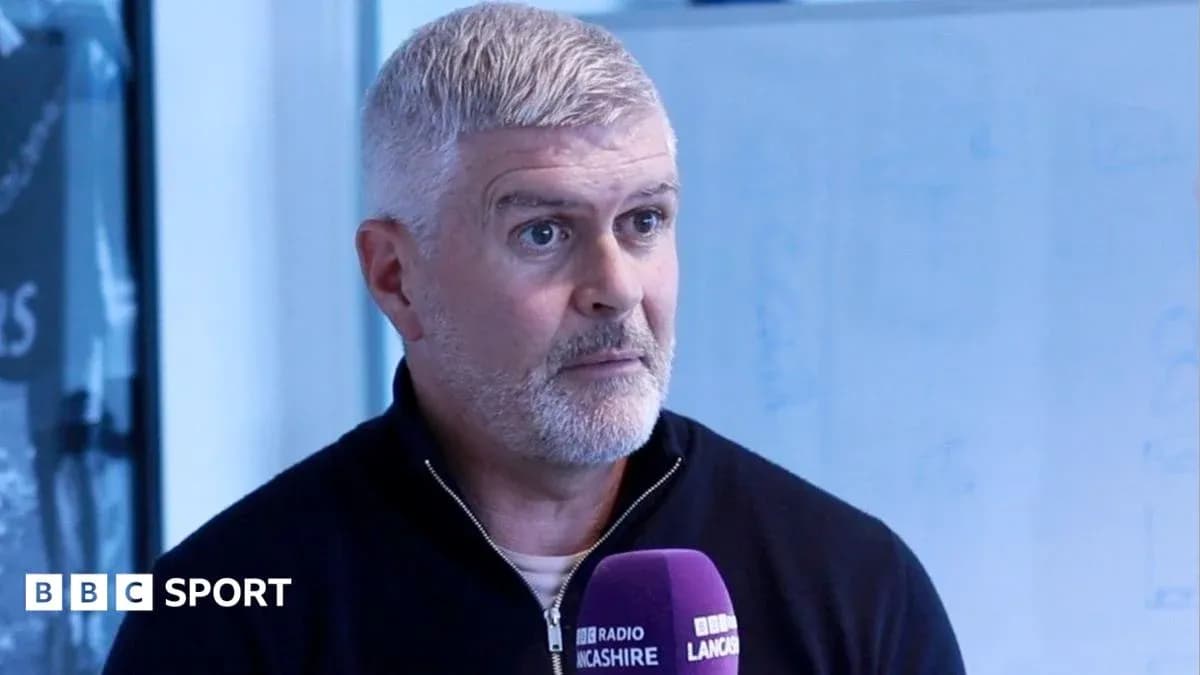
Blackburn Rovers’ new chief executive Steve Curwood has walked straight into a storm and, to his credit, hasn’t tried to pretend otherwise.
“Everyone is frustrated,” he admitted, as he moved to defend a transfer window that delivered just four signings, three collapsed deadline-day deals and a rising sense of anger among supporters who expected far more.
The mood around Ewood Park is raw. Rovers lost seven players over the summer. They finished the window with a thinner squad than they wanted, a fanbase questioning the club’s direction, and a manager, Tony Mowbray, who had made it clear he wanted “that extra little bit of something” that never arrived.
The pressure finally told on Tuesday night, once the window slammed shut and the inquest began.
Deals Agreed, Then Gone
Curwood insists the club did the work. That the money was there. That the problem lay in the brutal reality of the market.
“Deals were on the table,” he told BBC Radio Lancashire. “Deals were agreed with players and clubs.”
Then came his blunt assessment of what happened next.
“We can talk about morals in football, maybe there aren't too many now and that's what's happened. We were gazumped at the last minute on a couple of deals, and one was a foreign one which took a bit more time than you would anticipate.”
Gazumped. A word that hits hard when supporters have spent weeks refreshing transfer feeds.
BBC Radio Lancashire understands two of those failed moves involved Reo Hatate, who instead joined Burnley, and Brian De Keersmaecker, who chose Bristol City. Targeted, tracked, lined up – and then lost when it mattered most.
Curwood’s message is clear: the board did not pull the plug.
“The investment has been there. There hasn't been a reluctance (from the board). There has been collaboration throughout the process. I think at the final hurdle we haven't been able to get them over the line.”
That final hurdle is where the damage has been done.
Mowbray’s Late Arrival and a “Chaotic” Window
Behind the failed deals sits a deeper structural issue: timing.
Michael O'Neill had steadied Blackburn last season, keeping them in the Championship while juggling his job with Northern Ireland. When he turned down the permanent role in mid-May, Rovers pivoted back to a familiar face. Mowbray was reappointed on 5 June – late by modern standards for building a squad.
Curwood doesn’t hide from that.
He calls the window “chaotic” and points straight at the calendar.
“Ideally your manager will be in by the start of May to work out where are we going for next year,” he said. “So that timeline has been constrained somewhat, and then conflated by injuries.”
The dilemma was obvious. Move early and secure what you can, or wait for first-choice targets and risk being left short.
“If you want to do your deals early, maybe you can't go after the best players sometimes,” Curwood explained. “You've got to either wait and go for target number one with this risk, or cement one in the building because we know we can get him, like Jayden Fevrier for example.”
Rovers chose to chase Mowbray’s preferred options. They backed the manager’s judgement, and they paid the price when rivals stepped in.
“We might highlight three or four targets, but Tony wants to make sure the people here want to be here and play for him. Was it the wrong thing to do to push for the specific players Tony wanted? These things happen when you try to be specific, but none of us want to just bring in players to add bodies in the building.”
That line will divide opinion. Some supporters will applaud the refusal to panic buy. Others will look at the depth chart and wonder if ideals have trumped practicality.
Outgoings, Offers Rejected and a Thinner Squad
If the incomings underwhelmed, the exits still went ahead.
Seven players left in the summer, trimming what Curwood describes as a “top-heavy” squad. He stands by those calls.
“You've got to allow the manager to make certain decisions,” he said. “The squad list was top-heavy. Certain players needed game-time, like George Pratt going to Bradford.”
At the same time, Blackburn did resist bids for several key figures. BBC Radio Lancashire understands offers were turned down for Ryoya Morishita, Sean McLoughlin, Balasz Toth, Yuki Ohashi and Ryan Alebiosu.
So Rovers held on to important assets, reshaped the wage bill, and still ended up short of the reinforcement Mowbray wanted. That is the tension at the heart of this window: financial backing without the final product on the pitch.
A New CEO in the Middle of the Storm
Curwood himself has barely had time to find his feet. He arrived from League Two side Fleetwood Town only two months ago and has been dropped straight into a club in transition.
“It's been a whirlwind since I arrived – with a transfer window, an administrator going to another club, and a senior physiotherapist leaving,” the 54-year-old said.
This is not a stable backdrop for a delicate rebuild. Key backroom figures have gone. The manager came in late. Injuries have complicated plans. The new CEO is trying to impose structure while the ground shifts under him.
He knows these first months will define how he is judged.
“The first 90 days will give me time to reflect and bring some of the processes this club need to improve where we are,” he said. “We'll be in a very different position moving into the next window, and beyond that.”
That is the promise. More joined-up planning. Earlier decisions. A manager in place with a clear run at the next market.
For now, though, Blackburn Rovers must live with the reality of this one: a “chaotic” summer, a handful of signings, several near-misses, and a season ahead that will test whether frustration can be turned into resolve – or whether this window lingers as a missed opportunity.