
Cristiano Ronaldo Retires from Portugal After Split with Jorge Jesus
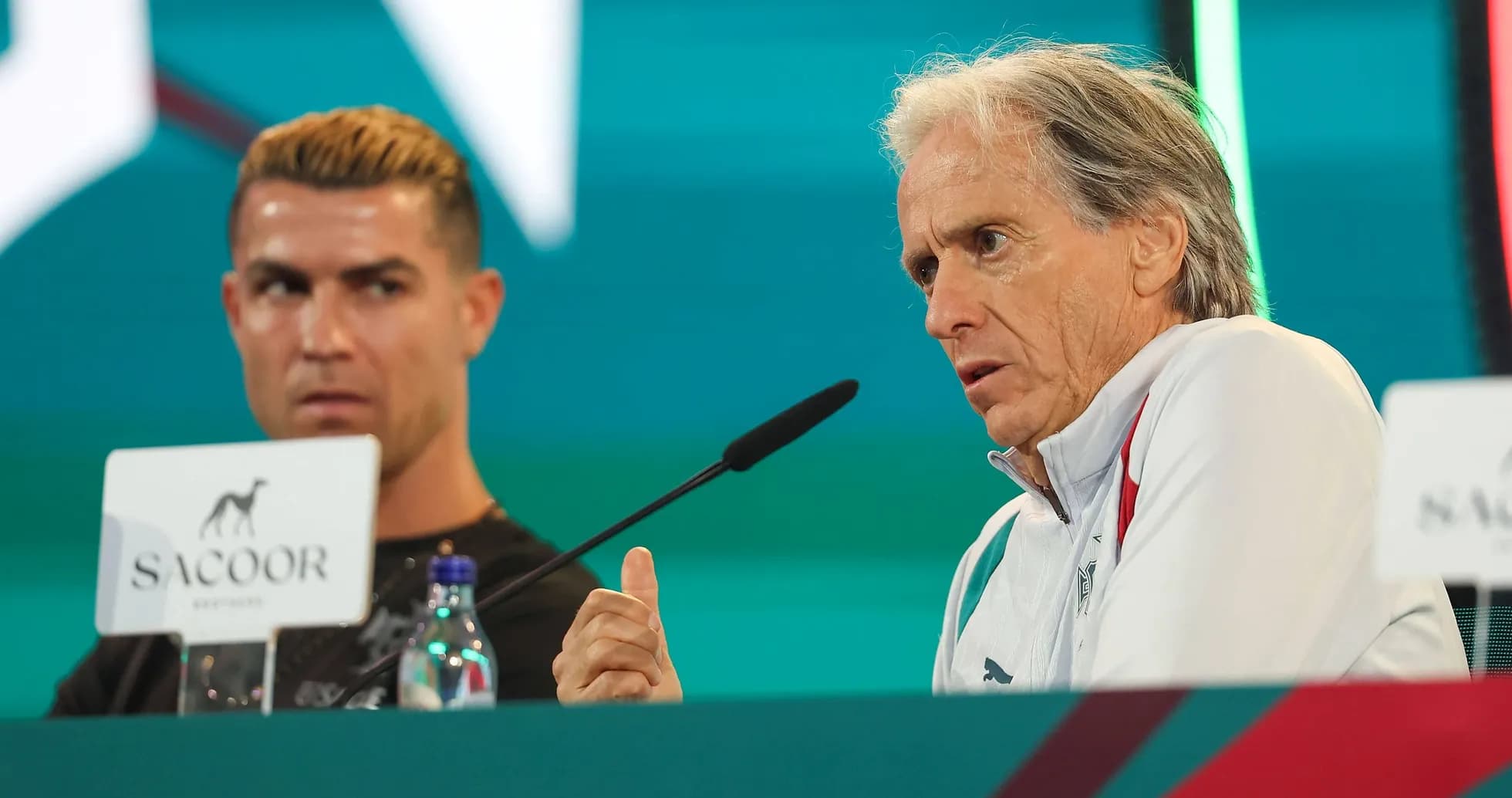
Cristiano Ronaldo has called time on one of international football’s defining careers, announcing his retirement from Portugal duty in an emotional video that felt as raw as it was final.
At 41, the country’s record scorer has stepped away from the national team not after a farewell lap of honour, but in the middle of a storm – a fierce fallout with Portugal coach Jorge Jesus over playing time that turned a September camp into a breaking point.
A giant exits under a cloud
Ronaldo’s last act in a Portugal shirt came in a 1-0 Nations League win over Wales in September. It was low-key, almost routine, the kind of night that never hinted it would be the end.
The fracture opened in the very next game.
Against Norway, Ronaldo stayed glued to the bench, an unused substitute as the clock ran down. For a player who built a career on deciding matches, watching one drift by from the sideline cut deep. What followed was not the dignified fade-out many had imagined, but confrontation.
Ronaldo accused Jesus of going back on a promise: at least 30 minutes on the pitch, he believed, had been guaranteed once he was told to warm up. Those minutes never came. The anger wasn’t just about selection; it was about trust.
Tension spiked again when, according to reports, Jesus declined to honour an agreement to publicly explain the decision, instead reinforcing that team selection rested with him alone. For Ronaldo, that was a step too far. The forward refused to train and walked away from the camp before Portugal’s next Nations League fixture against Denmark.
A relationship that had survived the usual noise around an ageing superstar finally cracked.
Jesus salutes a “global icon”
If the split was ugly, the words from the coach were anything but.
Jorge Jesus, speaking after the announcement, reached for tribute rather than retaliation.
“Cris is a global icon – for Portugal and the national team,” he said, underlining that whatever had happened in recent days did not erase two decades of service. He talked about Ronaldo as a reference point for a generation, “a role model for young Portuguese people,” and recalled their shared spell at Al Nassr as part of a bond that went beyond a single disagreement.
Inside the national team set-up, Jesus had even made Ronaldo’s status literal. “I had a large picture of him put up in the auditorium,” he revealed. “He will always be an icon of the national team and our history. It is his decision.”
The coach admitted he had tried to keep the story going. “We had already spoken about this before the first squad announcement. I asked him to stay on with me because I needed him by my side, but I have to accept his decision. He will always be in the hearts of the Portuguese people and part of the national team. There’s no changing that. He will always be an icon of Portuguese football.”
The words carried respect, but also resignation. A chapter he wanted to prolong had closed without his consent.
Retirement that had been stalking him
This ending did not come out of nowhere. It had been circling ever since Portugal’s World Cup exit in the summer, when questions about Ronaldo’s international future grew louder and more persistent.
Back then, Jesus managed to pull him back from the brink. The coach went public with his backing, framing Ronaldo’s departure as something that should happen only on the player’s terms.
“Cristiano should end his time in the national team the way he wants, he’s the one who will decide how he wants it,” Jesus said last month. He recalled his first squad as Portugal boss: “In my first call-up, I said, ‘I need you, I need you to be close to me, playing or not playing, I need you’. And now I’m saying the same thing.”
Those appeals kept Ronaldo in the fold a little longer. They couldn’t stop the collision between a fiercely competitive veteran and a coach trying to manage a squad for tomorrow as well as today.
So the career ends not with a pre-planned farewell night in Lisbon, but with a social media video and a sense of unfinished business.
Numbers that belong to history
Strip away the noise of the final weeks and the scale of Ronaldo’s Portugal career is staggering.
He leaves the international stage with 146 goals in 234 appearances, a return that redefined what was thought possible at this level. He dragged Portugal to a first major trophy at Euro 2016, then added the Nations League title to the collection, turning a country long associated with near-misses into a serial contender.
For a generation of Portuguese fans, he wasn’t just the captain. He was the constant. Through coaches, cycles, and tactical revolutions, Ronaldo remained the reference point, the player who could change a tournament with a single moment.
Now that reference point is gone.
Portugal step into the unknown
The timing is brutal for Portugal. The Nations League continues later this month, with Denmark and Wales waiting, and the squad must now move on without the man who has been their attacking axis for nearly two decades.
The armband will find a new arm. The goals will have to come from new sources. The dressing room will lose its most powerful personality and, with it, a certain gravitational pull.
There is talent in reserve. There always is at this level. But replacing Ronaldo is not a tactical tweak; it is a psychological shift. The team must learn to live without the safety net of the player who always believed he could rescue them, even on nights when the evidence suggested otherwise.
Club focus, new reality
Away from the national team, Ronaldo’s world narrows to club football.
His immediate concern is Al Nassr, though even there the past few days have underlined that nothing is straightforward. He missed the club’s AFC Champions League trip to Uzbekistan due to security concerns, a reminder that even at this late stage of his career, the circus still follows him.
For the first time since his teenage years, there will be no call from Portugal, no summer tournaments to chase, no qualifiers to dominate. Just league games, continental nights with Al Nassr, and the knowledge that his country’s shirt now belongs to someone else.
The era of Cristiano Ronaldo with Portugal is over. The question now is not what he has done – that is carved into football history – but how a nation, and a generation of players raised in his shadow, learn to write the next chapter without him.





