
Cristiano Ronaldo Retires from Portugal After 23 Years
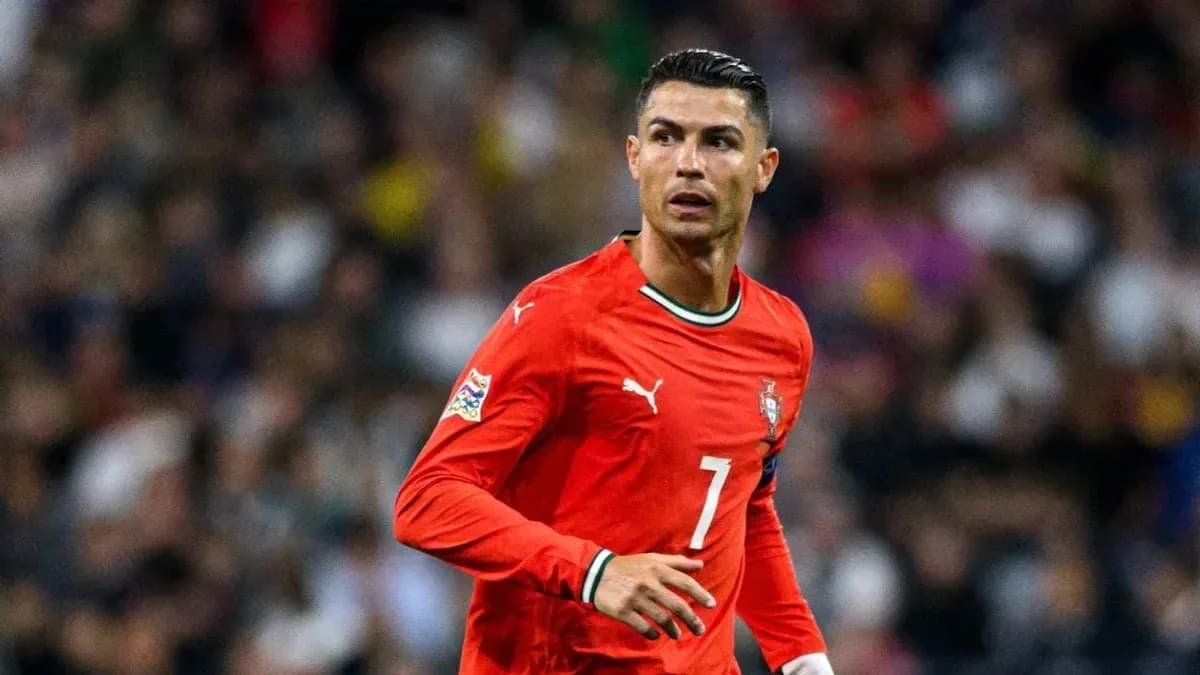
Cristiano Ronaldo has finally stepped away from the Portugal shirt that defined so much of his life, announcing his retirement from international football after 23 years at the top of the global game.
At 41, the Al Nassr forward delivered the news in a video message released on November 5, speaking directly to the supporters who have followed him from the moment he first pulled on the national colours as a skinny teenager.
He leaves the stage with numbers that may stand untouched for a generation: 234 senior caps and 146 goals for Portugal, both men’s international records, according to FIFA. Records that became routine. Records that started to feel inevitable every time he lined up for the anthem.
His career, though, is not over. Not yet.
Ronaldo will continue at club level in Saudi Arabia, still chasing the towering personal milestone of 1,000 career goals. The club game remains his last competitive frontier, even as the international chapter closes.
The timing of his decision carried its own symbolism. The announcement landed a day before Portugal coach Jorge Jesus was due to name his next squad, with Nations League fixtures against Denmark and Wales looming. For the first time in more than two decades, a Portugal list will drop without the automatic inclusion of Cristiano Ronaldo.
“The Time Has Come to Pass It On”
In his farewell, Ronaldo focused on the shirt more than the statistics.
“Today the time has come to pass it on to the future,” he said of his national-team jersey, in FIFA’s English translation of his message. The words were simple, but the weight behind them was not. He called the decision difficult, driven by emotion as much as by practical realities.
He turned the spotlight away from himself and towards the people who had carried him through the journey. Family first: those who accepted the constant absences, the travel, the tournaments that swallowed summers and winters alike. He acknowledged teammates, coaches, medical staff, and the often invisible workers who fill the gaps in elite sport but rarely find their faces in the photographs.
Ronaldo also spoke directly to Portuguese fans scattered around the world, for whom the national team can feel like a travelling piece of home. He recalled scanning the stands during the anthem and seeing families, generations side by side, united for a few minutes in a shared identity that blurred any differences between them.
For him, those were not just pre-match rituals. They were the essence of what the shirt meant.
A Rift With Jorge Jesus That Never Quite Healed
The end of his international career did not arrive in a vacuum. Tension had been building.
Ronaldo’s relationship with Jorge Jesus frayed during the September international break. On September 27, he remained an unused substitute in Portugal’s 2-1 win over Norway, a detail later confirmed in the Norwegian federation’s match record. Three days later, on September 30, he left the national camp, the day before Portugal faced Denmark.
That departure became the flashpoint.
On October 6, Ronaldo released a statement accusing Jesus of breaking promises about his role, including an assurance that he would play against Norway. He had warmed up, he said, but never received the call to enter the pitch. Jesus rejected the notion that any agreement about playing time had been made, as reported by Sky Sports.
Ronaldo later apologized to his teammates and to Portuguese supporters for walking out, conceding that he should not have left the camp. At that point, he insisted he was still available for selection.
The Portuguese federation responded with a 30-day suspension and a €255 fine. By the time he announced his retirement, that ban had already been served. The door was technically open. He chose to close it himself.
On November 5, speaking to Canal 11, Jesus revealed that he had asked Ronaldo to continue before naming his first Portugal squad, saying he wanted the veteran forward alongside him. According to RTP, the coach accepted that he now had to live with Ronaldo’s decision and disclosed that a large photograph of the former captain had been placed in the national-team auditorium as a permanent reference point for the younger generation.
The dispute may have accelerated the end, but it did not erase the legacy.
From Figo’s Heir to Portugal’s Standard-Bearer
Ronaldo’s Portugal story began in August 2003, when an 18-year-old winger from Madeira replaced Luis Figo at halftime against Kazakhstan. It felt like a passing of the torch even then, a glimpse of the future in a single substitution.
What followed changed the country’s footballing identity.
He captained Portugal to its first major international trophy at Euro 2016, a night in Paris that rewrote the nation’s football history. He then helped guide the team to Nations League titles in 2019 and 2025, turning Portugal from perennial nearly-men into serial contenders.
On the World Cup stage, he found the net in six separate tournaments, amassing 11 goals overall, including three at this year’s competition. His final World Cup appearance ended in a 1-0 defeat to Spain in the round of 16, a subdued exit for a player who had spent his career refusing to bow quietly.
Now, Portugal must move on without the man who defined its modern era. The No. 7 shirt will not stay empty for long; football never allows a vacuum. Someone else will pull it on, feel the weight of it, and try to write their own story.
But they will do so in the shadow of 234 caps, 146 goals, and one relentless standard: the expectation that Portugal can walk into any stadium in the world and believe it belongs.
That, more than any record, is the legacy Cristiano Ronaldo leaves behind.





