
Cristiano Ronaldo: The Burden and Legacy of a Football Icon
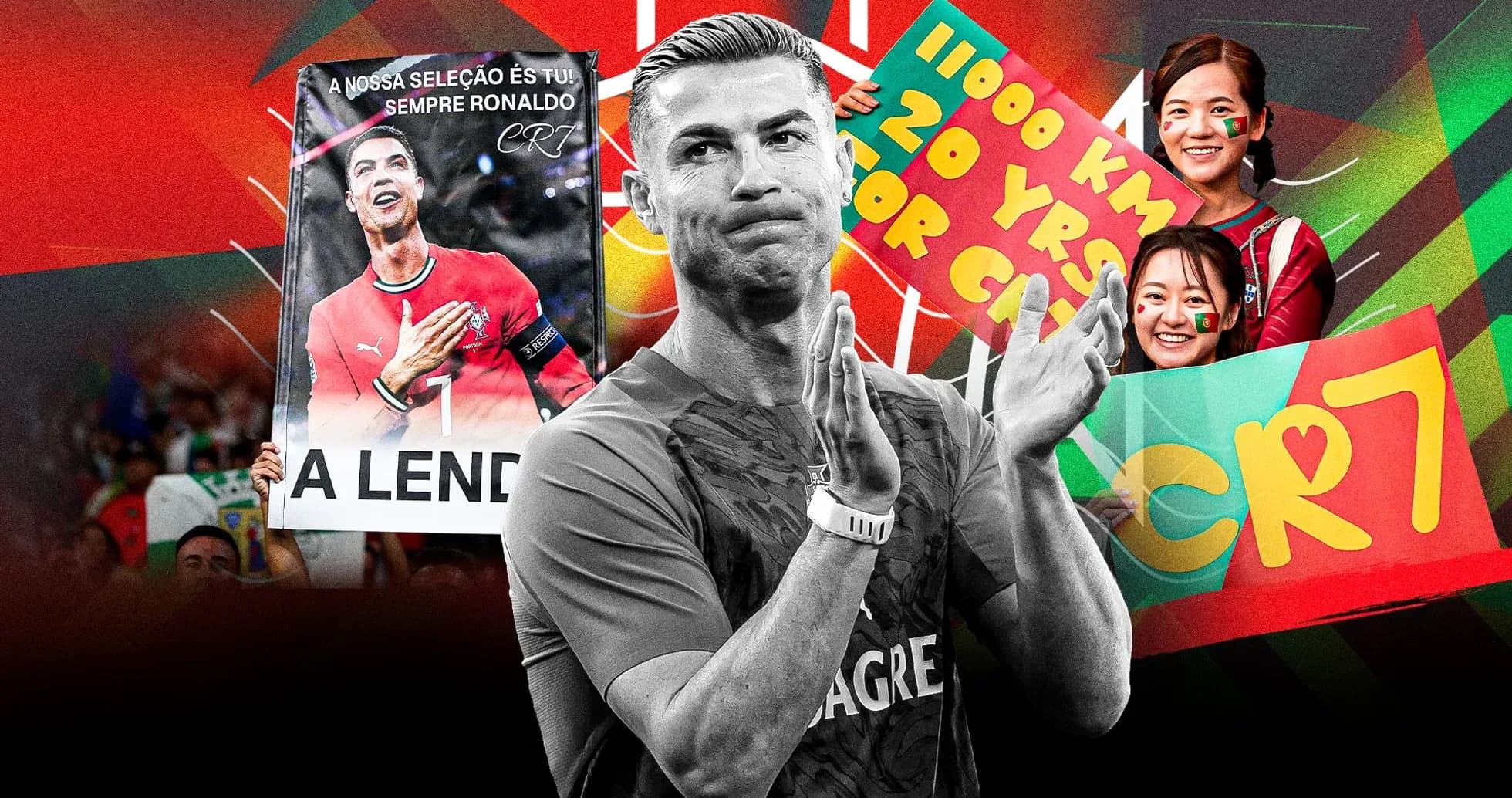
Cristiano Ronaldo always promised to leave on his own terms. The twist is that, by his own admission, he nearly walked away from international football months ago – quietly, on a flight home from the United States, talked out of it only by FPF president Pedro Proença.
It fits. Portugal’s greatest icon, still needing to be convinced that the story was not quite over, even as the football made it brutally clear that it should have been.
A Legend Who Became a Load
On the pitch, the verdict had been obvious for some time. Portugal went through three straight major tournaments trying to accommodate an immobile centre-forward, reshaping attacks, bending game plans and sacrificing fluidity just to keep Ronaldo at the heart of it all. The trade-off stopped making sense.
He had become a burden. Strictly in sporting terms, that is.
Economically, he remained priceless. The five-time Ballon d’Or winner was still a mint for the federation, a commercial machine whose presence guaranteed attention, sponsors and revenue on a scale Portugal had never known.
Proença didn’t even hide it. At an FPF event last month, while urging Ronaldo to continue in the Seleção shirt, he called the Al-Nassr forward “the greatest asset” Portuguese football had ever produced. The word jarred in a footballing context, but it was brutally accurate. As a player, Ronaldo no longer justified a starting place. As an “asset”, he was still the most valuable figure in the entire ecosystem.
The Ronaldo Industry
Ronaldo is not just a footballer. He is a one-man industry.
Juventus did not sign him in 2018 purely for his goals. They signed a global brand, a digital juggernaut. Within 24 hours of announcing his move to Turin, between July 10 and 11, the club’s social media accounts swelled by 2.2 million new followers. That is not a fanbase; that is a market.
“The Ronaldo Effect is very real,” football finance author Marco Bellinazzo told GOAL. “To grow on an international level commercially, you need a global icon like Cristiano Ronaldo, who is very useful in terms of generating new deals, particularly in North America and Asia.”
The numbers backed him up. Six months after Ronaldo arrived at the Allianz Stadium, Juventus struck a new seven-year deal with adidas worth €357m – double the value of the previous agreement. Then came the upgraded JEEP shirt sponsorship in November 2019: €42m a year, up €25m on the old contract.
In the age of influencers, Juventus had simply signed the most influential of them all.
Footballers followed him, too. His shock move to Al-Nassr in 2022 was quickly mirrored by Karim Benzema and Neymar joining the Saudi Pro League within roughly six months. Where Ronaldo goes, markets move.
Portugal’s Global Amplifier
Portugal rode that wave for two decades.
Their captain wasn’t just the face of the national team; he was, as sports marketing expert Daniel Sá put it to Lusa after the World Cup, bigger than the team itself. “From a brand perspective, Ronaldo is incomparably bigger than the entire Portuguese national team and countless others combined,” Sá said.
His warning was stark. “It will be a tragedy when he leaves, because people still don’t grasp the media attention that will be lost. We’ll be falling down a high-speed escalator. He’s the one who has enabled them to sign numerous contracts and earn a lot of money for over 20 years.”
In commercial terms, Ronaldo is irreplaceable. Sá later told EFE that “he’s a global communications platform in himself. So, Portugal is not just losing an extraordinary player. It is also losing the greatest international amplifier of the Portugal brand.”
That’s the scale of the void. Not just a missing No.7. A missing megaphone.
Easier to Replace the Goals Than the Glow
Strange as it sounds, Portugal may find it easier to replace his goals than his glare.
This is, after all, the most prolific scorer in international football history. Yet the early signs suggest the Seleção will not suddenly dry up without him. If anything, the attack already looks more coherent.
Gonçalo Ramos is no Ronaldo. Nobody is. But the moment he stepped in for the former captain at the 2022 World Cup and hit a hat-trick against Switzerland, he showed he could lead the line in a way that suits this team.
The pressure on the AC Milan striker will be relentless now, sharpened by the acrimony of Ronaldo’s eventual exit and the weight of expectation that follows whoever inherits his role. Still, when the spotlight swung onto him for last month’s games against Denmark and Norway, Ramos responded. He scored in both, making it three goals in three consecutive starts and four in his last five appearances for Portugal.
Those numbers sit awkwardly beside the 34 minutes he was granted at the World Cup, while Ronaldo laboured on as first-choice No.9. The contrast speaks for itself.
But this is not only about goals. It is about movement, pressing, combinations. About how well a centre-forward can unlock the full potential of the gifted wide players and midfielders around him.
That is why, when readers of Portuguese daily A Bola were asked to choose their preferred XI for last month’s match against Wales, they picked Ramos ahead of Ronaldo. Not out of disrespect, but out of recognition. For too long, the needs of one man had been prioritised over the balance of an entire team.
A New Golden Chance
Portugal’s so-called new golden generation is not guaranteed anything. They might never win another major trophy. Talent alone does not lift cups.
But they unquestionably have a better chance with a forward in his mid-20s than one edging into his 40s.
Ronaldo’s legacy in Portuguese football is untouchable. Together, player and country rewrote history: European champions, Nations League winners, permanent fixtures at the sharp end of tournaments. His goals will be missed. So will his aura, his magnetism, his ability to drag the world’s cameras to wherever he happened to be standing.
The brand will shrink without him. The Seleção will almost certainly never be as globally popular – or as profitable – as they were in the Ronaldo era.
Yet the team itself, unshackled at last from the obligation to serve a single star, already looks stronger.
And that, in the end, might be the most fitting final contribution of Cristiano Ronaldo to Portugal: leaving behind a national side finally ready to win without him.





