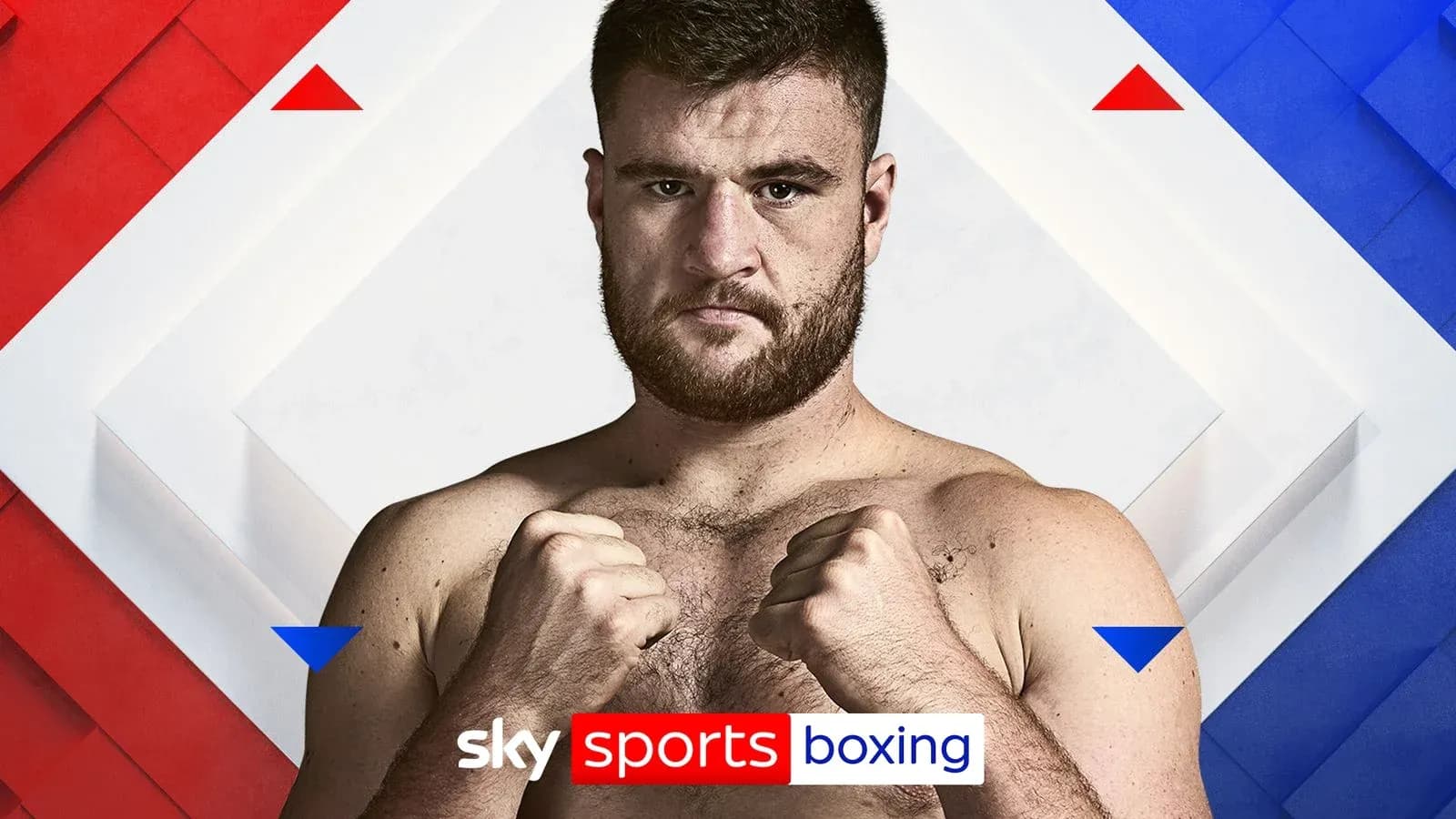
Chaos in Croke Park: Thomas Carty's Dramatic Fall Against Dave Allen
On a night built for Irish boxing history, chaos stole the undercard.
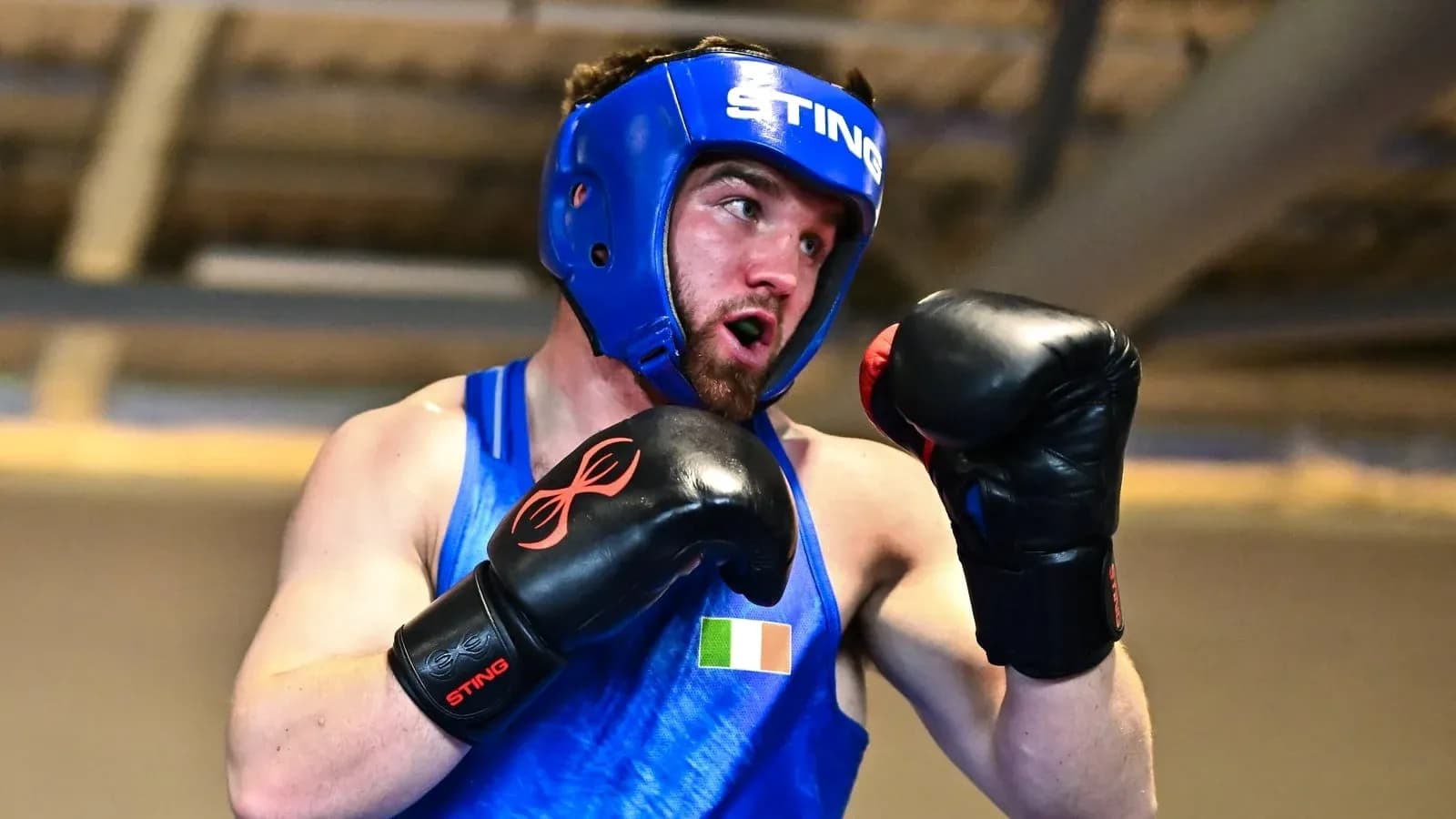
More than 83,000 fans had poured into Croke Park to say goodbye to Katie Taylor and roar on local heavyweight Thomas Carty against cult British figure Dave Allen. It was the kind of stage most fringe big men never touch. Ring walks soaked in noise, lights cutting through the Dublin dusk, that crackling sense that even a support bout could change a career.
It lasted 80 seconds.
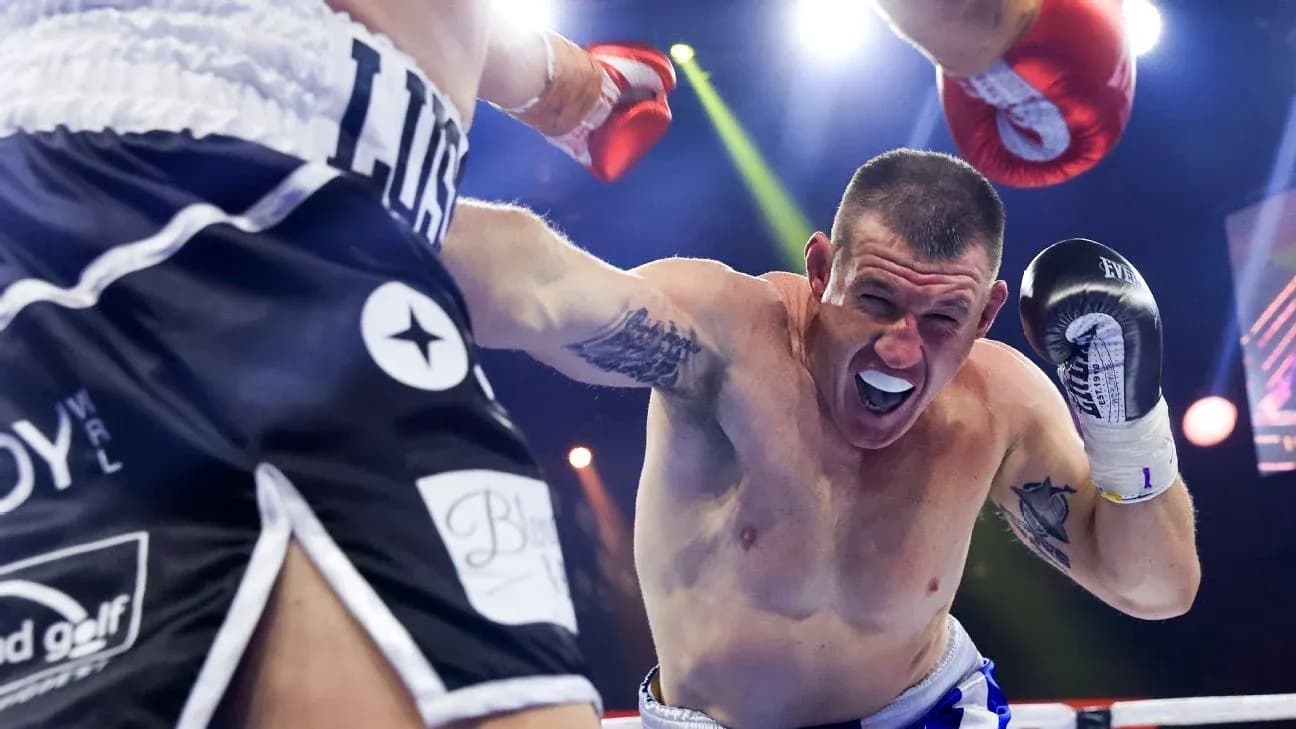
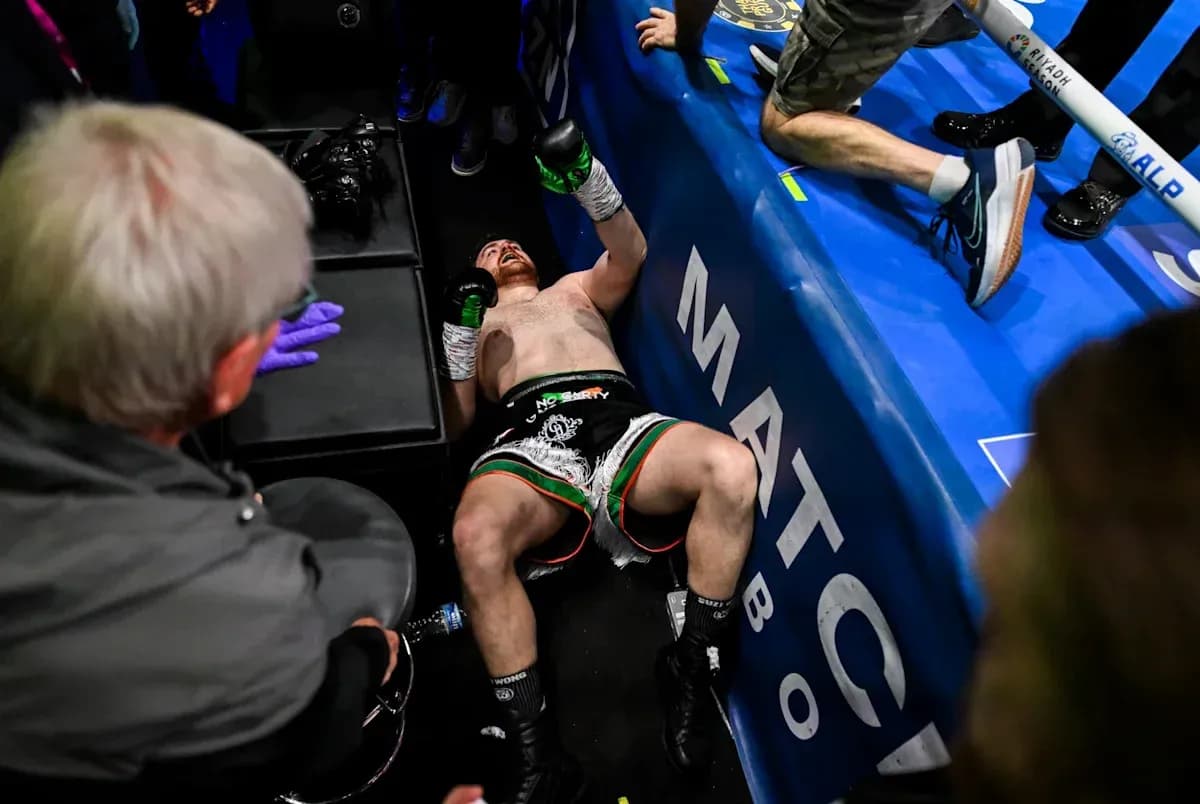
Carty and Allen had barely begun to wrestle for control in the opening round when the fight lurched into farce. A clinch, a tangle, shots whipping in around the back of the head – and then, in a moment that stunned the stadium, Carty toppled through the ropes and out of the ring, crashing down onto the area below.
One of the biggest nights of his life ended with him upside down and dazed, staring back up at the canvas he was supposed to own.
A fall nobody saw coming
Speaking on Uncrowned’s “The Ariel Helwani Show,” Carty replayed the blur.
“I did get clipped in the back of the head the first time [in the first clinch] and thought nothing of it, got on with it,” he said. “Ended up in a clinch [again] and just at that moment, I got caught with another punch in the back of the head within 10-15 seconds, and next thing I knew I was upside down, falling out of the ring.
“In the moment I can't recall, I'm only going off what I see here from the videos, but I remember hitting a bench or something on the way down, and then again down onto the ground.”
The 11-1 heavyweight, with 9 knockouts to his name, left Croke Park not with a statement win, but with injuries to the back of his head and neck. He said he tried to rise and fight on, only to find his leg trapped under a stool amid the chaos on the floor.
“The whole thing happened so fast — I just remember looking up, and there were like 20 people,” he recalled. “People in the ring looking down, photographers looking, ringside doctors looking, about 20 different people talking, and my coach was there as well.”
The ringside physician took one look and made the call: Carty wasn’t fit to continue. The bout was waved off.
Inside the ropes, Allen stood as confused as anyone.
“At the time, I weren't really sure what was going off,” he admitted. “It was half a round, and he went flying out of the ring. Weren't really sure what was going off, weren't sure if I was going to get disqualified, weren't sure if I won the fight — weren't really sure at all.”
Confusion, then anger
For several uneasy minutes, nobody knew what the result would be. The referee, the doctor and the local commission huddled, aware that the decision would define the night for both men.
If they ruled Carty had been sent through the ropes by a legal punch, Allen – now 27-9 with 20 knockouts – could have walked away with a bizarre stoppage win. If the shot to the back of the head was judged intentional or the direct cause of the injury, Carty might have been handed a deeply controversial victory.
Instead, the referee called it an unintentional accident. No-contest.
When the replay flashed up on the big screens, the atmosphere turned sour. Slow-motion replays of Allen’s blows to the back of Carty’s head drew loud boos from a partisan Dublin crowd, many convinced they’d just watched their man fouled out of a career-defining opportunity.
Carty stopped short of branding Allen a cheat, but he did not soften his view of those final punches.
“I don't know [if he did it on purpose],” he said. “I don't think he necessarily said, 'Right, I'm going to punch Thomas on the back of the head.' But that's what happened.
“I think [he was trying to utilize], like, old man tactics. He was obviously trying to clip me around the back of the ear, but it was just unnecessary, man. Completely unnecessary.”
Allen pushed back on the idea that he’d gone rogue.
“I'm a rough fighter, not a dirty fighter,” he said. “I'm pretty rough. Half the time I'm not looking where I'm punching, I just want to hit you.
The first one went around the back of his head, but he was ducking into the shot. The second one, he rushed me and put his head down. I threw the right hand at his ear, he turned into it, and it hit him on the back of the head.”
Both agreed on one thing: neither man, in their eyes, quit.
“I don't believe [he was looking for a way out],” Allen insisted. “I spoke to Thomas, and he told me that he didn't. I'm inclined to believe him. He's a fighter, and I have to believe what he tells me. I have no hard feelings toward him, and that's that, really.”
A career gamble gone sideways
Outside the ring, though, the noise grew harsher. Carty scrolled through the reaction and saw a narrative he could barely recognize.
“The tone seems to be [online] that from the fight, I didn't fancy it and was looking for a way out,” he said. “What part in the whole fight, for the short time that it lasted, did I not fancy? Because — as far as I could see, having watched the fight back — it was me throwing punches and landing. The only two punches I got caught with were on the back of the head.”
He had reason to bristle. This was not a man cashing out. It was a fighter who had dragged himself back from a serious ACL injury, poured money and time into a camp, and bet on a breakthrough.
“It's just absurd [thinking I would try and throw the fight],” Carty said. “Having been sidelined for so long, after being injured, it took so much effort to get back — so much commitment from not just me but my team. My team has sacrificed so much time, alongside my own time.
“Financially, it was a massive commitment to get back from the ACL [injury], the training that we put in. The pay isn't amazing at this level of fights. I was gambling on getting the bigger fight after this one. I was fully prepared and fully ready to take this one. I thought I would be sitting here today, planning the next move. And all I can think about right now is getting the rematch.”
That is the only outcome that makes sense to him now: run it back, clean slate, no questions.
On the evidence of the fallout and the size of the stage, a second meeting would have no trouble selling. This time, it could stand alone as a main event, not a supporting act.
One man wants revenge. The other wants out.
There is a problem. Allen does not share the appetite.
“I know they want the rematch ... [but] there's nothing in it for me,” he said. “I took the Croke Park fight because they offered me a deal for some of my fighters to box on their shows. I got six slots. ... That was why I took the fight. That was the only reason, as well.”
For the Doncaster heavyweight, this was business, not a blood feud. He has his own finish line in sight and a very different prize in mind.
Allen revealed he has only one or two fights left before he walks away, and Carty is not part of that farewell tour. He wants the British heavyweight title, the old domestic belt that still carries weight with UK fighters and fans. That, not a repeat of a freakish no-contest in Dublin, is how he intends to close his career.
So boxing does what boxing often does. It leaves a story half-told.
Carty, bruised, indignant and still searching for closure. Allen, pragmatic, already looking elsewhere. And Croke Park left with a memory that will linger: a heavyweight tumbling into the void on a night that was supposed to launch him, and a rivalry that might never get the chance to become real.