Casey Howe's Journey: From Maguiresbridge to Celtic

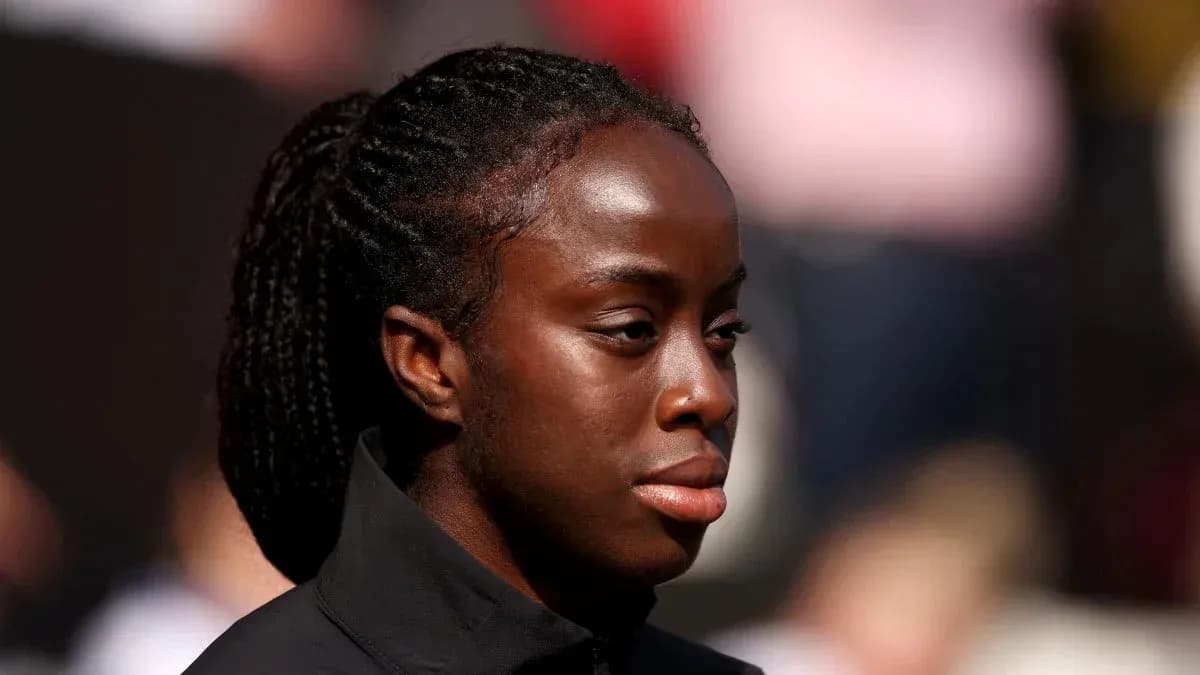
From Maguiresbridge’s back roads to the roar of Celtic, Casey Howe’s journey has never been straightforward. It has, however, always been relentless.
The 23-year-old from County Fermanagh has already crammed more into a young career than many manage in a lifetime. A Northern Ireland debut at 17. A treble with Glentoran. A move to Nottingham Forest. Promotion with Wolves. A prolific spell at Athlone Town that turned heads across the water.
Now she is in Glasgow, pulling on the famous green and white and scoring the kind of goal that belongs on highlight reels.
On just her second appearance for Celtic, with the Scottish Women’s Premier League game against Montrose drifting towards frustration, Howe stepped in. Eighty-two minutes gone, deadlock unbroken, tension rising. Then a touch, a shift, and a left-footed curler arcing into the top corner. Celtic went on to win 3-0, but it was Howe’s strike that cracked the game open and announced her arrival.
For a self-described “young girl from Maguiresbridge”, it felt a world away from the long car journeys that built this career.
Those trips were the foundation. Her parents driving her to Ballinamallard, Cookstown and Belfast four or five times a week so she could train and play, chasing a dream that at times must have seemed distant.
“They wanted to give me the best platform to be the best I can,” she said, reflecting on the miles and the hours. Without those sacrifices, she knows she would not be walking into Celtic’s state-of-the-art Barrowfield training centre now, part of one of Scottish women’s football’s biggest clubs.
The route there has been steady, not sudden. Linfield, Glentoran, Sligo Rovers. Then Athlone Town, where her form in the League of Ireland Women’s Premier Division made it impossible to ignore her any longer. Each move sharpened her game, each environment asked a different question.
Celtic, though, feels like another level.
Here, she is immersed in a tactical structure that demands intelligence as much as pace. Sessions are detailed, the demands clear. “As a player, you're always looking to develop in any training session,” she said, and this is a place where development is non-negotiable. She talks about the “big improvement tactically”, about adapting to different styles and understanding exactly how head coach Grant Scott wants his team to play.
The system suits her instincts. Celtic want to attack. They want the ball, they want movement, they want risk in the final third. For a 14-cap Northern Ireland forward who thrives on expression, it is an ideal stage.
“We're trying to play a nice attacking brand of football,” she said. For Howe, that means freedom: the licence to drive at defenders, to vary her runs, to drift into spaces that unsettle back lines. She has known more rigid systems, where every movement is prescribed and every run rehearsed. This is different.
“I've played under people in the past where it's almost robotic,” she admitted. At Celtic, she feels trusted to read the game herself. That trust feeds confidence. Confidence feeds performances. Performances win matches.
It also makes life miserable for defenders. When a front line constantly interchanges, drags markers out of position and attacks at pace, shape starts to crumble. Howe can sense that. She knows the value of being “allowed to run into different areas or make different movements”, and she understands how that chaos benefits the collective as much as the individual.
Yet for all the new surroundings and the elite facilities, her connection to home has not loosened. Fermanagh remains at the heart of her story, and she knows exactly how hard it can be for young players there to break through.
“I think sometimes it's hard because being from Fermanagh you don't necessarily have the facilities on your doorstep,” she said. The long drives that defined her childhood still define the reality for many girls now, travelling up and down the country to find pitches, coaches and opportunities.
For Howe, the payoff is clear. The medals. The promotions. The international caps. “All the sacrifices… winning makes it all worth it,” she said. Every late night on the road, every early start, every compromise made by her family has been converted into something tangible.
Her rise at Celtic is not just a personal project. It feeds directly into her ambitions with Northern Ireland. She broke into the national team as a teenager; now she wants to help push it into a new era.
“I want to leave the Northern Ireland shirt in a better place than when I came in,” she said. It is not a throwaway line. She talks about legacy, about building on the progress already made, about ensuring the green jersey carries more weight and more expectation for the next generation.
That sense of responsibility stretches beyond one country. Howe speaks about leaving women’s football “in Northern Ireland, in Scotland, in England” even 1% better than when she found it. If her career can show a girl in Fermanagh that there is a path, that the miles are worth it, that the sacrifices can lead somewhere, then she counts that as a win.
From Ballinamallard United to Barrowfield, from those endless car journeys to late goals in a Celtic shirt, Howe has already come a long way. The treble with Glentoran, the promotions, the moves across leagues and borders – they all feel like chapters building towards something bigger.
Now she stands at one of the powerhouses of the Scottish game, with trophies to chase, a national team to drive forward and a generation back home watching every step.
For Casey Howe, the road has never been easy. It has simply never been long enough to make her stop.