
Carrick Faces Pressure at Old Trafford After Roma Win
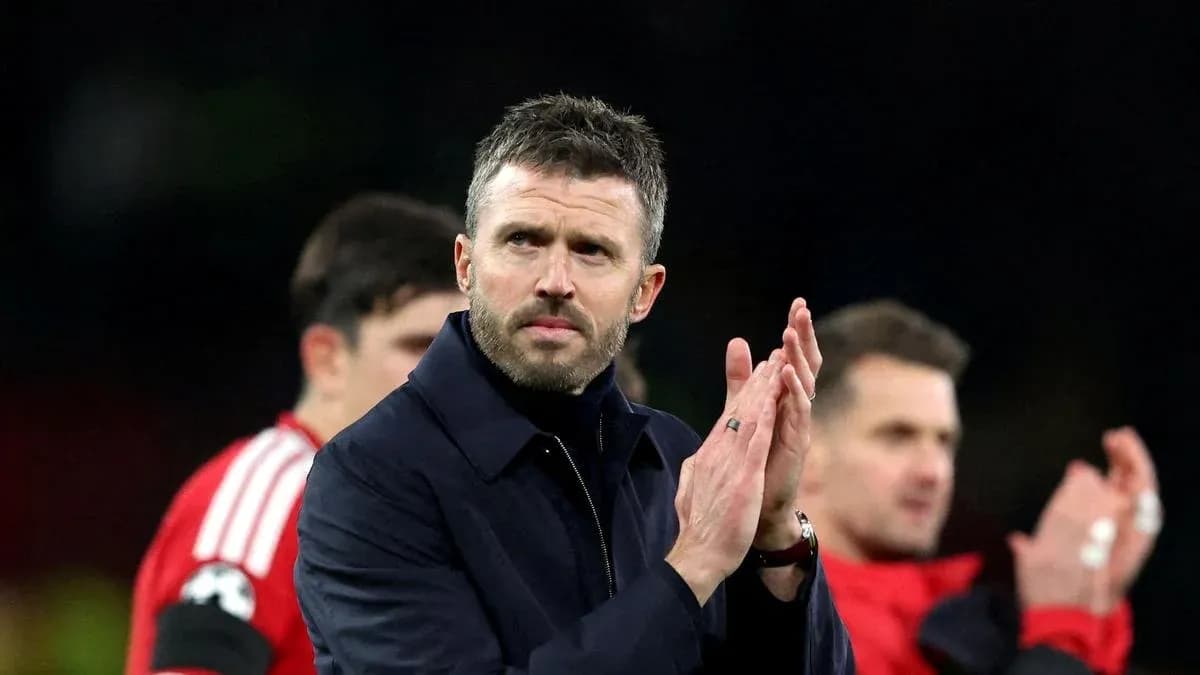
Michael Carrick walks back into Old Trafford this weekend knowing the cheers from Tuesday night might not be enough to drown out the noise around his future.
The comeback against Roma bought him time. Nothing more.
Carrick on the brink
At half-time in midweek, with Manchester United 2-0 down and bereft of ideas, it felt like the end. Players trudged off, heads down, the crowd restless. Carrick’s position looked close to untenable.
Then the game flipped.
United, winless in nine and staring at their worst run since 1988/89, suddenly found a pulse. Old Trafford roared, Roma retreated, and Matheus Cunha stepped into the chaos. Two late goals, a 3-2 victory, and a stadium that had been braced for mutiny instead erupted in relief.
That kind of night can transform a season. It can also mask deeper problems.
The table does not lie. United’s slide has been so severe that, by the time they kick off against Aston Villa on Sunday, other results could leave them bottom of the Premier League. Bottom. A club of that size, that history, staring up at everyone else.
So Roma felt like a reprieve, not a resolution. The international break looms, and with it a natural pause for the club’s hierarchy to take stock. Carrick is fighting not just for points now, but for the right to shape what comes next.
Emery in the opposite dugout
Adding another layer to the drama is the man in the other technical area.
Unai Emery has been linked with the Old Trafford job before, his name floated as a potential successor as United’s form deteriorated. His work at Aston Villa has not gone unnoticed: structure, identity, results. The kind of package any big club would at least glance at.
Yet the narrative has shifted. Reports suggest Emery is close to signing a new deal with the Birmingham club, a sign of mutual commitment just as speculation around United intensifies. If there was ever a moment for Villa to underline their own ambitions and stability, it is walking into a stadium wrestling with its direction.
For Carrick, the optics are stark. He stands on the touchline fighting to keep his job, while a supposed candidate for that same role arrives looking increasingly secure in his.
City’s own tension
Across the city, a different kind of pressure is building.
Manchester City travel to Nottingham Forest trying to avoid something that almost never happens to them: a third straight league defeat. For a team that has normalised relentlessness, the prospect of a mini-crisis lurks if they slip again.
They are chasing Arsenal, again, but this pursuit carries an unusual shadow. Even if Pep Guardiola’s side matches Mikel Arteta’s team stride for stride, there is no guarantee it will matter. City are still waiting to learn their punishment after being found guilty of more than 100 breaches of Premier League financial rules, with a hefty points deduction among the potential sanctions.
Every league game, every dropped point, now feels as if it might be replayed later in a courtroom of opinion. The title race could yet be settled as much by lawyers as by late winners.
Arsenal, at this stage, look like the only genuine rival for the crown. On paper, both contenders have manageable fixtures this weekend. On the pitch, City’s assignment may be far more awkward than it appears.
Forest, the numbers, and the reality
Nottingham Forest sit lower in the table than their performances suggest, and the data backs that up. Opta’s “expected points” model, built from expected goals for and against, places Oliver Glasner’s side third in the league — an extraordinary 16 places higher than their actual position.
That gap tells its own story: a team creating enough, competing enough, but not yet turning performances into results with any consistency. For City, that is a warning. Forest are not playing like relegation fodder; they are playing like a side capable of bloodying a heavyweight’s nose.
So while City wrestle with the psychological weight of potential sanctions and the rare prospect of three defeats on the bounce, they walk into a fixture that could easily catch them cold.
Back in Manchester, Carrick faces his own reckoning. One coach fighting the table, another fighting the rulebook, both working under the same unforgiving truth of this league: time runs out quickly for those who fall behind.





