
Carrick's Dilemma: What to Do with Bruno and Martínez?
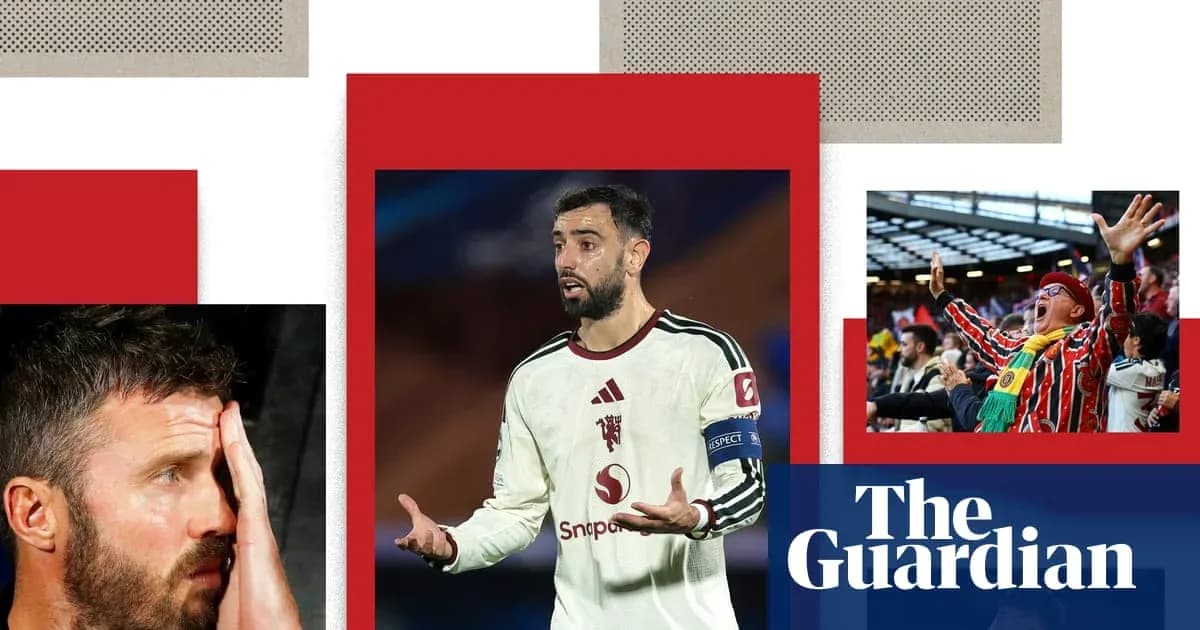
When Bournemouth walk out at Old Trafford for Sunday’s 2pm kick-off, the loudest noise may not come from the away end or the Stretford End. It may come from the team sheet.
Michael Carrick stands at a crossroads. Does he strip Bruno Fernandes of the captaincy, even drop him from the XI, to reassert control over a dressing room that has started to answer back? On Friday he pointedly refused to rule it out. That silence said plenty.
The issue runs deeper than the armband. Both Fernandes and Lisandro Martínez are out of contract in the summer, with United holding an extra-year option in each case. Their recent behaviour suggests minds already drifting elsewhere. The club must decide whether January becomes the moment to cash in and cut ties.
The numbers are stark. Around £40m for Fernandes, £25m for Martínez, if suitable bidders emerge in the winter window. That kind of money would give a head start on the rebuild Carrick has been tasked with leading, whether he is here to see it through or not.
What forces the issue is not just their contracts, but their defiance. Fernandes’s words in Como still hang in the air like a bad smell. After Wednesday’s 4-1 humiliation he laid the blame at the staff’s tactical approach.
“It’s a decision from the staff to not press man-to-man and sometimes leave space behind and try to get the ball, wait for them, but sometimes when you give space to these teams they get confidence,” he said.
That is not a subtle nudge. It is a public challenge to the head coach’s authority. If Carrick lets it slide, he risks looking like a bystander in his own dressing room. If he acts – by removing the armband, by dropping his most decorated player of the year five times over – he sends a message that will echo beyond this weekend. Even if the club later replaces him, his successor inherits a cleaner slate.
On Sunday, the decision will be written in ink on the team sheet. Old Trafford will read it instantly.
Reconnecting a Fractured Club
Seven hundred Manchester United fans travelled to Lombardy. They stood in driving rain and watched their side disintegrate against Cesc Fàbregas’s Como. They did not leave early. They rarely do.
Those same supporters will file into Old Trafford again, desperate – not expecting, but desperate – to see a response. Carrick often speaks about the fans as the club’s lifeblood. The question now is whether his players feel the same way, or whether that bond has thinned to a slogan on a wall.
Performances like the one in Como betray a team that has lost its sense of responsibility to those in the stands. That cannot be repaired with a few social media apologies. It needs something more fundamental: a non‑negotiable creed from the manager that reminds the squad who they play for and why that matters.
If Carrick can hardwire that back into the dressing room, nights like Como become less likely. Not impossible. But less acceptable. The fans will forgive a bad team; they will not forgive a team that looks like it has stopped caring.
Where Has the Joy Gone?
The club’s history is not subtle. Sir Alex Ferguson’s flying wingers. Sir Matt Busby’s holy trinity of Best, Law and Charlton. The “attack, attack, attack” roar that used to feel like instruction as much as anthem.
Right now, none of that lives on the pitch. Carrick admitted on Friday that something essential has been “lost”. He is right.
The irony is that he has already shown what his United can look like. On 17 January 2026, in his first game of this second spell, he sent out a side that tore into Manchester City from the first whistle. They suffocated Pep Guardiola’s team, denied them time to breathe and walked off with a 2-0 win that felt like a statement of identity as much as a result.
That was the template last season: a front‑foot, energetic, slightly wild proposition that finished third and restored a sense of fun to Old Trafford. The gloom of Ruben Amorim’s final days lifted. The smile came back.
This year it has vanished. In its place: a heavy, joyless air. A club braced for the next setback, not the next surge. The cavalier edge that once defined United has dulled into something cautious and plodding.
Carrick has tried to move the side towards a more possession‑based model. On paper, it makes sense. On grass, the flaws are obvious. Youri Tielemans, signed to orchestrate from midfield, does not have the legs to anchor a central role and has been pushed into the No 10 position. Kobbie Mainoo, the one player who can truly run the engine room, is injured. Fernandes, meanwhile, roams everywhere and nowhere, leaving gaps where a calm passing option should be.
The result is a system that wants to control games but cannot hold its own shape. No wonder it looks joyless. It feels like a team fighting its own instructions.
Time for the Kids?
Another uncomfortable truth: the senior core is not delivering. Fernandes, Luke Shaw, Harry Maguire, Diogo Dalot, Marcus Rashford, Amad Diallo, Martínez – players with years in the shirt, experience in pressure, and currently, too many flat displays between them.
When a group like that starts to drift, managers often reach for the same lever: youth.
“Play the kids instead” is a cliché because it so often rings true. Young players arrive without the scars of recent failures. They run. They smile. They play as if this is a privilege, not a burden. And in a stale dressing room, that energy can be contagious.
United have options. Shea Lacey, a sharp, direct wide player. Harry Amass, an adventurous left‑back. The Fletcher twins, Jack and Tyler – one a clever No 10, the other a defensive midfielder. Between them they have 22 appearances. None is ready to carry a club on his shoulders. None needs to be.
What they can do is challenge the comfort of those ahead of them. They can force standards up simply by threatening to take minutes. And on current form, it is hard to argue they would do worse than some of the long‑serving names they would replace.
If Carrick wants to jolt this squad awake, a braver use of his young players is one of the few tools left at his disposal.
An Attack That Has Forgotten How to Hurt
The numbers in front of goal are damning. In seven of their 11 games this season, United have scored either once or not at all. That is not a blip. That is a pattern.
Ten goals in seven league matches. Five in three Champions League outings, four of those against minnows Sabah. Strip away the padding and you are left with a side that rarely looks like blowing anyone away.
Como was another grim entry in the file. No discernible pattern of play. No control. Barely a chance worth the name. For a club that built its legend on waves of attacks and late surges, this current impotence feels almost unrecognisable.
Keep playing like this and the table will not be forgiving. A relegation fight is no longer an absurd concept if the goals do not start flowing. United’s status does not grant them immunity from the maths.
The personnel up front are not without quality. Matheus Cunha, Bryan Mbeumo and others thrive when the game loosens, when they can improvise and attack space rather than shuffle through rehearsed patterns that never quite come off. A more off‑the‑cuff style, allied to a clear attacking intent, would suit them and drag United back towards the kind of menace that brought wins over City, Arsenal, Chelsea and Liverpool last season.
That is the choice now. Persist with a possession project that the squad, as currently built and injured, cannot execute, or lean back into the chaos that once made this team dangerous.
On Sunday, against Bournemouth, Carrick’s answers will be there in front of everyone: in his captain, in his kids, in his shape, and in how often his side dares to attack. The season will not be decided this weekend, but the direction of travel might be.





