Canelo Álvarez Reclaims WBC Title in Riyadh Showdown
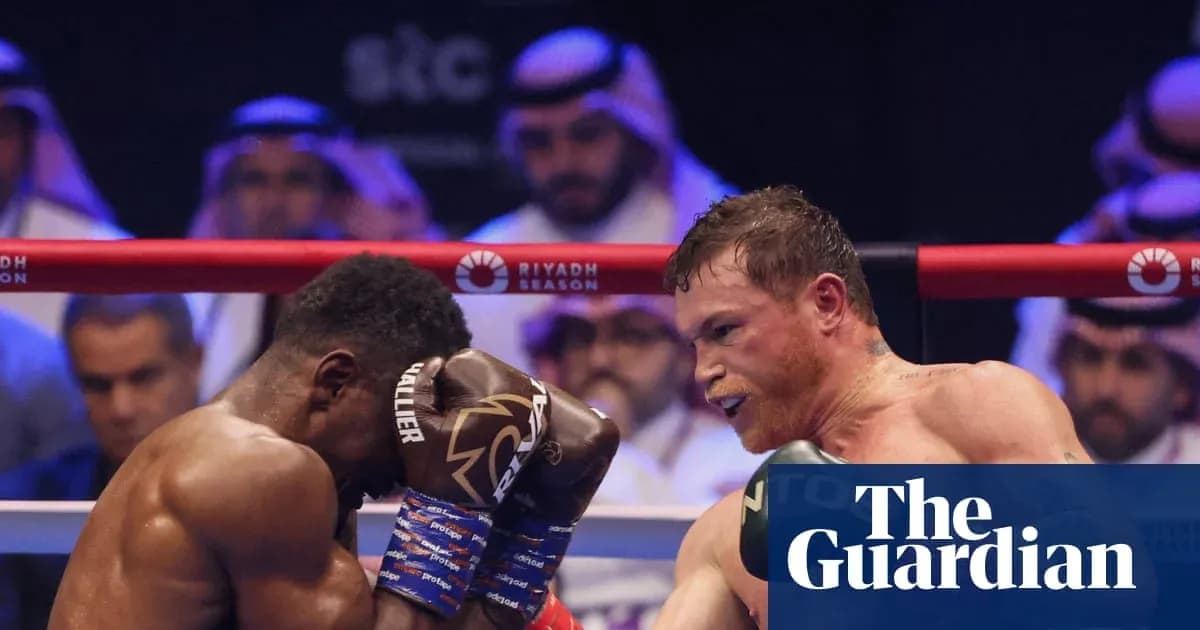
Saúl “Canelo” Álvarez walked back into boxing’s most dangerous neighborhood on Saturday night and took his old belt off the new man’s shoulder.
Under the bright lights of Kingdom Arena in Riyadh, with a nervous city still flinching at the sound of aircraft overhead, the Mexican reclaimed the WBC super-middleweight title with a unanimous decision over the previously unbeaten Christian Mbilli. The scorecards – 115-112, 116-111 and 117-110 – told one story. The way Álvarez fought told another.
This was about authority. About memory. About a 36-year-old champion reminding a younger, fresher man – and the rest of the division – that timing and craft can still drown youth and volume.
A fight in the shadow of missiles
The bout went ahead in a city on edge. Three weeks earlier, a missile strike on King Khalid International Airport had killed at least 12 people and injured more than 300. A second projectile hit a passenger terminal the following day. Airlines pulled flights. The kingdom’s sporting calendar wobbled.
Several events, including the star-studded Six Kings Slam tennis exhibition, were cancelled or pushed back. This one stayed on the bill.
Turki al-Sheikh, the powerful chairman of Saudi Arabia’s General Entertainment Authority, had already framed the night as a test of resolve, revealing that Álvarez personally vowed to fight in Riyadh “no matter what happens” and “fears nothing.” The rhetoric matched the backdrop: a Saudi-led coalition claiming to have intercepted missiles and drones launched by Iran-aligned Houthi forces, and a state determined not to let its new sporting empire blink.
In that climate, every ring walk felt heavier. Every risk, a little more real.
Canelo’s old weapons, still sharp
Álvarez had not fought in more than a year. His last outing, a unanimous-decision defeat to Terence Crawford in September 2025, had stripped him of his undisputed super-middleweight crown and raised the first serious questions about decline. Three defeats in a 69-fight career hardly signal collapse, but the aura had dimmed.
He walked out in Riyadh to reclaim it.
Mbilli, 31, Cameroon-born and French by flag, arrived as the man who had inherited what Álvarez once owned outright. Elevated to full WBC champion after Crawford left the division, he brought a record of 29 wins and one draw, his only blemish a split draw against Lester Martínez on the undercard of Álvarez-Crawford. He also brought a plan: pressure, numbers, and a refusal to give the older man space to think.
From the opening bell, Mbilli did exactly that. He marched forward, threw in bunches, tried to turn the ring into a phone booth. He wanted chaos.
Álvarez gave him clarity instead.
Leaning on his trademark counter-punching, he picked his moments, sat down on precise shots to the body and head, and made Mbilli pay for every reckless step. The Mexican’s feet were economical, his guard tight. When he did open up, it was with the kind of cold efficiency that has defined his peak years.
The pressure finally told in the seventh. As Mbilli surged again, Álvarez slipped and detonated a sharp uppercut that staggered the champion and sent a ripple through the arena. It wasn’t a knockdown, but it was a line in the fight: the clearest signal yet that the cleaner, heavier work belonged to the challenger.
From there, Mbilli never stopped coming. He refused to fold, kept throwing, kept asking questions. Álvarez kept answering them with straighter, sharper punches. The Frenchman’s volume looked brave; Álvarez’s accuracy looked decisive.
A title reclaimed, a legacy reinforced
When the final bell rang, there was little doubt in the judges’ minds. They sided unanimously with Álvarez, whose performance married veteran poise with just enough of the old menace. One set of eyes at ringside had it 117-110 – wide, but not outrageous for a fight where one man landed the cleaner, more telling shots.
The win pushed Álvarez’s record to 64 victories, three defeats and two draws. More importantly, it returned the WBC belt to his waist and nudged him back into the sport’s elite conversation at 168lbs, the division he once ruled as undisputed king.
In the ring afterward, he allowed himself a rare moment of sentiment.
“It’s something unbelievable. It feels like my first title,” he said in English. “Now, after 21 years as a professional, 16 years ago I won my first title. Now I won that title again. I’m so proud of my team.
“I love boxing. That’s why I’m here, because I still love boxing and I enjoy it a lot.”
The words carried the weight of the last year: the Crawford defeat, the whispers about erosion, the long layoff. This was not a man clinging on. This was a man insisting he still belongs.
Family at a distance, questions in the air
There was another layer to the night. Álvarez’s family – usually a visible, vocal presence around his biggest fights – stayed away.
“I also want to thank my family, who are watching me from afar today for the first time,” he said in Spanish. “My siblings, my parents, my daughters, my son, and my wife – who also couldn’t make it due to certain circumstances.”
He left it there. No direct mention of the missiles, the security briefings, the intercepted drones. No explicit link between the empty ringside seats and the threat hanging over Riyadh. The implication hovered anyway.
Mbilli, meanwhile, absorbed the first defeat of his professional career. The new champion who never truly got to enjoy the throne leaves with a record of 29 wins, one draw and now one loss, but also with credit for the way he fought: relentlessly, courageously, determined to test whether Álvarez still had the answers.
He found out the hard way that he does.
Saudi’s gamble, boxing’s crossroads
For Saudi Arabia, the night ticked another box in an ambitious project. Under Turki al-Sheikh’s stewardship, the kingdom has become a gravitational force in professional boxing, luring its biggest names with vast purses and grand stages even as human rights concerns and accusations of sportswashing shadow every announcement.
The missile strikes, the security lockdown, the cancelled events – all of it threatened that momentum. Álvarez’s willingness to walk toward the risk, to fight in Riyadh when others might have stepped back, will not be forgotten in those corridors of power.
Inside the ropes, the picture is simpler. The old champion has a piece of the crown again. The division he once unified now has its most bankable star back in possession of a major title.
After a night when missiles and drones shared the headlines with jabs and uppercuts, one question lingers over super-middleweight boxing: with his belt back around his waist and his pride restored, who dares to be next in line for Canelo Álvarez?