Canelo Alvarez Reclaims WBC Crown in Riyadh
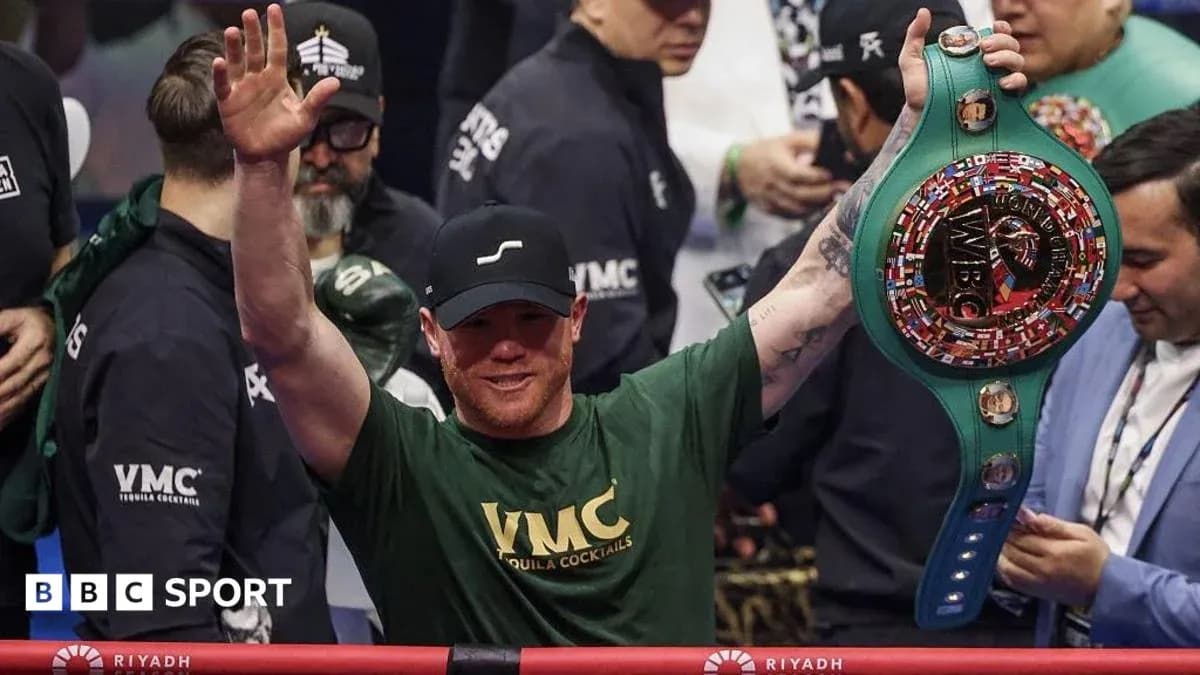
In a city braced for missiles as much as for punches, Saul “Canelo” Alvarez walked into the Riyadh ring with no belt around his waist and every question hanging over his legacy. Twelve rounds later, he walked out WBC super-middleweight champion again – and with the old aura very much intact.
Against the unbeaten Christian Mbilli, the Mexican star delivered a performance that felt familiar, almost nostalgic. Sharp eyes. Slick shoulders. Cruel counters. The judges saw it clearly too: 115–112, 116–111, 117–110, all for Alvarez.
At 36, in his 69th professional fight and more than a year removed from losing his titles to Terence Crawford, this was supposed to be the night we found out if the decline had truly begun. Instead, it became the night he reminded everyone why his name has sat near the top of pound-for-pound lists for over a decade.
A champion with something to prove
This was new territory for Alvarez. Not since 2015 had he entered a fight without a world title. Mbilli, Cameroon-born and Canada-based, arrived as the man with the belt, elevated to WBC champion in January and defending it for the first time. He also arrived unbeaten in 31 bouts, brimming with the kind of restless energy only an undefeated fighter carries.
He tried to use it from the opening bell.
Mbilli charged forward, hustling Alvarez to the ropes, letting his hands go in busy flurries. He peppered the Mexican’s guard, head and body, looking to drown the older man in volume. For a couple of rounds, the pattern held: Mbilli on the front foot, Alvarez watching, measuring, giving ground.
But the pressure lacked bite. When the counters came, they hurt.
Alvarez began to answer with that familiar coldness. He rolled with shots, slipped just enough, then snapped back with crisp hooks and right hands. When Mbilli landed, Alvarez shook his head, almost dismissive, then beckoned him on. The message was clear: you can touch me, but you can’t move me.
Class begins to tell
By the sixth round, the gap in quality had opened up. Mbilli still threw more punches, but Alvarez landed the ones that mattered. A couple of savage right uppercuts burst through Mbilli’s guard, the kind of shots that stop an aggressive fighter in his tracks and make him think twice about charging in so freely.
They didn’t quite break Mbilli’s spirit, but they bent his belief.
The rounds started to look the same. Mbilli marched forward, busy and brave, yet too often hitting arms, gloves, air. Alvarez picked his spots, timing his man as he walked in, turning him, making him pay for every mistake. The Mexican’s defence – the subtle head movement, the slight pivots, the calm in the pocket – looked like the vintage version many thought had faded.
Then came another setback for the defending champion. Docked a point for punches to the back of the head, Mbilli saw his uphill climb steepen. He kept coming, but the momentum had shifted decisively. Alvarez, now fully in control, began to cruise.
Fighting under a different kind of shadow
All of this unfolded against a backdrop that had little to do with boxing and everything to do with risk. In the days leading up to the fight, doubts swirled over whether it would even happen. Saudi Arabia’s growing conflict with Yemen’s Houthi movement had already forced other major events off the calendar.
Two days before the bout, Saudi Press Agency reported Civil Defence had intercepted two ballistic missiles over Riyadh. Earlier in October, a missile strike on King Khalid International Airport had killed 13 people and injured more than 300. The Six Kings Slam tennis exhibition disappeared from the schedule. So did the final round of the 2026 World Rally Championship and the 2026 Urban Cycling World Championships.
Combat sports stayed. The show went on. And in that charged setting, Alvarez reclaimed his place on the throne.
The finish and the future
Mbilli never stopped trying. He kept trudging forward, still throwing, still hoping to change the story with one big shot. In the closing stages he finally found a couple of sharp right hands, the kind that would have rattled lesser fighters.
Alvarez barely blinked.
His defence remained tight, his counters accurate, his composure unbroken. By the final bell, there was no real doubt. The scorecards confirmed what the eye had seen: this was the 64th victory of a four-weight world champion who still knows exactly who he is in a ring.
When it was over, the emotion caught up with him.
“It’s so difficult to explain,” Alvarez said. “It’s something unbelievable, this feeling. Like my first title. Thirty-one years as a professional. Sixteen years ago, I won my first title. Now, I won the title again. I’m so proud.”
He did not call out a next opponent. No shopping list of names. No immediate talk of revenge or unification. Just a simple plan.
“I’m going to rest. I’m going to keep learning. I’m going to keep working hard,” he said. “And right now I’m going to be a couple of weeks off and then come back.”
Back as champion. Back with questions answered, at least for now. The only mystery left is how long nights like this can continue for a man who has already lived several boxing careers – and still finds new ways to write his own story.