Canelo Alvarez Reclaims Title in Riyadh Showdown
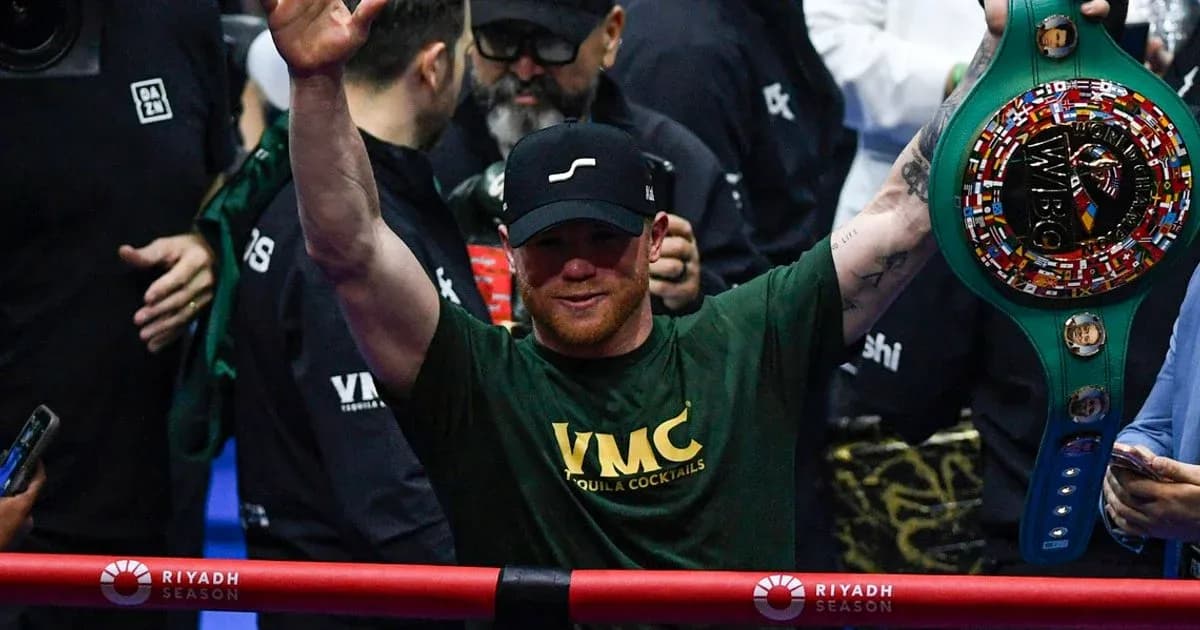
In a city living under the shadow of intercepted missiles and drones, Saul “Canelo” Alvarez walked into a Riyadh ring and chased something far more personal than money or legacy.
He went looking for his belt. And for himself.
Canelo back where he belongs
Twenty-one years into a brutal profession, with hundreds of millions already banked and his name already etched among the greats, Alvarez still fought on Oct 31 as if this were the night that would define him. For the first time in more than a year, the 36-year-old stepped through the ropes, stripped of his undisputed super-middleweight crown and of the aura of invincibility Terence Crawford had ripped away in September 2025.
Against Christian Mbilli, he took it all back.
Across 12 tense rounds, Alvarez leaned on the tools that built his empire: those sharp, venomous counters, the thudding body shots, the subtle defensive moves that make opponents miss by inches and pay in full. Mbilli pressed, hustled and swung in volume. Canelo answered with clarity.
The judges saw it the same way: 115-112, 116-111, 117-110. A unanimous decision. A world title reclaimed.
“It’s something unbelievable. It feels like my first title,” Alvarez said in the ring, emotion cutting through the noise. “Now, after 21 years as a professional, 16 years ago I won my first title. Now I won that title again. I’m so proud of my team.
“I love boxing. That’s why I'm here, because I still love boxing and I enjoy it a lot.”
Pressure meets precision
Mbilli arrived in Saudi Arabia unbeaten in 29 fights, with only a split draw against Lester Martinez on the Alvarez-Crawford undercard marring a perfect record. Elevated to full WBC champion after Crawford left the division, the Cameroon-born Frenchman carried the confidence of a man who believed the timing was right: Canelo older, coming off a rare defeat, the division’s balance of power seemingly shifting.
So Mbilli did what he does best. He walked forward.
From the opening bell, he tried to drown Alvarez under a wave of punches, throwing in clusters, forcing exchanges, refusing to give the Mexican a moment’s peace. The plan was obvious: raise the tempo, test the legs, test the lungs, test whether a 36-year-old with nothing left to prove still wanted to live in the fire.
The answer came in the middle rounds.
The pressure finally met resistance in the seventh, when Alvarez detonated a crisp uppercut that snapped Mbilli’s head back and sent him staggering. It wasn’t a knockdown, but it was a statement. Mbilli’s volume suddenly looked less imposing when the cleaner, heavier shots belonged to the man in front of him.
From there, Canelo controlled the geography of the fight. He picked his moments, dug to the body, and turned Mbilli’s aggression into opportunities. The Frenchman never stopped trying, never stopped coming, but the champion in waiting kept finding the shots that mattered.
A career re-centred
This win did more than add another belt to a crowded trophy cabinet. It reset a narrative.
Crawford’s unanimous decision over Alvarez in 2025 had been only the third defeat of Canelo’s professional career, but it cut deep. It stripped him of his undisputed status at super-middleweight, ended his reign as holder of all four major titles in the division and raised the inevitable question: was this the beginning of the end?
In Riyadh, under tight security after the Saudi-led coalition said it had intercepted Iran-aligned Houthi missiles and drones aimed at the capital, Alvarez answered with his gloves. While other events in the kingdom, including the Six Kings Slam tennis exhibition, were cancelled or postponed amid safety concerns, boxing’s biggest active draw stepped into a 25-square-metre ring and embraced the chaos.
He emerged with a rebuilt record of 64 wins, three defeats and two draws, and with a new champion’s belt around his waist. Mbilli, now 31, walked away with the first loss of his professional career and the harsh education that only elite level nights can provide.
Alvarez, though, walked away with something else: proof that, two decades on, the hunger still bites just as hard. The belt is back. The questions, inevitably, will follow.
At 36, how many more nights like this can he summon—and who dares to be next?