Cameron Brink Challenges Clickbait Culture in WNBA Debate
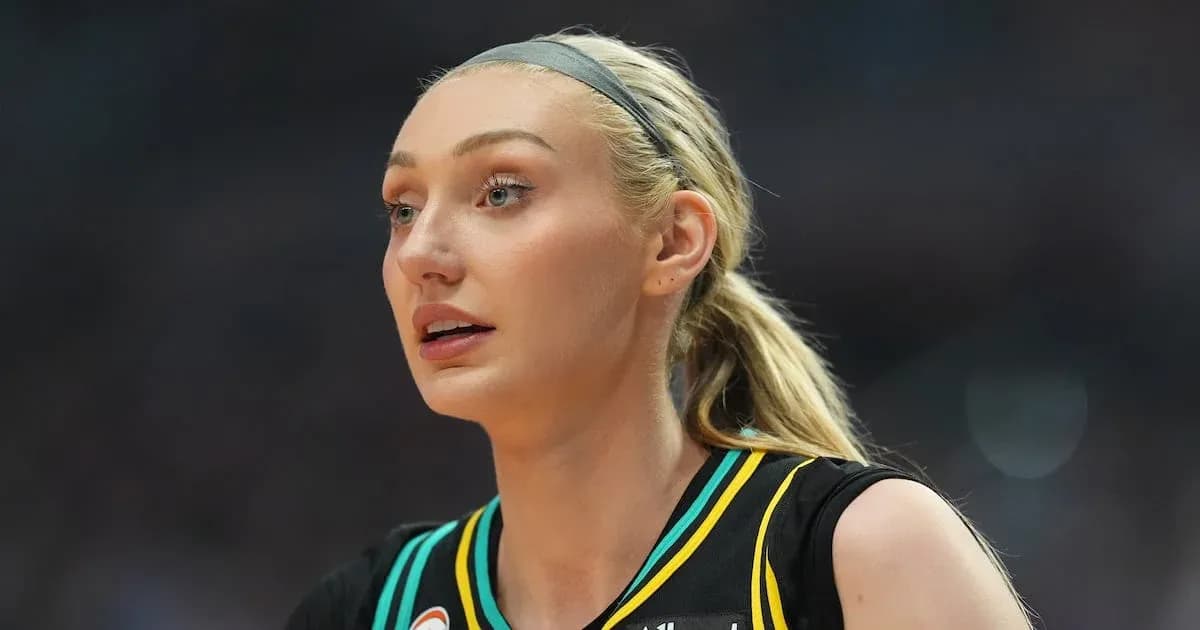
Cameron Brink has no interest in being polite about it.
The Los Angeles Sparks forward, one of the WNBA’s brightest young stars, has stepped directly into one of the league’s loudest off-court debates and stamped her position on it with force: the current uproar over trans players, she says, is manufactured.
Speaking to The Mirror’s Jarrod Castillo, the 24-year-old didn’t dance around the topic.
“When it comes to the trans issue... I think it’s a non-issue. I think it’s just people trying to come for the trans community and I just don’t stand for that,” Brink said, cutting straight through the noise that has swirled around the league in recent weeks.
This isn’t a theoretical conversation. It’s unfolding in real time around her sport.
Brink pushes back on “clickbait” culture
The latest wave of discourse has been stoked by a familiar set of names. Former NBA center Enes Kanter Freedom was escorted out of a Chicago Sky game on Sunday after a confrontation with Sky guard Natasha Cloud. Freedom, who logged 748 NBA games over 11 seasons, has teamed up with fellow ex-NBA player and 2024 GOP Senate candidate in Minnesota Royce White in a series of stunts aimed at the WNBA.
Both men have mockingly declared themselves transgender and vowed to enter the WNBA Draft, turning a complex and sensitive issue into a spectacle designed for social media engagement.
Brink didn’t bother with diplomacy when his name came up.
“I think what – I don’t even know what the f--k his name is – Enes Kanter, he’s a stupid piece of s--t,” she said. “And I think a lot of people think that and I think he’s just trying to stay relevant.”
She wasn’t finished.
“I think people are tuned in for the right reasons and it’s great that we can all talk about things that are important and hard and you can have your opinions on that,” Brink continued. “But taking something that’s a non-issue right now and just trying to use it for clickbait, for views, for likes and then targeting a vulnerable community is just really low.”
The word “clickbait” hangs over all of it. To Brink, this isn’t a genuine policy debate. It’s a performance, and the target is a community she believes already carries more than enough weight.
A debate without current WNBA participants
For all the noise, one fact sits at the center of Brink’s argument: there are currently no trans players in the WNBA.
The league has had just one openly trans and non-binary player in its 30-year history: Layshia Clarendon, who retired in 2024 after 11 seasons. Clarendon’s presence was historic, but isolated. The hypothetical scenarios that dominate TV segments and social feeds simply aren’t playing out on WNBA courts right now.
The latest round of commentary was sparked last month when ESPN ran a feature on Indiana Fever guard Sophie Cunningham, who expressed opposition to transgender girls and women competing in girls’ and women’s sports. That piece lit the fuse. Freedom and White’s mock declarations poured fuel on it.
Brink’s response lands as a direct challenge to that manufactured storm. To her, the conversation has drifted far from reality and deep into bad-faith territory.
A rising star unafraid of the microphone
Brink’s willingness to wade into a volatile cultural flashpoint is notable, not just because of what she said, but because of where she is in her career.
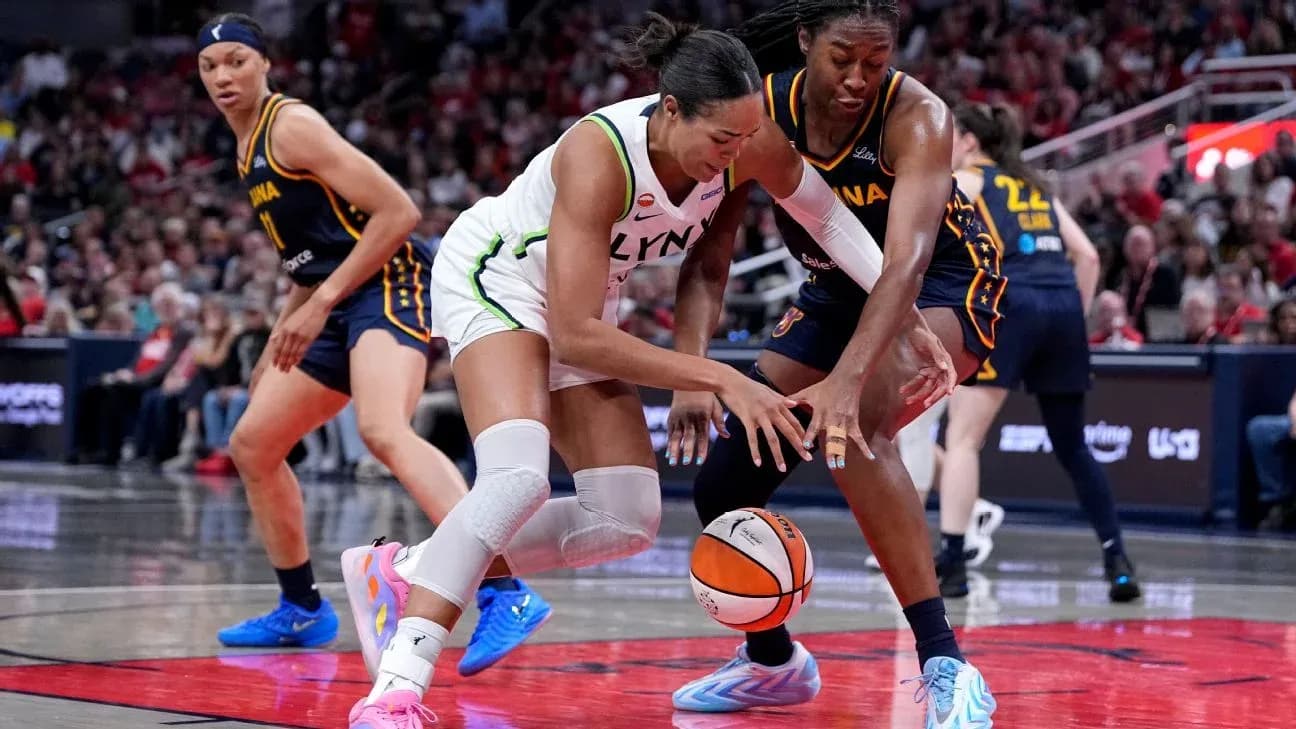
A native of Princeton, N.J., she entered the league with heavy expectations after a standout career at Stanford, where her blend of size, skill, and mobility made her one of college basketball’s most intriguing prospects. The Sparks made her the second-overall pick in the 2024 WNBA Draft, betting that she could be a franchise pillar for the next decade.
Three seasons in, she’s carving out exactly that kind of role. Through 28 games this year, Brink is averaging 9.4 points on .500 shooting, 5.0 rebounds and 1.7 assists in just 18.5 minutes per night. Efficient. Productive. Still with obvious room to grow as her minutes and responsibilities increase.
Most young players in that position choose the safe route off the court. They stick to clichés, keep their heads down, and let veterans handle the hardest questions.
Brink is choosing something else. She’s putting her name, her platform, and her reputation behind a stance that will draw as much criticism as praise.
In a league that has never shied away from social issues, that kind of clarity doesn’t just echo for a news cycle. It lingers. And as the WNBA’s profile surges and its culture wars grow louder, the question now is simple: how many more rising stars will decide, like Brink, that silence is no longer an option?