Chicago Bulls Rookie Caleb Wilson Injured: Fantasy Impact
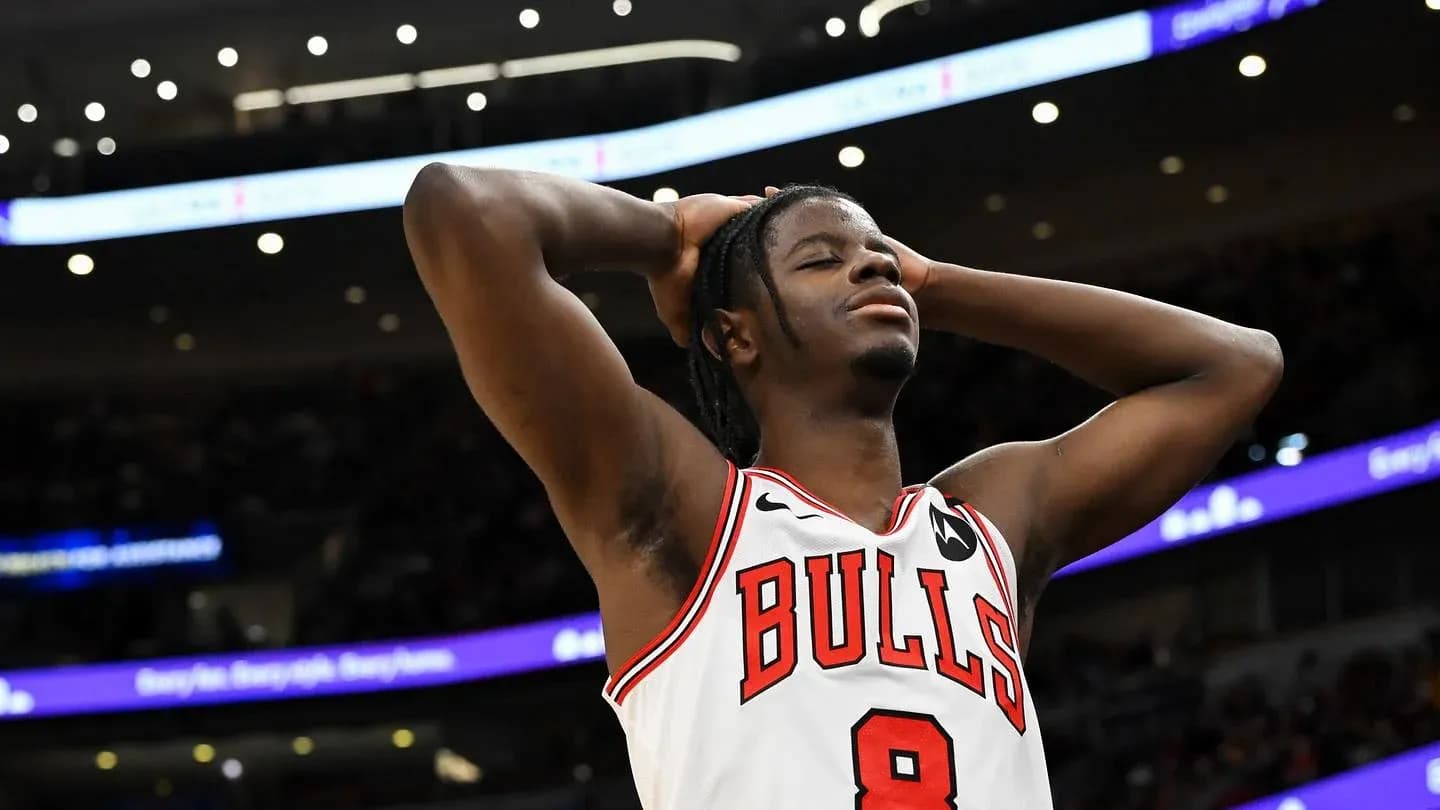
Chicago’s rookie revelation has been ripped out of the picture just as the story was getting good.
Caleb Wilson, the Bulls’ electric fourth overall pick and early Rookie of the Year frontrunner, fractured his hand in Wednesday’s loss to San Antonio and will undergo surgery. The timeline is brutal: four to six weeks on the shelf for a 1–9 team that had built its identity around him — and for fantasy managers who’d already started banking his numbers.
Before the injury, Wilson wasn’t just promising. He was producing like a star: 18.9 points, 6.2 rebounds, 1.9 assists, 1.8 steals and 0.9 blocks in 30.8 minutes per night. He took 16.2 shots a game, hunted passing lanes, protected the rim, and drove everything Chicago did on both ends.
Now all of that is gone in an instant.
Head coach Tiago Splitter is suddenly staring at a massive hole in his rotation and his playbook. You don’t simply replace that kind of two-way engine. You spread it around and hope the collective can keep you afloat.
For fantasy managers, that’s where the opportunity begins.
Buzelis steps into the spotlight
The clearest winner here is Matas Buzelis. The third-year forward now walks into a frontcourt stripped of its main option and will be asked to act like one.
With Wilson out, Chicago will lean heavily on Buzelis’s perimeter shooting, his ability to attack closeouts, and his length on defense. He’s built for multi-category production: points, threes, rebounds, plus a healthy mix of blocks and steals when he’s locked in.
The difference now is volume. His usage is set to climb, his minutes should be secure, and the leash on his offensive creativity gets a little longer. In standard 10- and 12-team fantasy leagues, that combination makes him a priority add, not a luxury.
The door has swung open. Buzelis just has to walk through it.
Smith’s chance to own the glass
The ripple effect doesn’t stop on the wing. In the frontcourt, Jalen Smith suddenly becomes a name to circle.
With Wilson out and Nic Claxton still dealing with early-season injury management, Smith is in prime position to soak up minutes. If Splitter trusts him in the 25-minute range consistently, the path is clear: rebounds, blocks, and enough floor spacing to matter.
He’s not a like-for-like replacement for Wilson, but he doesn’t need to be. He just needs to dominate his lane — clean the glass, contest everything, and knock down open looks. In deeper leagues, that profile makes him an immediate target. In shallower formats, he’s at least on the short list for anyone hunting big-man stats.
If Chicago’s season continues to spiral, Smith’s workload could only grow.
Giddey takes the controls
The biggest tactical shift comes in the backcourt. Wilson had been Chicago’s offensive engine through the first 10 games. Every possession seemed to orbit around him.
Now that responsibility falls squarely on Josh Giddey.
The Australian playmaker will be asked to initiate in the half court, push the tempo, and create easier shots for a group that just lost its primary scorer. Fantasy-wise, he’s already rostered almost everywhere, but expectations change now: more touches, more decisions, more box-score weight.
That should mean a bump in assists, steady rebounding from the guard spot, and a noticeable rise in scoring volume. In category leagues especially, his profile sharpens. Managers who were patient early could be rewarded with a stretch where Giddey quietly operates as a nightly double-double threat with upside.
Chicago needs his brain and his bravery on the ball. Fantasy managers need the numbers that come with it.
The supporting cast: minutes and margins
Behind the headline names, several role players suddenly find themselves closer to the heat.
Patrick Williams and Leonard Miller both stand to gain from Wilson’s absence, particularly at the four. Williams offers a familiar blend: low-end defensive stats, spot-up threes from the corners, and steady, if unspectacular, minutes. He won’t win a week on his own, but he can quietly patch holes.
Miller is different. His appeal lives in per-minute bursts — rebounding, scoring flurries, energy plays that tilt a second unit. In deep formats, that kind of upside is worth stashing on a watch list, especially if Chicago’s record forces Splitter to experiment more aggressively with youth and length.
On the perimeter, Norman Powell’s role sharpens even further. Already averaging 19.3 points per game, he becomes an even more important scoring valve with Wilson gone. As long as his back spasms don’t linger, Powell’s shot volume and green light should remain among the safest bets on this roster. For fantasy managers, that’s a sturdy scoring floor in a suddenly unstable offense.
Navigating the fantasy fallout
Wilson’s injury slices the momentum out of a thrilling start to his 2026–27 campaign, but the timeline matters. Four to six weeks points to a late-December return — well before the stretch run of most fantasy seasons.
The play is clear: stash, don’t panic-sell.
If your league offers IL/IR spots, Wilson belongs there, not on the wire. Use that flexibility to pounce on Buzelis, who carries the clearest path to a sustained breakout. Smith deserves immediate attention for anyone hunting boards, blocks and threes. Keep Miller on the radar in deeper setups, and lean into Giddey’s expanded playmaking and Powell’s scoring surge.
Chicago has lost its rookie star for now. The question is whether the pieces left behind can keep the season — and your fantasy roster — from collapsing with him.