
Bruno Fernandes Rejects Manchester United Again – Pochettino's First Challenge
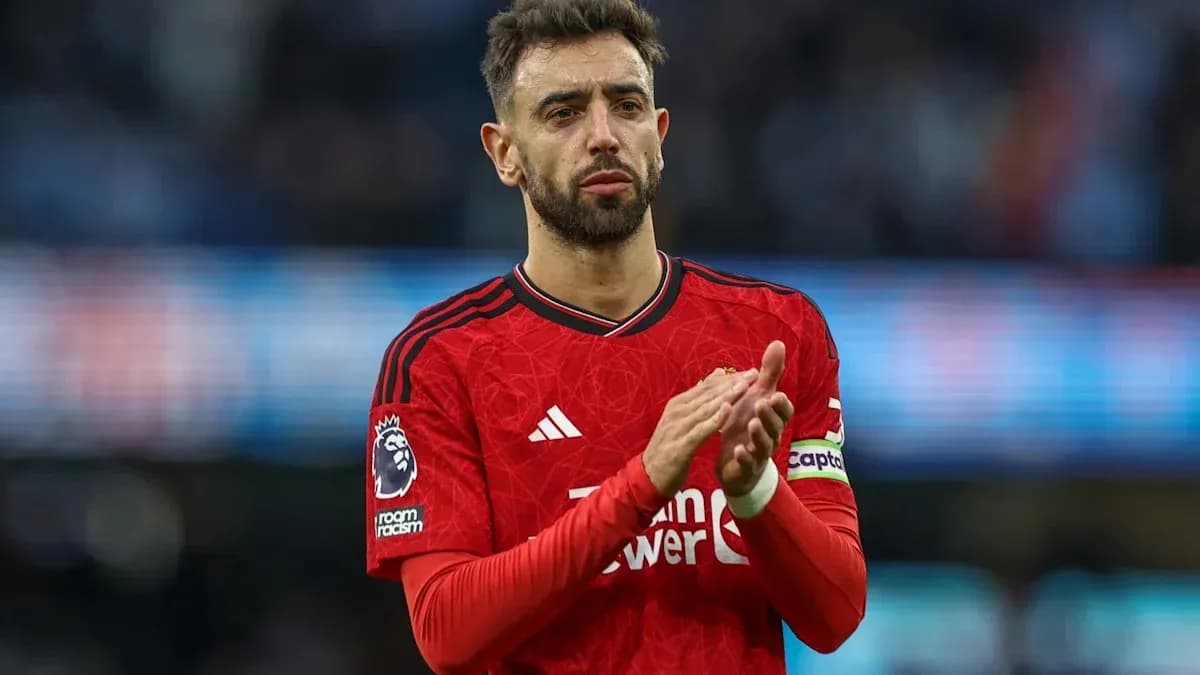
Bruno Fernandes has turned Manchester United down for a second time. No new contract. No mood music. Just another headache for a club already on the floor.
His current deal runs until June 2027, with United holding a 12‑month option that would take him to 2028. On paper, there is time. In reality, the timing could hardly be worse. Michael Carrick has just been sacked after the club’s worst domestic start in 40 years, United are in the relegation zone, and Mauricio Pochettino has not yet taken charge of a single training session, never mind a match.
His first game? Anfield. Liverpool away. 22 November. And he walks into a dressing room where the captain has just rejected improved terms. Twice.
Contract Talks That Refuse to Move
United opened discussions in the summer, riding the afterglow of Fernandes’ outstanding campaign, when he was named Men’s PFA Player of the Year and broke the Premier League assists record. The club put a new deal on the table. He said no. They came back with better terms. He said no again.
The exact moment of his latest refusal is unclear, but the pattern is obvious: both sides are digging in.
United want him to stay. They will keep talking about salary and length, and if no agreement is close by the turn of the year, the club is almost certain to trigger the one‑year option before 1 January. Without that, once the contract ticks into its final six months, Fernandes could sign a pre-contract with a foreign club.
For now, it is a stand-off. The captain who told Carrick he was committed is not yet prepared to commit on paper.
Como, Criticism and a Captain Under the Microscope
The mood around Fernandes shifted sharply after that Champions League defeat at Como last month.
He is usually measured with the media. Not that night. He openly questioned the tactical approach, spelling out that the staff had decided not to press man-to-man, to sit off, to “give them the ball” and wait for moments to win it back. It was detailed and pointed.
His words cut through the dressing-room walls and straight into the wider debate about United’s direction. Gary Neville did not hold back, calling the comments “horrific” for a captain, telling him to “read the room” and branding him an “excuse merchant” on his podcast. If that is what he says in public, Neville argued, what must be said when the cameras are off?
The consequences were immediate. Fernandes was left on the bench for the Premier League defeat to Bournemouth, only to return to the starting XI against Chelsea the following matchday. Carrick, already under pressure, refused to rule out dropping his captain in an emotional address before his dismissal.
Then came Roma. A comeback win, a moment of relief, and Fernandes fronted up again.
He insisted he had not been punished for the Como comments. He framed the benching as a football decision: he was not performing, the manager was right to act, and he accepted it. He railed against “a lot of lies” about a supposed clearing of the air with Carrick and stressed his belief in the manager, staff and players.
And then he underlined his own standards in the bluntest possible terms: it did not change his aim to win every “f***ing” game ahead of him.
For a fanbase searching for leadership, it was raw and revealing. For a board negotiating a long, expensive contract, it was another layer of complexity.
Why Neither Side Is Rushing
On one level, there is nothing unusual here. Big contracts rarely get done at the first or even second attempt. A player of Fernandes’ stature, in his early thirties, coming off a career‑best season, is entitled to push hard for his final major deal.
But the context matters.
Fernandes wants to compete for the biggest prizes. He also knows Pochettino well enough by reputation and almost joined him at Tottenham in 2019 before signing for United six months later. It makes sense that he wants to see what the Argentine can build, how quickly the team can be reshaped, and whether his own role remains central.
United, for their part, are wary of committing to a huge, long-term contract when his form has dipped from last season’s extraordinary level. He has still scored six times in 13 matches this campaign, but the all-action, relentless creator of last year has not always been on show.
Inside Old Trafford, Liverpool’s experience with Mohamed Salah’s last deal is a cautionary tale. A giant wage, a long contract, and a player whose output eventually dropped turned into a heavy financial weight. United do not want to repeat that mistake with a 32-year-old whose numbers, while still strong, are no longer historic.
So the club hesitates. The player waits. And the clock ticks.
A Club in Turmoil, A Manager Walking Into the Storm
All of this is playing out against a backdrop of chaos.
Chief executive Omar Berrada and director of football Jason Wilcox flew to Monaco this week to meet Ineos chief Sir Jim Ratcliffe over Carrick’s future. The Glazer ownership ratified the decision to sack the manager and replace him with Pochettino, who arrives from his role in the United States.
Carrick, already a divisive figure among supporters, took two days of training at Carrington while the hierarchy agonised over his fate. The delay only fuelled criticism from fans and from within the club about how he was treated and how decisions are being made.
Into that maelstrom steps Pochettino.
He inherits a relegation fight, a fractured mood, and a captain who has just rejected two contract offers. His first assignment is one of the most unforgiving fixtures in English football: Liverpool away, under the Anfield lights, on 22 November.
United can buy themselves time with the extension clause. They can keep talking, keep reassuring, keep insisting that Fernandes remains central to the project. But the dynamic has changed.
Pochettino’s first big victory at Manchester United might not come at Anfield. It might be persuading his captain that this is still a club worth tying his future to.





