
Bruno Fernandes Rejects Manchester United Contract Offer Amid Pochettino Era
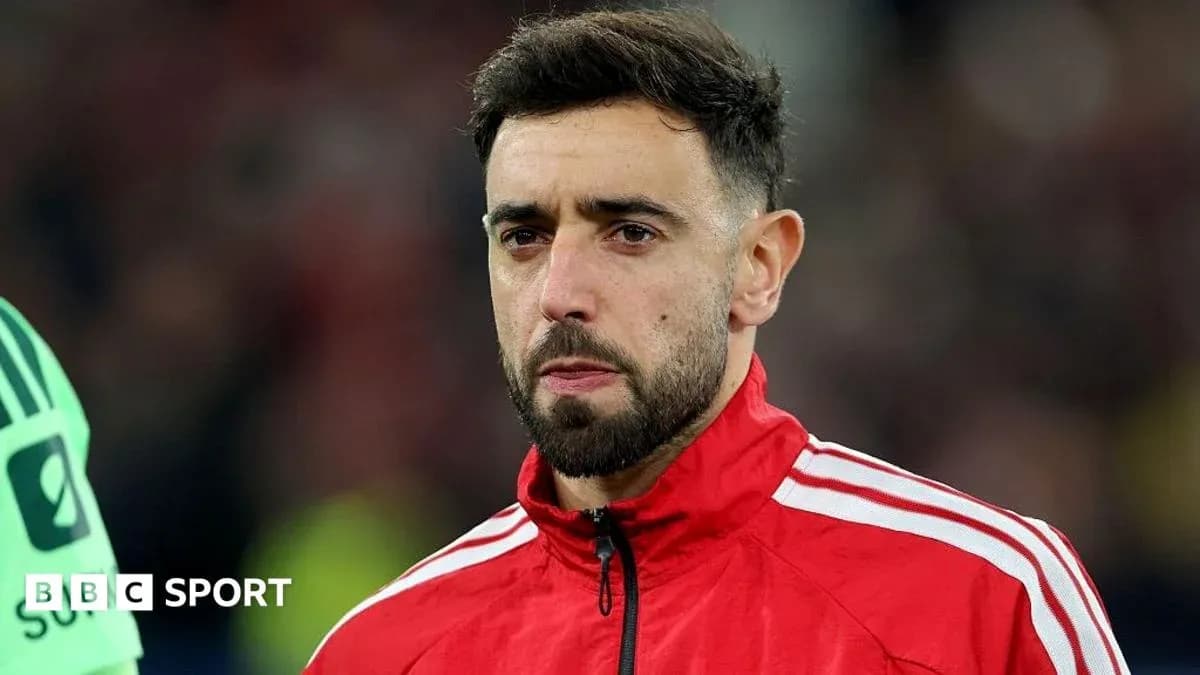
Bruno Fernandes has turned down a second contract offer from Manchester United, sharpening the focus on a captain whose future now hangs over a club already in turmoil.
The 32-year-old midfielder is entering the final year of his deal, which runs out at the end of the season. United hold a 12‑month extension option that would keep him at Old Trafford until 2028, and if fresh terms cannot be agreed, that clause is almost certain to be triggered before 1 January.
They may have no choice.
By that point, Fernandes would be free to sign a pre-contract agreement with overseas clubs, with his deal inside the final six months. For a player who has long seen himself on the biggest European stages, the timing matters.
Talks stall as United unravel
United have been in negotiations with Fernandes’ representatives for months, trying to tie down the Portugal international on a longer-term agreement. Twice they have gone to him. Twice he has said no.
It is not clear exactly when the second offer was rejected, but the sense around the club is that no quick solution is coming. Not now. Not with everything else falling apart.
Michael Carrick was sacked on Thursday after overseeing the club’s worst start to a domestic campaign in 40 years, another manager swallowed up by the churn. Into that chaos steps Mauricio Pochettino, currently in charge of the USA national team and expected to take over at Old Trafford, with his first game slated to be the trip to Anfield to face Liverpool on 22 November.
United hope that new leadership, a new voice, and a new project can shift the mood. They also hope it can shift Fernandes.
Pochettino factor and a decision delayed
There is history here. Fernandes came close to joining Pochettino’s Tottenham in 2019, only for that move to collapse. Six months later, United pounced and brought him from Sporting, where he had already built a reputation as a prolific, creative force.
Now the dynamic is reversed. Pochettino is the one expected to move, with Fernandes already in place, waiting to see what the Argentine can build.
For the captain, the calculation is simple and ruthless. He wants to compete for the biggest prizes. The clock is ticking on his prime years. Another season of promise has fizzled into frustration at Old Trafford, and he will want clear evidence that Pochettino can turn United from a drifting giant into a serious contender before committing the final stretch of his peak to the club.
Saudi Pro League sides tried to tempt him 18 months ago, but the prevailing sense has long been that Fernandes prefers to remain in Europe. That preference only increases the pressure on United to convince him they can match his ambitions.
United’s dilemma: pay up or hold back?
From the club’s perspective, this is not a straightforward “pay the man” situation.
United have watched Fernandes’ form dip sharply from the extraordinary heights of last season, when he broke the Premier League assists record and swept the major player of the year awards. That version of Bruno justified a huge, long-term commitment. The current one raises questions.
The cautionary tale is close to home. Liverpool pushed massive money onto the table to keep Mohamed Salah, a decision that has since become a heavy financial weight as his influence waned. United cannot afford to lock themselves into a similarly expensive, extended contract for a player who might already be past his peak output.
So they negotiate. They push numbers across the table. Fernandes pushes them back.
A stand-off with a deadline
On the pitch, Fernandes has still produced flashes: six goals in 13 matches this season underline his enduring importance to United’s attack. Off the pitch, his contractual situation has become a strategic fault line.
In theory, this should be routine. Big players reject first and second offers all the time. Deals are rarely done at the opening bid. The back-and-forth is part of the game.
This one feels different because of timing, context and risk.
United can delay a definitive outcome by activating the 12‑month extension, buying themselves time and protecting his transfer value. Fernandes can delay his own decision, watching closely how quickly Pochettino can impose structure, identity and belief on a squad that has lost all three.
The stand-off is not yet a crisis. Not yet.
But as the new manager walks into a fractured dressing room and a fanbase demanding more than promises, one question will linger over every performance, every result, every misstep: is Bruno Fernandes willing to pin the rest of his prime to this version of Manchester United?





