
Bruno Fernandes: A Contract Gamble Manchester United Cannot Afford
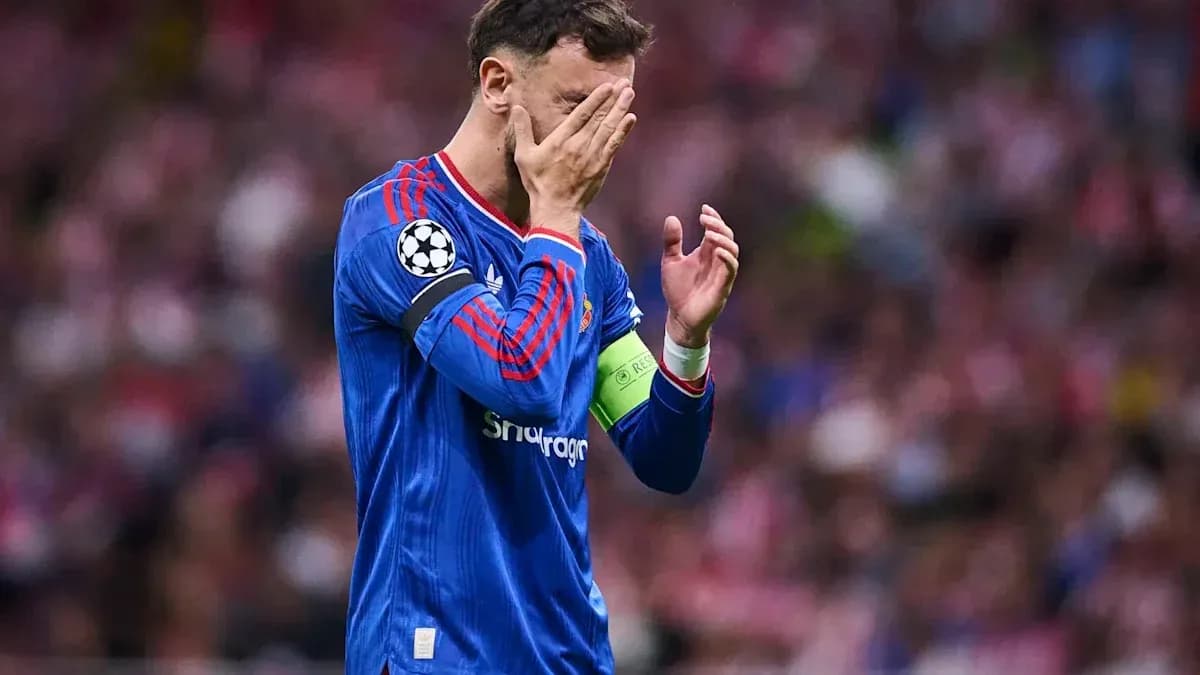
At a club drowning in problems, Manchester United have somehow managed to create another one. This time, it’s about the one player they can least afford to mishandle.
Bruno Fernandes, captain, creator-in-chief and lightning rod for almost everything that happens at Old Trafford, has rejected a second contract offer. His current deal runs to June 2027, but the negotiations around an extension have stalled. For a club already wobbling under the weight of years of missteps, this is not a side issue. It is a test of what Manchester United want to be.
Chaos Above, Instability Below
The backdrop is toxic. The Glazers remain deeply unpopular, accused by their own supporters of not understanding how to run an elite football club. On the touchline, the churn has continued. Michael Carrick’s dismissal made him the 12th manager – permanent or interim – to depart since Sir Alex Ferguson retired. Promoted from interim to full-time and gone inside a year, he joins the short, unhappy list of coaches who barely lasted a season.
His exit followed United’s worst league start in 40 years. The club responded by turning to Mauricio Pochettino, handing him the keys to yet another “rebuild”, this time with the hope that the former Chelsea and Tottenham manager can finally restore order, identity and relevance in the title race.
Yet the squad he inherits is still misshapen. Recruitment has been expensive but erratic. There is no settled goalscorer since Cristiano Ronaldo left in November 2022. Key positions remain weak. And right at the centre of it all sits a contract saga involving the player who so often drags United to respectability.
A Captain Holding the Cards
Fernandes has already turned down one offer in the summer and another more recently. That double rejection tells its own story: the two sides remain far apart on what his next deal should look like.
On the pitch, his importance is not in doubt. Six goal contributions in nine Premier League games this season, including a hat-trick against Ipswich, underline a familiar pattern. Even when United misfire, Fernandes is usually the one stitching attacks together, forcing the issue, keeping them competitive when the rest of the team looks lost.
Since arriving in 2020, he has amassed over 200 goals and assists across all competitions. He is the captain, the creative hub, the player who demands the ball when others hide. Losing that, for any reason, would be brutal. Losing it for nothing would be negligent.
The Clock, the Clause and the Threat of a Free Exit
United do have some protection, but also a looming headache.
Fernandes signed his current contract in August 2024, tying him to Old Trafford until June 2027. Under FIFA rules, once a player enters the final six months of his deal, he can negotiate a pre-contract with clubs outside his current country. For Fernandes, that tipping point would arrive on 1 January 2027.
Let him reach that stage and foreign clubs could move early, line up a free transfer and strip United of their captain without a fee. For a player of his creativity, leadership and output, the financial and sporting loss would be enormous.
United, though, hold a unilateral option to extend his deal by 12 months, pushing the expiry date to June 2028. Trigger that clause before he enters the final six months and the pre-contract threat disappears. It would buy time – for Pochettino to shape his team, for INEOS to map a strategy, for fresh talks to resume.
But there is a cost. Using a club option is legal and common; it can also feel like a power play. After everything Fernandes has given since 2020, enforcing an extension instead of reaching a mutual agreement risks souring a relationship with the dressing-room leader who has carried this side through some of its bleakest nights.
Money, Years and the Fear of Regret
Strip the story back and the argument is familiar: salary and contract length.
Fernandes will be 33 next year. United want to avoid tying themselves to a long, expensive deal for a player entering the natural physical decline years. INEOS, now driving football operations, prefer shorter commitments. Fernandes, by contrast, believes – with justification – that his status and contribution merit a contract that reflects his standing.
He has every reason to think that way. Last season, he was the standout performer in a troubled campaign, dragging United into the Champions League and sweeping the major individual honours: FWA Footballer of the Year and PFA Players’ Player of the Year. His 21 Premier League assists set a new single-season record. In a malfunctioning team, he was the one constant.
United’s caution is not entirely irrational. They have seen what can happen when big money meets age and decline. Liverpool’s decision to hand Mohamed Salah a lucrative two-year extension in April 2025, on the back of a 29-goal, 18-assist league campaign, has since been questioned as his output dipped. Clubs at this level are scarred by such deals.
That example looms over the Fernandes talks. Commit huge wages into his mid-30s and United risk a similar scenario if his numbers fall away. Refuse to do so and they risk losing a player whose influence still defines their attack.
Still the Brightest Light in a Dark Season
Even in this difficult campaign – United languishing in the relegation zone, performances veering from flat to chaotic – Fernandes’ importance keeps resurfacing.
He inspired a Champions League comeback against Roma with a goal and an assist, then contributed again in the draw against Aston Villa. These are the moments that have become his trademark: when the game tilts away from United, Fernandes forces it back.
Yes, his form has not been flawless. There have been stretches where his decision-making has dipped and his influence has waned compared with last season’s relentless consistency. Reports of disagreements with Carrick over tactics, particularly after the 4-1 humiliation against Como in the Champions League, have added another layer to the narrative around him.
But the broader picture remains the same. When United find any kind of rhythm, Fernandes is usually the one conducting it. When they are on the floor, he is often the first to react.
Three Roads, Three Risks
From here, United’s options are clear – and uncomfortable.
- Give him the deal he wants. Back him as the central figure in Pochettino’s rebuild, offer a more attractive long-term contract and accept the risk that his performances may dip in his mid-30s. The upside is obvious: a happy captain, a stable dressing room, continuity of leadership and creativity. Pochettino would know that in the tightest games, he still has a proven match-winner.
- Trigger the one-year extension. Activate the clause, keep him until June 2028 and buy time. This would prevent a free exit in 2027 and allow INEOS and Pochettino to judge his trajectory more calmly.
- Cash in next summer. The most brutal option: sell him while his value remains high, end the saga and reshape the squad. There would be no shortage of suitors – top European sides and Saudi Arabian clubs would inevitably circle a player of his pedigree.
Yet selling him would leave a huge hole. Replacing his combination of output, personality and Premier League know-how would demand major investment and flawless scouting. There is no guarantee United would get it right.
Whichever path they choose, this is no longer just a contract negotiation. It is a statement about what kind of club United intend to be under INEOS and Pochettino.
A Divided Fanbase, a Singular Question
The debate among supporters reflects the wider confusion. Some insist United must do whatever it takes to keep their captain. Others see him as part of the problem – too emotional, too reliant on a specific tactical framework, too quick to complain, too focused on the spectacular rather than the collective.
Both views carry some truth. His on-pitch frustration can inspire or irritate. At times it channels standards; at others it spills over into counterproductive moaning. But when the noise fades, one hard question remains.
Who replaces him?
Not in theory, not on a scouting report, but in reality. Which realistic target can walk into Old Trafford and replicate the goals, assists, chance creation and responsibility Fernandes has shouldered for years? Which player can do that while also understanding the unique pressure of Manchester United and the Premier League?
Lose him, and United don’t just need a new No. 10. They need a new captain, a new reference point, a new emotional barometer for a team that already struggles for identity.
The Real Decision
The most pragmatic route may be the simplest: convince Fernandes to commit to at least the next phase of the Pochettino era. Secure his immediate future, give the new manager a season or two with his captain at the heart of the project, and use that time wisely.
If, during that period, Pochettino decides the team must evolve beyond Fernandes, United can plan a succession properly – identify, recruit and bed in a long-term heir rather than scrambling in the market under pressure.
Because this is the real issue. It is not just whether United should keep or sell Bruno Fernandes. It is whether they have any coherent plan to replace everything he brings if he walks out of Old Trafford – and whether a club that has spent a decade lurching from one short-term fix to another is finally ready to get this decision right.





