Bronny James Struggles in Third NBA Season
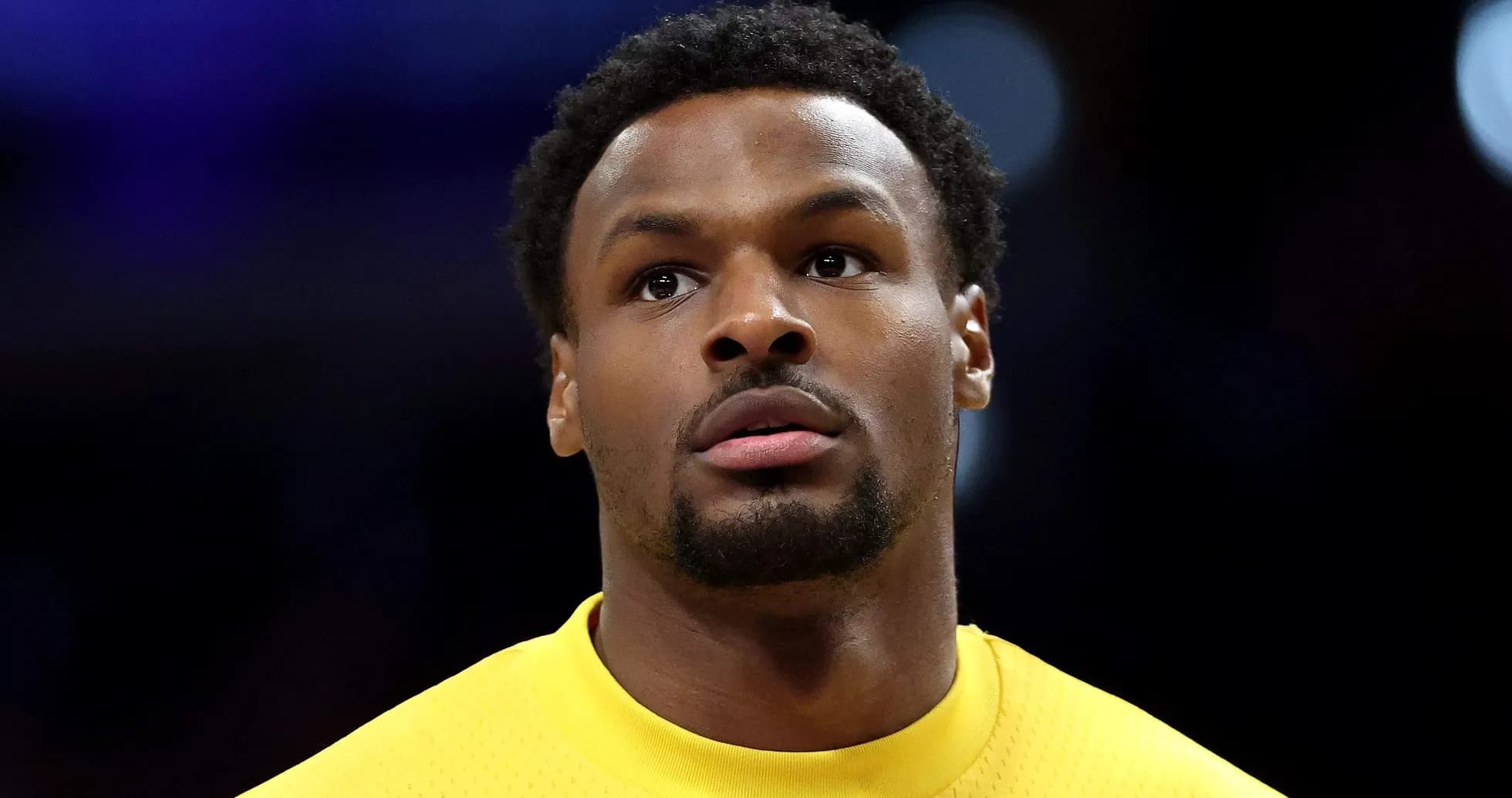
The surge never came.
A few games into his third NBA season, Bronny James has not carried over the spark he showed late last year. The flashes that briefly quieted the noise around his name have faded, and in Los Angeles, the scrutiny always rushes back twice as loud.
At 22, James is no longer the wide-eyed rookie trying to find his footing. He’s a rotation guard on a team with championship ambitions, playing under a head coach in JJ Redick who has made it clear that the bar for the Lakers’ backcourt is much higher than what he’s getting from his reserves. So far this season, James has been part of the problem, not the solution.
A Roster Squeeze With One Obvious Name
The Lakers sit at the full 15-player limit. Any move for outside help comes with a human cost, and everyone around the team understands what that likely means.
The front office is expected to hunt a trade first, ideally for a big man to spell Walker Kessler. But the more the backup guards struggle behind Luka Doncic, the louder the internal and external murmurs become about adding a veteran ball-handler.
That’s where an old name resurfaced.
On a recent episode of “Buha’s Block,” Lakers reporter Jovan Buha fielded a listener’s question about a possible reunion with D’Angelo Russell, now with the Shanghai Sharks in the Chinese Basketball Association. The idea is simple: bring back a familiar, experienced playmaker to steady the second unit and take some of the creative burden off Doncic.
The complication is just as simple.
“You’d have to waive (Jaden) Hardy or Bronny, and realistically it would be Bronny because Hardy, they’re gonna try and flip due to his contract,” Buha said.
There was no drama in his tone, just a blunt read of the situation. If the Lakers do move for a free agent guard, James’ roster spot is the one that makes the most sense to clear. Hardy still holds trade value. Bronny, right now, does not.
Buha acknowledged that a Russell return is technically on the table. “Technically, yeah,” he said of the possibility of bringing back the 30-year-old former No. 2 pick.
Then came the reality check: “I don’t think they will though.”
The fact that the scenario is even being discussed publicly by a plugged-in reporter tells you plenty about where James stands. His place on the roster is no longer a given.
Redick’s Patience Wears Thin
The frustration isn’t just theoretical. It’s showing up in Redick’s post-practice comments and in the way he talks about his third-string guards.
“Unacceptable.”
That was Redick’s word, relayed by Buha on X, to describe the inability of the Lakers’ third unit to run the offense in fourth quarters. This isn’t about highlight plays or individual numbers. It’s about basic organization, structure, competence when the starters sit.
Redick also pointed the finger at himself and his staff, saying they need to do a better job of reinforcing offensive principles and keeping the group organized. But the subtext is clear: the players on the floor aren’t executing, and the coach isn’t going to shield them from criticism.
James is squarely in that group.
He entered the season having publicly set a goal: improve as a backup ball-handler, become a more reliable steward of the offense when Doncic rests. It was a realistic, focused target for a young guard still carving out a role.
So far, he has fallen well short of it.
A Backcourt Built on Two, Searching for a Third
The top of the Lakers’ guard rotation is not the issue. Doncic and Austin Reaves are both averaging career highs in points, driving the offense and carrying the scoring load night after night. When they’re on the floor, Los Angeles looks like the contender it wants to be.
The problem comes when they sit.
Behind them, the cluster of James, Hardy, Collin Sexton and Quentin Grimes has sputtered. The second and third units have not provided control, tempo, or reliable shot creation. Possessions drift, spacing collapses, and opposing defenses swarm Doncic when he’s back on the court, unafraid of what happens when the ball leaves his hands.
When games tighten in the fourth quarter, contenders lean on trust. Right now, Redick doesn’t trust his reserve guards to manage those moments.
That’s the context in which every Bronny James minute is being judged. Fair or not, he’s no longer evaluated as a long-term project. He’s evaluated as a piece on a win-now roster.
The Weight of a Name, the Reality of a Role
Very few around the league expected James to make a massive leap in Year 3. He was a second-round pick for a reason, and his development curve was always going to be gradual. But he did come into this season with slightly higher expectations after his late-season push last year.
Those expectations haven’t been met.
The whispers among some fans have grown into open calls: move on, use the roster spot on someone who can help now. James’ contract status only sharpens the conversation. The Lakers hold a team option for the 2027-28 season, a built-in decision point that suddenly feels a lot closer than the calendar suggests.
This is the cold side of the NBA. Names, narratives, and family ties don’t run the offense. Production does. Reliability does.
For Bronny James, the next stretch of games won’t just be about finding rhythm. They may determine whether his future in Los Angeles extends beyond this season—or whether the Lakers decide that his roster spot is simply too valuable to wait on any longer.