Brighton & Hove Albion: From Survival to European Dreams
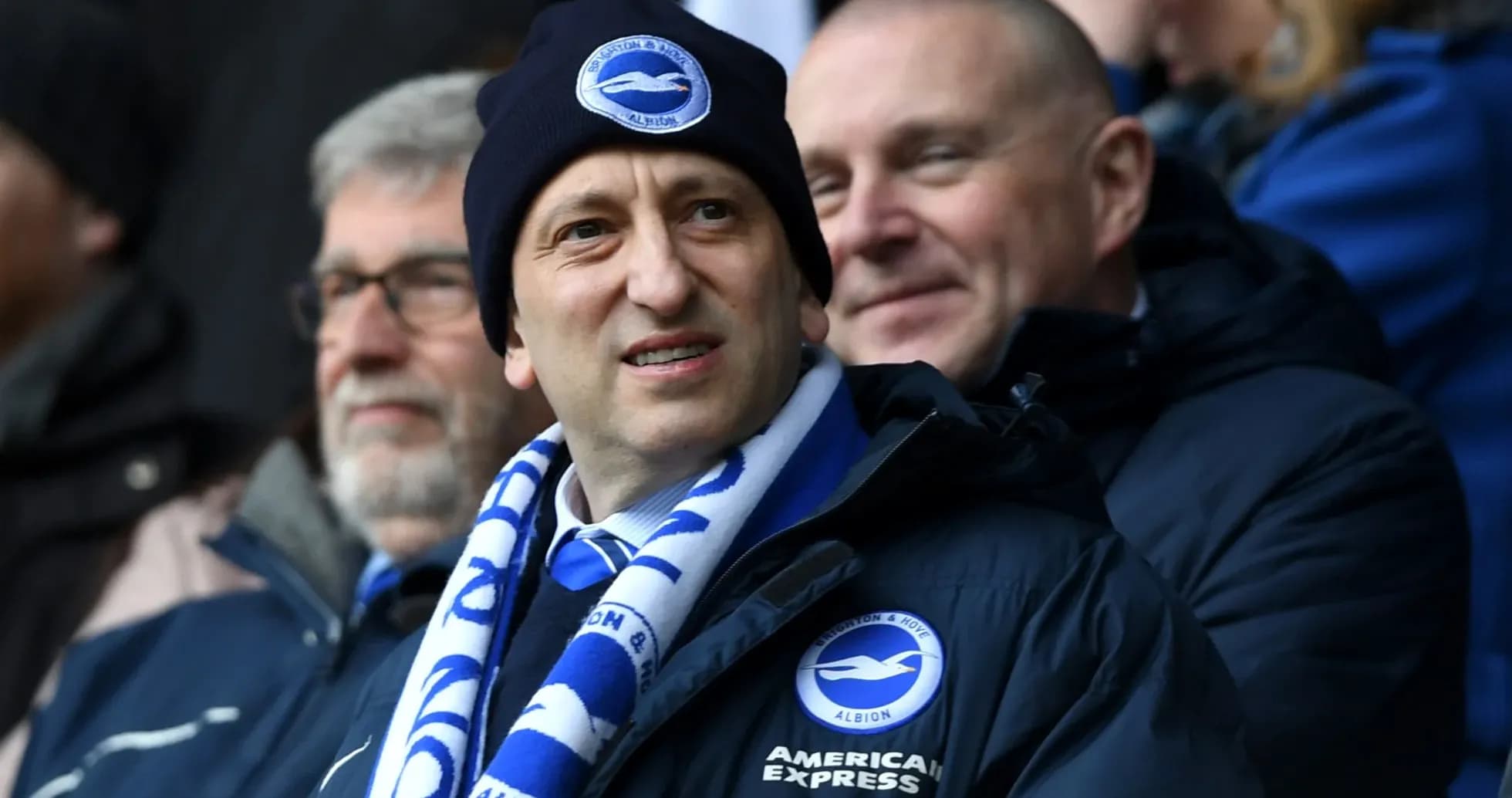
There was a time when Brighton & Hove Albion were not dreaming of Europe. They were wondering if they would exist at all.
Around the turn of the century, the club drifted through English football as a cautionary tale. The Goldstone Ground was gone. Home became a relative term: first a temporary exile to Gillingham, then the makeshift surroundings of the Withdean Stadium, an athletics track dressed up as a football ground. Crowds squinted through the rain and the running lanes and clung to the idea that something better might one day arrive.
It did. His name was Tony Bloom.
From marches on the seafront to a new era
Before Bloom, there was survival. Barely. Former manager Mark McGhee remembers the slog vividly, and his memories now sit neatly alongside the club’s own curated history in the new “Brighton & Hove Albion: Stand or Fall” gallery, opened as part of the club’s 125-year celebrations.
McGhee recalls the fight just to get a stadium signed off: Dick Knight’s campaigns, marches along the seafront, speeches and lectures pleading for planning permission. Brighton finally got the green light.
Then reality bit.
“We got the permission, but then had no prospect of building it,” McGhee told GOAL. The dream existed on paper, not in concrete or steel. Brighton had the right to build, but not the means.
That changed in 2009 when Bloom, a lifelong supporter, stepped in. At first, many assumed he would simply pay for a new ground. A generous backer, nothing more. McGhee is clear: they misjudged him.
They did not see the scale of his ambition. They did not grasp that the stadium was only the first piece. Bloom brought a vision that stretched far beyond a gleaming new home: a top-class training ground, modern infrastructure, a structure capable of lifting Brighton from League One strugglers to established Premier League operators.
He has done exactly that.
The mathematical wizard who backed his club
Bloom, a former sports gambler and poker player, had been a whispered name around the club long before he took control. McGhee remembers Friday lunches at Topolino’s in Brighton with then-chairman Dick Knight and director Ray Bloom, Tony’s uncle. The uncle would talk about his nephew, the “mathematical wizard,” long before anyone imagined he would become the architect of Brighton’s modern era.
The Bloom family’s ties run deep. The Harry Bloom lounge at the Amex is a reminder that this is not a billionaire parachuting in for a vanity project. It is a family steeped in the club’s story, now writing its most successful chapters.
“He’s as much, I’m sure, done this for his family as he has for the Brighton public,” McGhee said. You sense that matters in Brighton, a club that almost lost everything and has not forgotten it.
From League One to the Premier League in seven seasons. Nine straight years in the top flight. A place in Europe once again, this time in the Conference League. For a club that once scratched around for transfer funds and stadium drawings, it is a transformation that would have sounded fanciful two decades ago.
Chasing the silver that still eludes them
Brighton’s history is not empty. There are third and fourth tier titles, a Community Shield, and the near miss of the 1983 FA Cup final. Yet the club now moves with a different kind of intent. The target is no longer just stability or the odd cup run. It is a serious piece of silverware.
McGhee is convinced Bloom is not here to play the benevolent owner. He is here to win.
“I think that Tony's not in this to be a generous benefactor. I think he wants to win stuff, and he's putting things in place to create a team that can,” McGhee said. The foundations are visible: smart recruitment, a clear playing identity, facilities that belong to a club operating at the sharp end of the game.
McGhee is realistic about the Premier League. “I don't think they have a chance of winning the Premier League,” he admitted, but he sees a different path to glory. With the right draw and a bit of luck, Brighton could easily find themselves in an FA Cup or League Cup final. They have flirted with that level already. He calls it “the inevitable progression.”
The Conference League offers another route. Brighton have been paired with Panathinaikos and Getafe, with recent history showing exactly what is possible. West Ham, Chelsea and Crystal Palace have all tasted European success or deep runs from similar platforms. Brighton do not enter this competition as tourists.
A club that remembers where it came from
The new permanent gallery at Brighton Museum & Art Gallery, opened on August 15, captures this journey. “Stand or Fall” is more than a slogan; it is a lived experience. The exhibition pulls together old shirts, treasured memorabilia, archive footage and personal stories to chart 125 years of a club that has refused to disappear.
Visitors walk through the triumphs and the crises, the promotions and the relocations, the defining moments that embedded Brighton & Hove Albion into the fabric of the city. The nomadic years. The protests. The Amex rising from the ground. The leap into Europe.
This is what makes the present so compelling. Brighton are not just a data-savvy, well-run Premier League club. They are a survivor with scars, now stepping into competitions that once felt reserved for others.
The tests keep coming. Manchester United await in the Carabao Cup third round, a heavyweight tie that will reveal how seriously Brighton can push on multiple fronts. European nights bring Panathinaikos and Getafe, and with them, the chance to turn careful planning into something tangible and gleaming.
From the Goldstone’s demise to Gillingham and the running track at Withdean, to the Amex lights and European football: Brighton have already rewritten their story once.
The next chapter asks a simpler, sharper question: after everything they have built, is it finally time they brought a major trophy back to the south coast?