
Brazil Chaos as Raphinha and Ancelotti See Red Against Japan
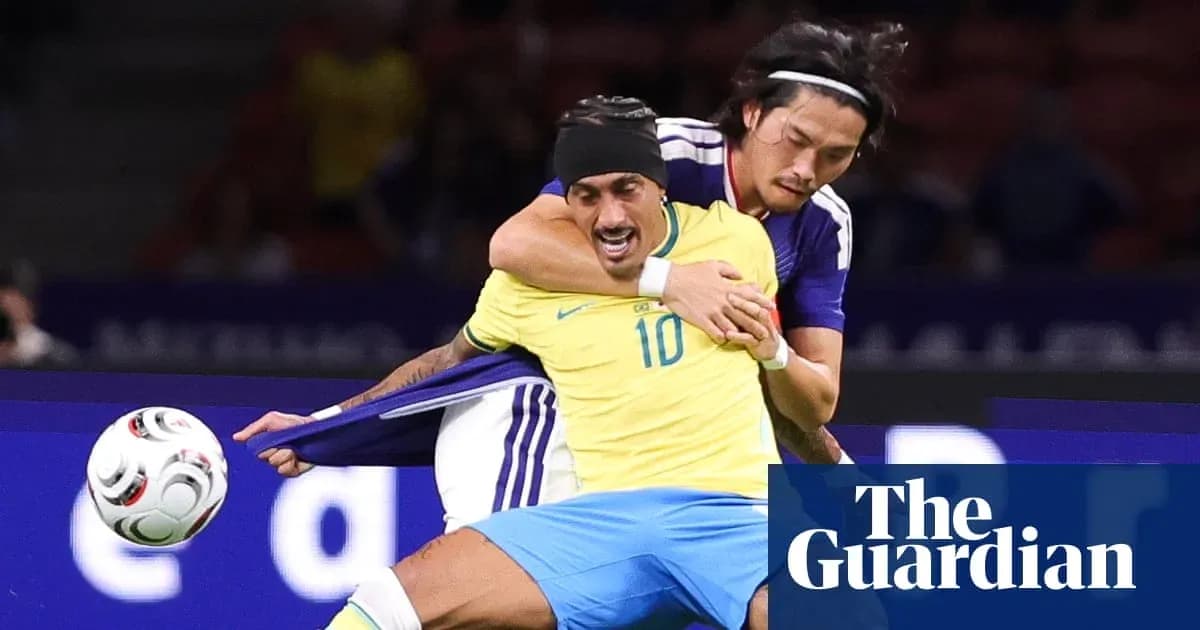
Brazil’s night in Singapore ended in chaos. A five-goal thriller with Japan slipped away in stoppage time, tempers boiled over on the touchline, and both Raphinha and Carlo Ancelotti were sent off as the Seleção crashed to a 3-2 defeat in an ill-tempered friendly.
It had all started badly enough.
Japan tore into Brazil and were two up inside 20 minutes, Takefusa Kubo and Keito Nakamura punishing a disjointed, distracted back line. Brazil looked open, uncertain, and a step slow against a Japan side that treated the friendly like a statement.
Vinícius Júnior dragged them back. He halved the deficit in the 33rd minute, a reminder that Brazil still possess individual brilliance even when the structure around it creaks. His equaliser on 75 minutes felt like a release: Brazil level at 2-2, the momentum finally theirs, Japan pinned back and clinging on.
Then came the sting.
Deep into stoppage time, Tatsuhiro Sakamoto struck what would prove the winner, a late goal that sparked fury on the Brazil bench. The Japan players wheeled away; the Brazilians exploded. Raphinha, already substituted after 71 minutes, left the technical area to protest on the touchline and saw red. Ancelotti followed him down the tunnel, dismissed in the closing seconds of a game that had slipped from his grasp.
A friendly in name only, and a night that leaves more questions than answers for Brazil.
Argentina’s New Era Begins
In Buenos Aires, the mood was different but no less raw. Argentina stepped into their first match of the post-Lionel Messi era and walked straight into a 2-1 defeat at home to Uruguay in the clásico rioplatense.
This was supposed to be a new chapter. Lionel Scaloni had just extended his contract through 2030, a long-term vote of confidence for the coach who took Argentina to a World Cup final. Yet the first page of this new story opened with an own goal and a stadium that didn’t quite feel full, or ready.
La Bombonera, usually a cauldron for the national team, fell short of a sellout. The absence said as much as the noise. Messi’s retirement in early October still hangs over everything; the fans turned up in their albiceleste shirts, most of them bearing the familiar No 10, but on the pitch that number stayed empty.
Scaloni made a deliberate choice not to assign the shirt. With no clear successor anointed, and no obligation to use it, he left the jersey vacant, a silent acknowledgement of the void Messi leaves behind.
On the pitch, that void was obvious.
Argentina lacked the explosive, surgical edge in the final third that Messi supplied for more than a decade. Nicolás Paz and Thiago Almada tried to knit moves together, to find the gaps Uruguay offered, but the killer pass never quite arrived often enough.
Uruguay, under new coach Diego Forlán, showed no such hesitation after the break. Leonardo Balerdi’s own goal in the 48th minute stunned the home crowd, and when Maximiliano Araújo doubled the lead five minutes later, Argentina suddenly looked like a team still learning how to live without their talisman.
Julián Álvarez pulled one back in the 73rd minute, a lifeline that jolted the stands and briefly revived belief. Argentina pushed, as they always do here, but the equaliser never came. Uruguay held firm, and Forlán’s reign began with a signature away win in Buenos Aires.
Argentina now turn to Costa Rica in Córdoba on Tuesday, searching not just for a result, but for a new identity. Uruguay host the Dominican Republic the same day, carrying the confidence of a clásico claimed and a project that already looks bolder than its billing.
Two giants, two defeats, and two very different but equally uncomfortable questions about what comes next.





