Bradley Barcola's Challenge at Liverpool: From PSG to Anfield
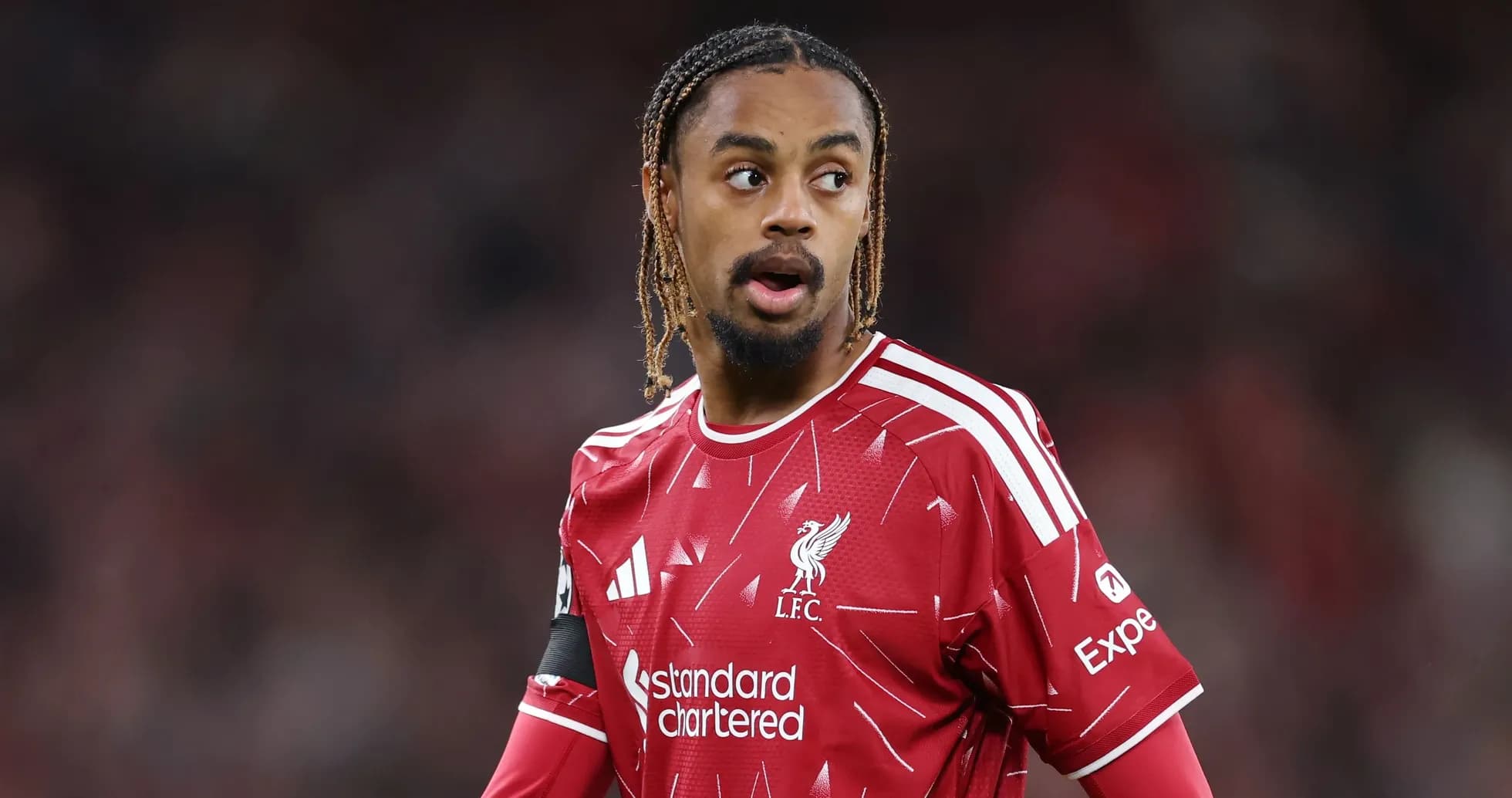
Bradley Barcola walks into Anfield with a price tag that bends the imagination. Up to £123 million. Second only to the biggest deal in Liverpool’s history. That kind of number doesn’t just follow a player; it stalks him.
Emmanuel Petit has seen enough of the game, and of Barcola, to know what comes next will not be straightforward.
From Paris patterns to Anfield chaos
For Petit, the challenge is not about talent. Barcola has that in abundance. The issue is unlearning.
“Bradley Barcola needs to learn a different way of playing,” Petit told Boyle Sports, drawing a sharp line between the world Barcola leaves behind and the one he now enters. At Paris Saint-Germain, he argued, the game is almost pre-programmed. Positions, movements, reactions to the ball – “everything is like an automation.”
Liverpool do not live in that kind of structure. Their best football has always carried a certain wildness: vertical runs, broken lines, chaos in the final third. Petit believes Barcola can give them something they have sorely lacked over the last two seasons – a winger who doesn’t just hug the touchline, but tears into space, runs at defenders, and forces one-on-one duels.
Barcola’s brief cameos of brilliance in a midweek Champions League win over Atletico Madrid hinted at what he can offer. Sharp touches. Direct running. A willingness to commit defenders. Yet that was still European football in a familiar rhythm. The Premier League, with its collisions, pace, and relentlessness, is another test entirely.
Talent is not the question – mentality is
Petit’s verdict is clear: the system will change, but Barcola’s raw ability will travel.
“Is Barcola going to play the same way he played for Paris Saint-Germain? No, because Liverpool don’t play the same way, but he will play with that same ability,” he said. The real doubt, in his eyes, sits between the ears.
The winger is arriving with a nine-figure valuation hanging over him. Every miscontrol, every missed chance, every quiet afternoon will be measured against that number. Petit openly wonders whether the 21-year-old has the mental strength to carry it.
“The only question is whether he has the mental strength to cope with the price tag of his transfer. We will have to see on that.”
There is no suggestion of a long bedding-in period, either. Petit insists Liverpool do not have the luxury of waiting months for Barcola to find his feet, comparing the situation unfavourably with clubs able to ease in talents like Florian Wirtz or Alexander Isak.
“He now has the chance to do that for Liverpool, and he needs to make an impact straight away. They cannot wait on him like Florian Wirtz or Alexander Isak.”
The expectation, though, is not all doom. Petit points to Barcola’s move from Lyon to PSG as evidence that he can adapt quickly to a new environment. “It took him a couple of weeks but then he was showing his great ability,” he recalled. Liverpool will cling to that precedent.
A superstar signing in a struggling side
Strip away the individual focus on Barcola and Petit's wider assessment of Liverpool is stark.
This is not a team, he believes, ready to carry such a project with patience. Liverpool have already dropped points in three of their first four Premier League games, a hangover from a fifth-place finish last season that has not yet lifted. The defence leaks chances. The balance looks off. The aura of inevitability that once surrounded them has faded.
“Liverpool and Manchester United have no hope this season,” Petit said, not dressing it up. He lumped them in with Chelsea as sides conceding far too many goals, but admitted he was “even less convinced” by Liverpool and United’s work in the transfer market.
His view of the top-four race is ruthless. Arsenal, Manchester City and Chelsea, in his eyes, stand apart. Liverpool and United, he argues, might end up scrapping over a single remaining place – and even that may go elsewhere.
“They are both missing players and it’s hard to see how they can be favoured to finish in the top four, especially together. They may fight over that last place after Arsenal, Manchester City and Chelsea, but that place may go to another team.”
The implication is uncomfortable for Liverpool: Barcola has been brought in to add unpredictability to an attack that had become easier to read, but his arrival does nothing to fix the structural issues behind him. The front line gets a new weapon; the rest of the team still feels incomplete.
Learning Liverpool’s language
For now, the spotlight locks onto Barcola’s evolution.
He must shed PSG habits – the comfort of automatisms, the slower tempo of Ligue 1 – and absorb the demands of a league that punishes hesitation. At Anfield, wingers are expected to press, sprint, track back, and then still have the energy to go again with the ball. It is not just about beating a full-back; it is about surviving the storm.
Petit is convinced the tools are there: pace, bravery on the ball, a hunger to attack space. What he questions is whether Barcola can carry that style under the weight of expectation and inside a team that no longer dominates every game by default.
Liverpool have paid for a game-changer. Now they find out whether they have bought a star for the next era, or handed a young winger one of the heaviest shirts in European football at the most unforgiving possible moment.