Bournemouth's Historic European Win Against Real Sociedad
“From -17 to Europe,” declared the flag in the away end at Anoeta, a strip of fabric that told Bournemouth’s story better than any commemorative brochure ever could.
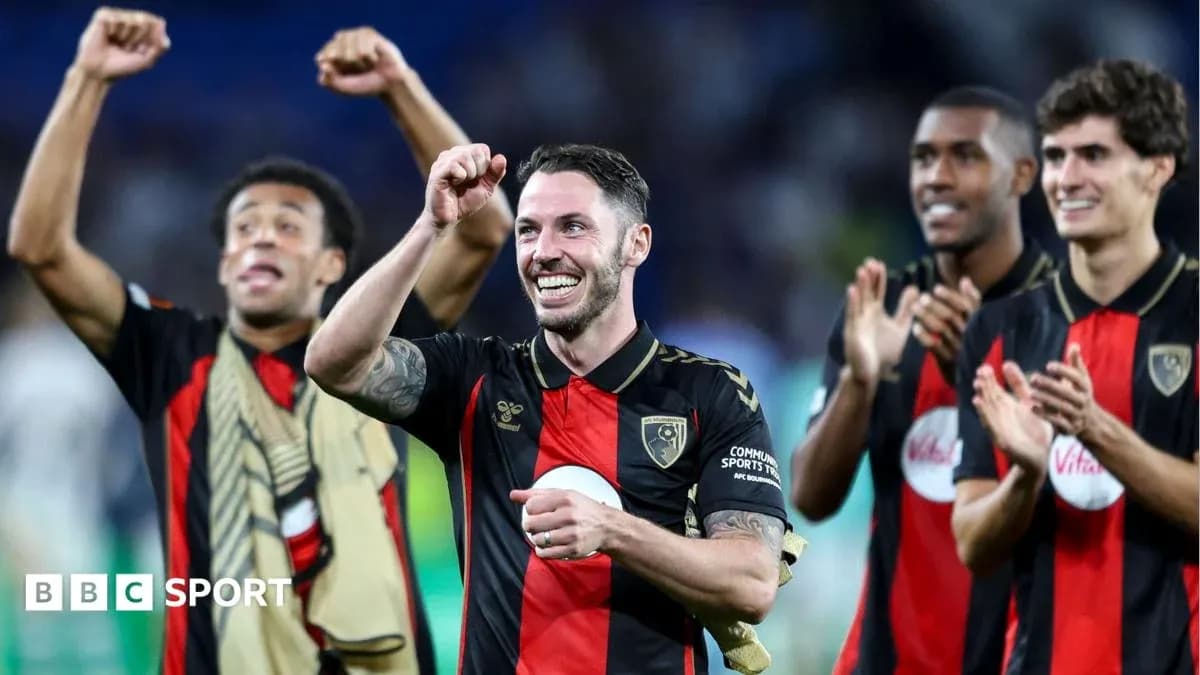
On a cool night in San Sebastián, as the club walked out for the first European game in its 127-year history, that banner felt less like nostalgia and more like a mission statement. Bournemouth are not here to make up the numbers. A 2-1 win at Real Sociedad in their Europa League opener underlined that with a snarl.
“It’s a brilliant win in our first European game. It’s brilliant for the club and the 2,000 fans from Bournemouth,” manager Marco Rose told TNT Sports. The word “brilliant” barely covered it.
From the brink to the Basque Country
To grasp the scale of this, you have to rewind. Not to the first promotion to the Premier League 11 years ago, when Bournemouth began to convince a new generation of supporters that top-flight football was simply what this club did. Further back.
Eighteen years ago, Bournemouth were hanging by a thread. Administration. A 10-point deduction. Relegation to League Two. Then the ultimatum: accept a 17-point penalty just to stay in the Football League in 2008-09 and agree not to appeal, or risk oblivion.
That was the backdrop. That was the reality. Survival, not San Sebastián.
The idea that one day a £100m-rated midfielder would be sliding passes onto the head of a Brazil winger to win a European tie belonged in fantasy, not the fixture list.
Yet here they were. Alex Scott, all composure and swagger, dictating the tempo in the Basque Country and justifying why some of the Premier League’s biggest spenders are circling. Rayan, the Brazilian match-winner, offering another reminder of why Bournemouth can point to a reported £130m release clause and keep a straight face.
This is no longer a plucky little club pinching a night out on the continent. This is a team built to compete.
A “proper” European away performance
Bournemouth have no European history to lean on, no folklore of great nights in far-flung stadiums. So they wrote their own template.
Against a Real Sociedad side led by World Cup winner Mikel Oyarzabal and fresh from lifting the Copa del Rey against Atletico Madrid last season, Bournemouth dominated the first half with a level of control that would have stunned plenty watching back home.
They hunted in packs. They pressed high. They stole the ball in dangerous areas again and again, not just disrupting Sociedad but dictating to them. It was not just running and enthusiasm; it was structured, intelligent aggression.
When they had the ball, they used it. They created chances even when Sociedad’s defence had retreated into shape, working angles, trusting their technique. For 45 minutes, it was the English side who looked like seasoned European operators, not the hosts.
The pressure finally told. Bournemouth’s relentlessness off the ball and sharpness on it gave them the platform, and their front-line quality did the rest. This was not smash-and-grab. It was statement football.
Then the game changed.
Sociedad are not a side that folds in their own stadium. There is a steel to this Basque club, a refusal to let a big night drift away. Poor as they had been before the break, they emerged for the second half with a different edge, the noise inside Anoeta rising with every challenge, every attack.
The adrenaline that had powered Bournemouth through the first half began to drain. Legs grew heavy. Touches lost a fraction of their crispness. The patterns of play that had looked so fluid now took more effort, more thought.
Rose saw it. “It was very intense and tough,” he said. “Brilliant first half in everything. The way we won balls and the possession high up. In the second half, we needed to suffer because we were not so sharp.”
So they suffered.
Learning to suffer – and to hold on
If there is a criticism that has stalked Bournemouth in the Premier League this season, it is their habit of letting leads slip. Four games, four leads surrendered. Defensive resilience has not been their calling card.
As Sociedad ramped up the pressure, those memories will have crept in for more than a few travelling supporters. The noise rose, the attacks came in waves, and the game started to feel like a test of nerve as much as of ability.
This time, Bournemouth held.
Djordje Petrovic, sharp and decisive, provided the kind of goalkeeping that settles a back line. Blocks, saves, good decisions. In front of him, defenders threw themselves into duels and second balls, refusing to be the ones who blinked first.
The slick football of the first half gave way to something grittier, more desperate, but no less valuable. This was the other side of European football: the long clearances, the time bought, the tackles that carry as much weight as a goal.
When the final whistle went, it was a famous win, not because of the margin, but because of what it represented. A club once told to accept a 17-point penalty or disappear had just taken three points off one of Spain’s most respected sides in their own stadium.
“It is a big occasion. A big moment for the club, and they should be applauded for it,” former Bournemouth full-back Charlie Daniels told BBC Radio Solent. He has seen most of this journey up close. He knew exactly what it meant.
Howe’s shadow and Smith’s moment
You cannot talk about Bournemouth’s rise without talking about Eddie Howe.
His appointment in January 2009 changed everything. He took that team, weighed down by a 17-point deduction, and dragged them not just to safety but to belief, finishing nine points clear of the relegation zone. Six and a half years later, in his second spell, he had them in the Premier League.
His fingerprints are still on nights like this.
So it felt right that on such a landmark evening, the team was led out by a player who was there in those early days. Adam Smith first arrived on loan in 2010-11, returned permanently in 2014 and has been a fixture ever since, closing in on 400 league appearances.
“Adam has been with the club for so long,” Daniels said. “Dedicated himself to the club, and it’s such a proud moment, not only for him, but for his family, his team-mates and old team-mates to see how he’s grown – not only as a player but as a man as well. To lead out the Cherries on this historical night is fantastic.”
Smith added another line to the record books, too. At 35 years and 141 days, he became the oldest English outfield player to make his debut in major European competition since Ipswich’s Reginald Pickett in 1962. A quirky statistic, yes, but one that speaks to persistence and loyalty.
No one on the pitch understood the weight of that “From -17 to Europe” banner more than the club captain.
The good times, with a warning
None of this has been straightforward, not even in the Premier League era. Relegation in 2020 hurt. The return to the top flight has been followed by an almost annual dismantling of the squad, as Europe’s elite pluck away Bournemouth’s best players.
The pattern continued this summer. Not even European qualification could keep Andoni Iraola, the architect of last season’s surge, who returns to the Vitality Stadium with Liverpool on Sunday. Bournemouth keep building; bigger clubs keep looking over the fence.
It is unlikely to stop. When you develop a £100m midfielder and a Brazil winger with a nine-figure release clause, the phone will keep ringing.
But nights like this change the conversation. They give players and supporters something tangible, something that cannot be replicated by a bigger wage elsewhere: the feeling of going away in Europe, of silencing a proud stadium, of seeing your club’s flag raised high in a place it had no right to be, if football followed logic.
Bournemouth fans know what the other side looks like. They have seen the empty stands, the points deductions, the existential fear. That is why they can recognise this for what it is.
These are the good times. The only question now is how far this improbable European chapter can run before the next banner needs writing.