
Bayern Munich's Power Struggle: Eberl vs. Freund
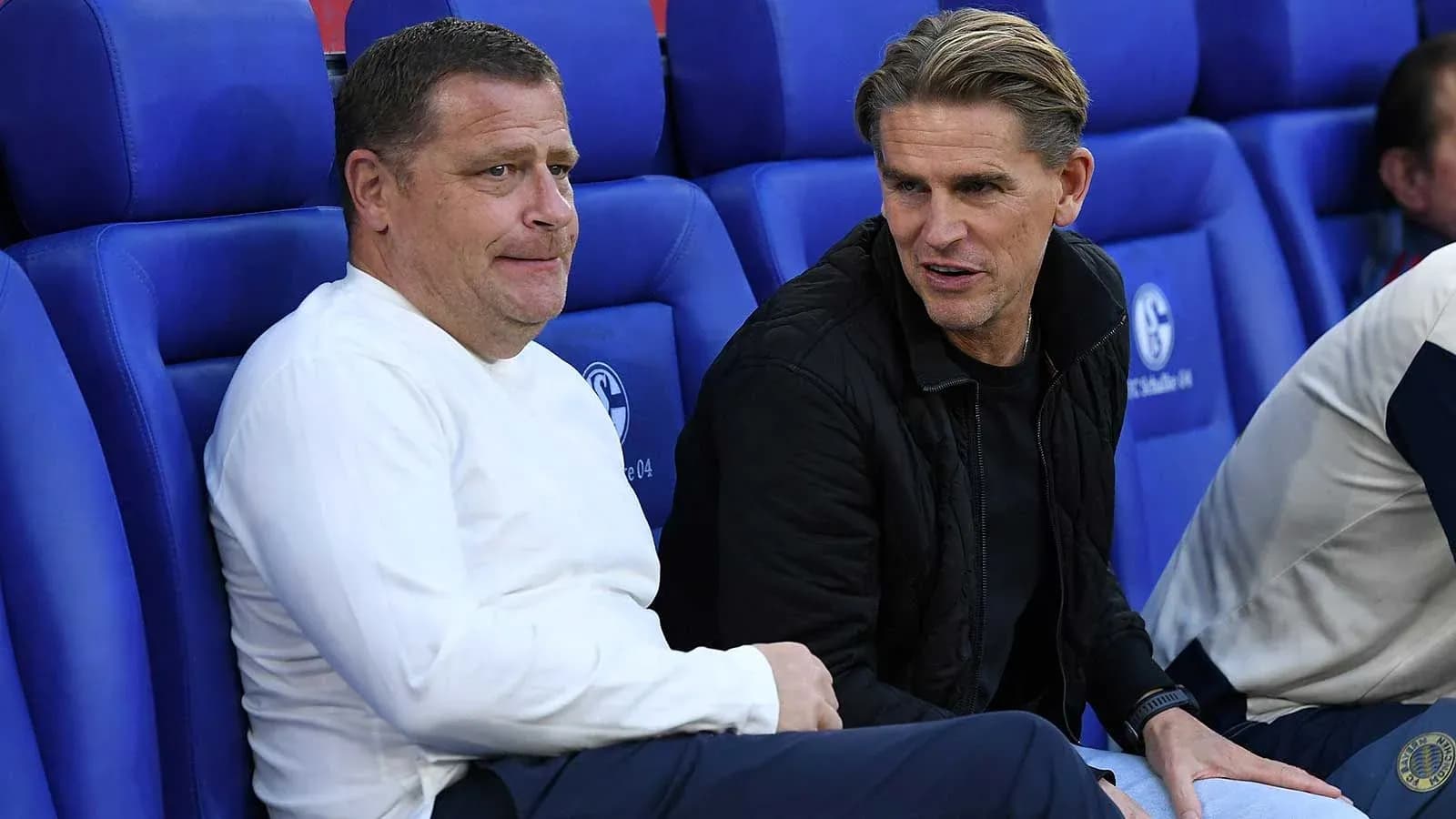
At Bayern Munich, power rarely changes hands quietly. Even when the trophies keep coming, the real battles are often waged far from the touchline – in meeting rooms, on phone calls, between competing visions of what the club should become.
Right now, that quiet struggle has two main protagonists: Max Eberl and Christoph Freund.
A successor search that opened an old fault line
According to reports from tz and the Münchner Merkur, Freund, Bayern’s sporting director, received a clear assignment: find a successor to Jörg Schmadtke for a key role in the club’s sporting structure. He did what he has always done best – he went back to a familiar network.
Christopher Vivell quickly emerged as Freund’s preferred candidate. The 39-year-old, born in Karlsruhe, currently heads what has been a much-criticised scouting operation at Manchester United. His CV reads like a tour through modern Red Bull football: chief scout at RB Salzburg, squad planner at RB Leipzig, then technical director at Chelsea. In Salzburg, he and Freund worked side by side, building reputations as sharp-eyed architects of squads rather than mere administrators.
On paper, it made sense. In practice, the idea stalled.
The interest in Vivell has cooled, the same reports say, and the reason cuts straight to the heart of Bayern’s internal politics: a disagreement between Freund and his superior, board member for sport Max Eberl. Eberl is said to be sceptical about putting yet another key post at Bayern in the hands of someone from the RB cosmos.
That stance is striking, given his own past.
Eberl and Freund: allies, rivals, or something in between?
Both men carry the RB stamp on their careers. Freund arrived in Munich from RB Salzburg in the summer of 2023 and, with the board role for sport still vacant after Hasan Salihamidzic’s departure in May 2023, he effectively shaped Bayern’s squad planning on his own for months.
Eberl’s path was more turbulent. After leaving Borussia Mönchengladbach as sporting director for health reasons, he resurfaced at RB Leipzig as managing director for sport. The move sparked heavy criticism, especially from Gladbach supporters who had long backed him and felt betrayed by the switch into the Red Bull system.
His time in Leipzig ended abruptly. After just a year and a half, the club and Eberl parted ways at the end of September 2023, officially citing his “lack of commitment”. By then, his name had been repeatedly linked with Bayern, who were still searching for a long-term board member for sport.
In March 2024, Eberl finally walked through the doors at Säbener Straße. By that point, Freund was already established and influential. The power balance shifted overnight.
Media coverage has since painted their relationship in increasingly sharp tones. Reports have spoken of tension; kicker went as far in April 2026 as to describe a “forced marriage” and list a series of disagreements between the two. The picture: two strong personalities, two strong ideas about how Bayern should be run.
Freund publicly rejected that narrative.
“That surprised me too,” he said at a press conference last summer when asked about talk of internal rifts. “It’s enjoyable working together. What matters is how things work internally, and they work very, very well.”
The words were clear. The doubts have not disappeared.
Success on the pitch, scrutiny off it
On the field, the trio of Eberl, Freund and head coach Vincent Kompany has delivered. Bayern’s sporting axis looks aligned from the dugout to the boardroom, at least when judged by performances and results. The club underlined that confidence by extending the contracts of both Freund and Eberl in recent months.
Behind the scenes, though, the picture is more complex. Eberl, despite his new deal, has faced internal scrutiny. The departure of Schmadtke underlines why.
Schmadtke, the son of Eberl’s long-time friend Jörg Schmadtke, was very much Eberl’s man. Brought to Munich in October 2024, he became an important ally for the board member for sport. Eberl is reported to have pushed through an extension of his appointment until the summer of 2027, reinforcing that trust.
Now that alliance has been abruptly cut short.
Schmadtke’s exit – and a power vacuum
For months, Schmadtke’s position at Bayern had been under heavy internal fire. Criticism grew, and eventually the club and the 37-year-old agreed to part ways early, at the end of January 2027 – years before his extended term was due to expire.
The whispers did not stop there. Rumours circulated that Schmadtke had leaked internal information from Bayern to the media, an accusation that goes to the very core of trust inside a club obsessed with control and discretion.
On Thursday evening, Schmadtke hit back. In a detailed post on LinkedIn, he drew a hard line.
“I have never passed confidential information to the media. Not in Munich and not anywhere else. I have never put down people under my responsibility,” he wrote. “I am demanding, and sometimes uncomfortable when it comes to quality. I am not disrespectful. And none of what was written had even the slightest connection to my departure from Bayern Munich. I do not speak publicly about internal matters. I have not done so at any of my previous posts, and that remains the case now.”
The message was clear: he rejects the role of scapegoat.
Yet his exit still hits one figure harder than anyone else – Max Eberl. Schmadtke’s departure strips him of a trusted confidant inside the club’s sporting structure, a voice aligned with his own. In a hierarchy as finely balanced as Bayern’s, that matters.
Who really shapes Bayern’s future?
So where does this leave the power dynamic?
Freund, empowered early and backed by a strong track record in Salzburg, continues to influence squad planning and long-term strategy. Eberl, the official board member for sport, holds the bigger title and the broader responsibility, but has just seen one of “his” appointments removed under pressure.
The cooled interest in Vivell, apparently over concerns about yet another RB link, only sharpens the contrast. Freund’s instinct is to trust a familiar network and methodology. Eberl, whose own RB past is never far from the conversation, now seems determined to draw a line somewhere.
On the pitch, Kompany and the team keep delivering, masking some of the friction. Off it, the next appointment to replace Schmadtke will say far more than any public statement about where the real power lies – and whose vision Bayern chooses to follow in the next phase of its evolution.





