
Barcelona's January Centre-Back Pursuit: Hansi Flick's Strategy
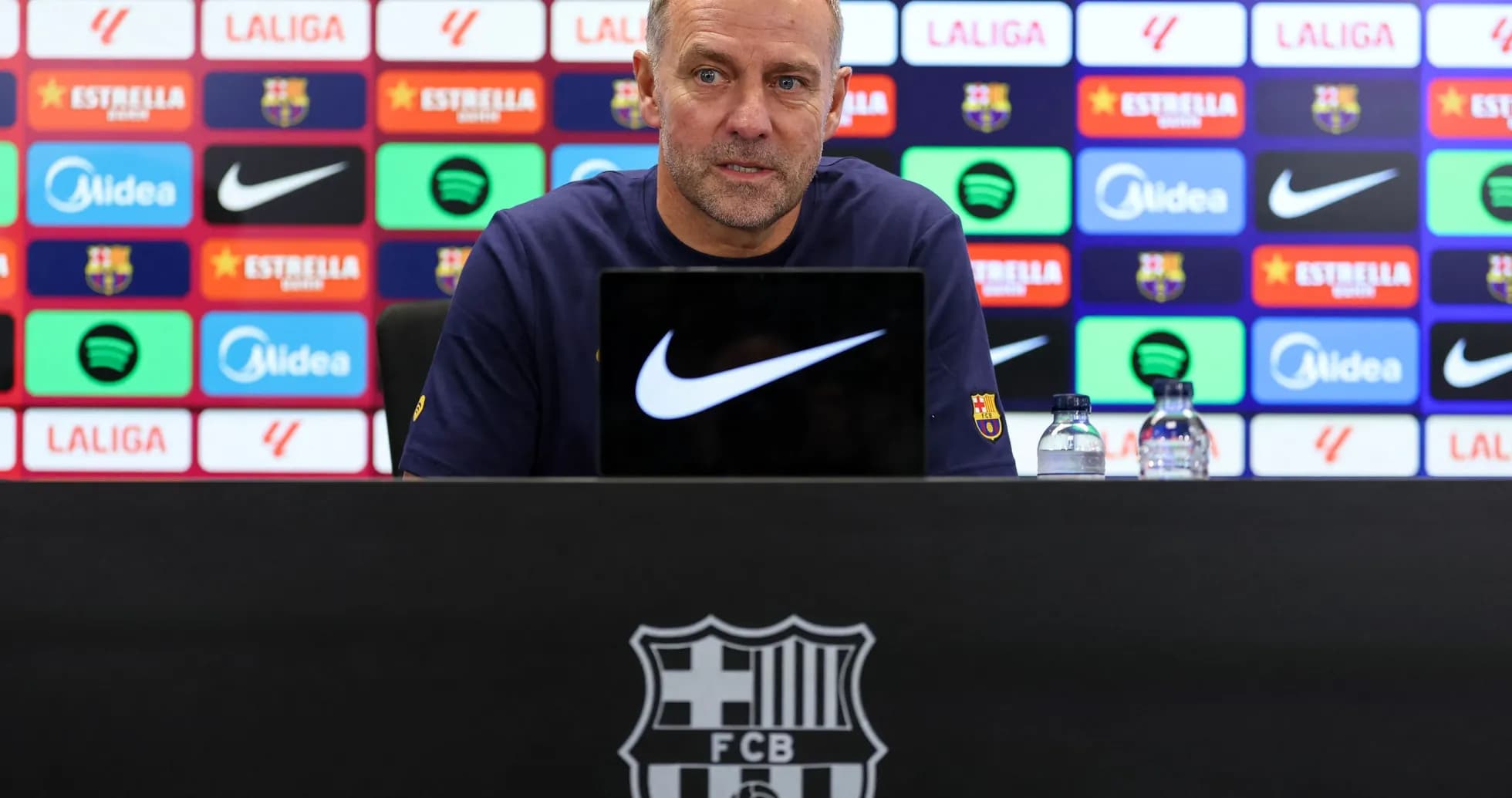
Hansi Flick has stopped hinting and started talking plainly. Barcelona’s coach has opened the door to a new centre-back in January, admitting the club are actively exploring ways to reinforce a back line that looks fragile and thin.
Injuries have stripped away his options. Performances have exposed the rest.
Speaking before the clash with Alavés, Flick made it clear the conversation is no longer theoretical. It is ongoing, detailed and firmly on the winter window.
“We always talk about what is best for the team and how we can improve. We are working on that, and we have spoken with Deco, Bojan and my coaching staff. If it is possible, we will do it,” he said, underlining that defensive reinforcements are firmly on the table, not just background noise.
A shortlist with heavyweight names
According to Spanish outlet Mundo Deportivo, Barcelona have drawn up a focused list of four centre-backs.
At the top end of the market sits Manchester City’s Croatian defender Josko Gvardiol, one of Europe’s most coveted stoppers and, in many eyes, the prototype of the modern central defender. Inter’s Alessandro Bastoni, Argentina international Lisandro Martínez and Real Betis’s Brazilian Natan complete the primary shortlist.
Gvardiol is the dream. He is also the problem.
The Croatian is under contract at City until 2031, a deal that hands the Premier League champions all the leverage and turns any January move into a near-impossible operation. Barcelona admire him deeply, see him as a standout among their targets, but know that pulling him out of Manchester mid-season would demand a financial stretch they are not currently built to make.
Bastoni’s case is different. Deco is keen, seeing the Inter defender as a ready-made solution at the highest level. Flick, though, is not fully convinced. Without the coach’s complete backing, the Italian’s candidacy weakens, especially in a window where every euro has to justify itself.
The realistic route: Martínez and Natan
That pushes attention towards options who look more attainable.
Lisandro Martínez, hardened by his experience in Europe and international football with Argentina, offers aggression, personality and the ability to step into midfield. His profile fits many of Flick’s tactical demands, and his situation appears less locked than Gvardiol’s, even if any move would still be complex.
Natan, meanwhile, brings something else: familiarity and value.
Already adapted to La Liga with Real Betis, the Brazilian has shown levels that catch the eye at Camp Nou. His performances, his age and his contract situation combine into a profile that could be accessible for a “reasonable” fee — a word that carries extra weight in Barcelona’s current financial reality. The club see in him a defender who can strengthen the present without suffocating the future.
Gvardiol remains the marquee name on the list, the one who lights up internal discussions. Natan, though, looks like the kind of operation that actually gets done.
Planning beyond January
Barcelona are not only thinking about the next window. They are also looking down the line.
Further along the planning horizon, Stuttgart’s Finn Jeltsch and RB Leipzig defender Castello Lukeba appear on the radar. Both are part of a broader scouting effort: young, high-upside defenders who could grow into long-term pillars rather than instant headline signings.
Those names reflect a dual strategy. Patch the present. Protect the future.
Money, sales and the cost of a reset
All of it, of course, comes back to money.
Any signing will have to fit within the narrow corridor created by Financial Fair Play and the club’s own budget constraints. The fee, the salary, the amortisation — every element will be weighed against the need to generate income, with potential sales looming over the planning.
Alejandro Balde is among the players who could be sacrificed if the club decide that a major defensive reshuffle is essential. His name being mentioned in that context shows how far Barcelona are prepared to go if Flick’s project demands it and the numbers force their hand.
A clear shift from summer thinking
This is not where Flick started.
In the summer, he chose continuity at the back, opting to trust what he had and prioritise attacking reinforcements. The idea was to build a front line that could dominate games, control territory and ease the pressure on a defence that, on paper, looked deep enough.
The season has challenged that assumption. Injuries have hit. Performances have dipped. The margin for error has shrunk.
Now, with January approaching, reinforcing the defence is no longer a secondary topic. It is a serious option, openly acknowledged by the coach and actively explored by the club’s sporting structure.
The door is open. The question is simple: will Barcelona walk through it with a statement signing, or settle on a smarter, more surgical move that keeps Flick’s project alive without breaking the bank?





