Barcelona's Center-Back Dilemma: The Need for Depth
Barcelona’s transfer window has been loud, busy and, in many areas, convincing. Midfield refreshed, attack rearmed, gaps plugged across the pitch. Yet as the clock ticks towards deadline, one problem still glares back from the squad list.
Center-back.
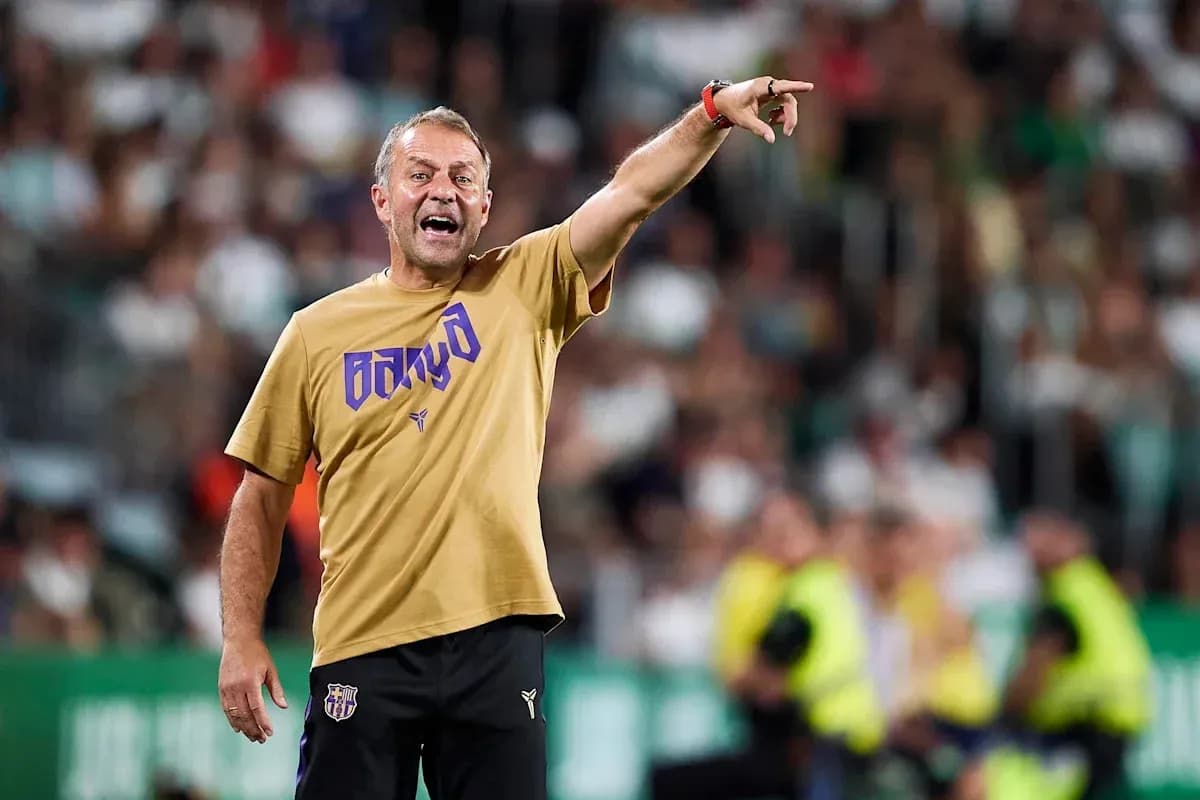
The 5–2 win over Rayo Vallecano summed up this Barça in one wild snapshot. They can blitz teams, overwhelm them with talent and tempo, and still walk off the pitch knowing they left the back door half open. Hansi Flick’s side looks built to score in bunches; it does not yet look built to suffer.
That’s where the tension lies. A club chasing trophies on multiple fronts cannot afford to be one injury away from a crisis in the heart of its defence.
A thin core in a brutal season
Álvaro Cortés’ departure stripped away another layer of protection. What’s left is brutally simple: three senior centre-backs — Pau Cubarsí, Gerard Martín, and Andreas Christensen.
On paper, that might sound adequate. In reality, it’s a tightrope.
Cubarsí and Martín have surged to the front of the queue and into Flick’s inner circle. In the biggest matches, they’ve been the ones trusted to anchor the back line. Against Athletic Club, they looked like they’d been doing it for years: calm on the ball, assured in duels, unflustered by the stage.
That’s the good news.
The concern sits just behind them. Christensen remains a high-level defender, intelligent and composed, but his body has never fully shaken the question marks. Across a long season, with La Liga, Europe and domestic cups all demanding minutes, relying on him as the only experienced backup is a gamble.
And that’s before you factor in fatigue, suspensions, or the inevitable knock picked up on a heavy pitch in January.
Eric García and Jules Koundé can both play centrally, of course. They’ve done it before and done it well. But right now they are being used at right-back, where their athleticism and comfort on the ball serve another structural need. On Flick’s whiteboard, they’re full-backs first, emergency centre-backs second.
Strip it down and the picture is stark: one injury to Cubarsí or Martín, and Barça are suddenly shuffling pieces rather than rotating them.
What kind of defender do Barça actually need?
This is not about chasing a superstar. The club does not need another guaranteed starter to block the path of two of its most exciting young defenders. The brief is narrower, and more delicate.
They need a defender who can live in the shadows and be ready under the lights. Someone content to be fourth choice, but good enough that, when thrown into a league game away to a mid-table side or a tricky Copa tie, the level doesn’t drop through the floor.
He doesn’t have to start Champions League knockouts. He does have to be trusted to give Cubarsí or Martín a night off without turning every cross into a panic.
Given the financial reality, that almost certainly means low cost. A smart opportunistic signing. Or a loan — the classic short-term patch that buys the club another year of planning.
This is where Deco steps in. The sporting director’s task is clear: find value where others see risk, and do it under the pressure of a ticking clock.
Enter Ruud Nijstad
One name has surged into the conversation: Ruud Nijstad.
At 18, the FC Twente defender is not the usual profile of a “safe” deadline-day option. He is young, left-footed, and already hard to miss. Standing at 195 cm (6'5"), he brings a physical presence Barça simply don’t have in abundance at the back.
Observers in the Netherlands talk about a defender who relishes contact, dominates in the air, and still looks comfortable stepping out with the ball. That last trait matters. In this team, a centre-back who can’t carry the ball or break lines with his passing quickly becomes a tactical liability.
On paper, Nijstad ticks a lot of boxes. Height, potential, ball-playing ability. He has even publicly admitted he’d love to play with Cubarsí at Barcelona, which never hurts when you’re trying to sell a project to a teenager.
But there’s a catch. A big one.
Twente know what they have. Nijstad has just signed a contract that runs until 2029, a clear statement of intent from club and player. They see him as a cornerstone, not a chip to be cashed in at the first serious offer. Selling their prized young defender days before the window shuts is not part of the plan.
Risk, reward, and the deadline clock
So the dilemma is set.
Do Barcelona force the issue for Nijstad, betting on his ceiling and accepting the cost and difficulty of prising him away? Or do they pivot to a more attainable profile — an older, cheaper, perhaps less glamorous defender who can quietly fill a role without reshaping the wage bill?
The sporting logic is clear enough. With only three senior centre-backs and two of them barely out of their teens, going into a gruelling season without extra cover is an obvious risk. The Rayo game showed how quickly control can fray when the defensive line is stretched and exposed.
Yet the market rarely offers the perfect player at the perfect price, especially on deadline day.
What Barça decide now will say a lot about how they see this season. Is it a campaign to protect and nurture Cubarsí and Martín with careful rotation, backed by a solid veteran? Or is it the moment to lean into youth again, to chase a talent like Nijstad and trust that the long-term gain justifies the short-term strain?
The clock is running. The squad list is clear. The question, for Barcelona, is not whether they need a centre-back.
It’s whether they dare to leave that gap unfilled when the window finally slams shut.