Barcelona vs Arsenal: Women’s Champions League Rematch
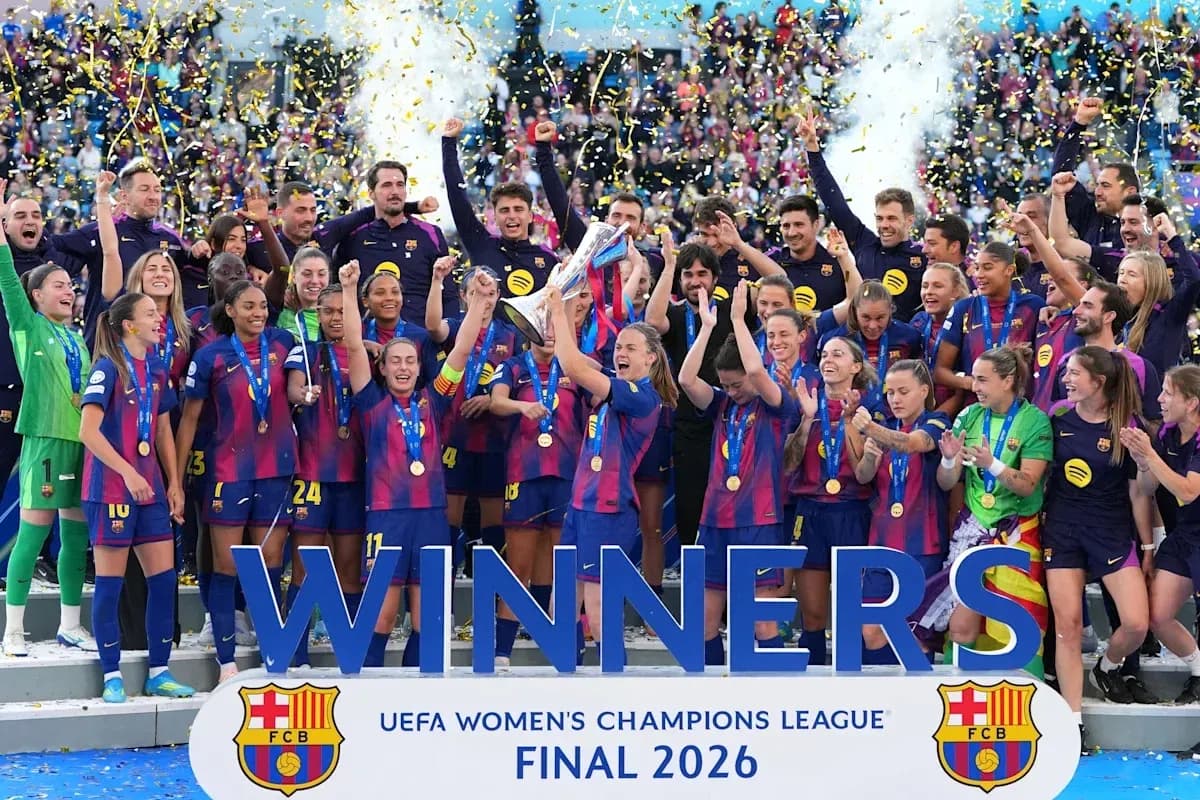
Barcelona handed Arsenal final rematch as new Women’s Champions League era begins
NYON, Switzerland — The draw balls had barely stopped spinning when one tie leapt off the page: Barcelona vs Arsenal, a reprise of the 2025 Women’s Champions League final, this time stretched across a league phase rather than a single night.
The title holders, entering a season of upheaval after the departures of two-time Ballon d’Or winner Alexia Putellas and several pillars of Spain’s golden generation, will defend their crown in a group of six opponents that looks kinder than it might have been. The campaign starts later this month, and the champions have been given enough room, on paper at least, to grow into their new identity.
Barcelona will host Arsenal in Catalonia in the standout fixture of their slate, with Paris FC and Servette also coming to town. Trips to Bayern Munich, Roma and Danish side HB Køge complete a schedule that mixes heavyweight clashes with potential trap games on the road.
For Arsenal, the narrative writes itself. They dethroned Barcelona in that 2025 final; now they must walk back into the champions’ home and try to do it again. Their own path is far from gentle. At the Emirates, Arsenal will welcome eight-time European champions OL Lyonnais, Benfica and Køge, while away days at Paris FC and Inter Milan add a distinctly continental edge to their autumn.
Lyon, beaten in May’s final, have been thrown into a demanding run of fixtures that underlines their status as perennial contenders. The French giants will travel to Arsenal, Juventus and Servette, and host Chelsea, Europa Cup winners Häcken and Inter Milan. Every one of those nights carries weight; every slip could be punished in an 18-team league table.
England’s domestic champions Manchester City have drawn a glamour-heavy home schedule. They will host Paris Saint-Germain, Real Madrid and Austria Vienna, then hit the road to face Bayern, Häcken and Inter. It is a draw that offers marquee occasions at home and unforgiving journeys away, the kind that can define a season before winter truly bites.
Real Madrid’s route is equally demanding. They will host both Paris clubs — PSG and Paris FC — as well as Inter, then travel to Bayern, Roma and Manchester City. For a club still chasing its first major breakthrough in the women’s game, this is a test of depth, resilience and ambition all rolled into three months.
A new league phase, a different kind of pressure
The revamped league format spreads the drama. Eighteen clubs, six rounds, and no room for a slow start.
Matchdays run from September 22 through December 16. When the table settles before the turn of the year, the top four will march straight into the quarterfinals in March. Those finishing between fifth and 12th will not be out — but they will be thrown into knockout playoffs in February, a high-wire act with no safety net.
Everyone else goes home early. In a field this deep, big names will fall.
The season’s climax is set for late May in Warsaw, at Poland’s national stadium, a stage chosen to underline the competition’s growing reach. By then, the new-look Barcelona, the chasing pack from England, France, Spain, Italy and beyond, and the rising forces from Scandinavia and central Europe will have been whittled down to two.
Money on the table, prestige on the line
UEFA’s prize pot matches the rising profile. The 18 Champions League clubs will share 18.2 million euros, with each guaranteed 505,000 euros just for reaching this phase. Performances from here will decide who takes the biggest slices, but the baseline already marks a significant financial foothold for clubs trying to professionalize and expand.
The ecosystem does not end there. The Women’s Europa Cup, launched only last year and won by Häcken in its debut edition, carries a prize fund of 5.6 million euros. It offers another route to European experience, another ladder for ambitious clubs outside the traditional elite.
But all eyes, for now, are on the main stage.
Barcelona, stripped of some of their icons, must prove they are more than a memory of past dominance. Arsenal return to the scene as champions of Europe, knowing the target on their back has never been larger. Lyon, Manchester City, Real Madrid and the rest see a landscape that feels more open, more volatile, more unforgiving.
The draw is done. The routes are set. By December, the table will show who is truly built for this new era — and who has been left behind.