Backlash Against Sydney Sweeney's Ad Highlights Women in Sports
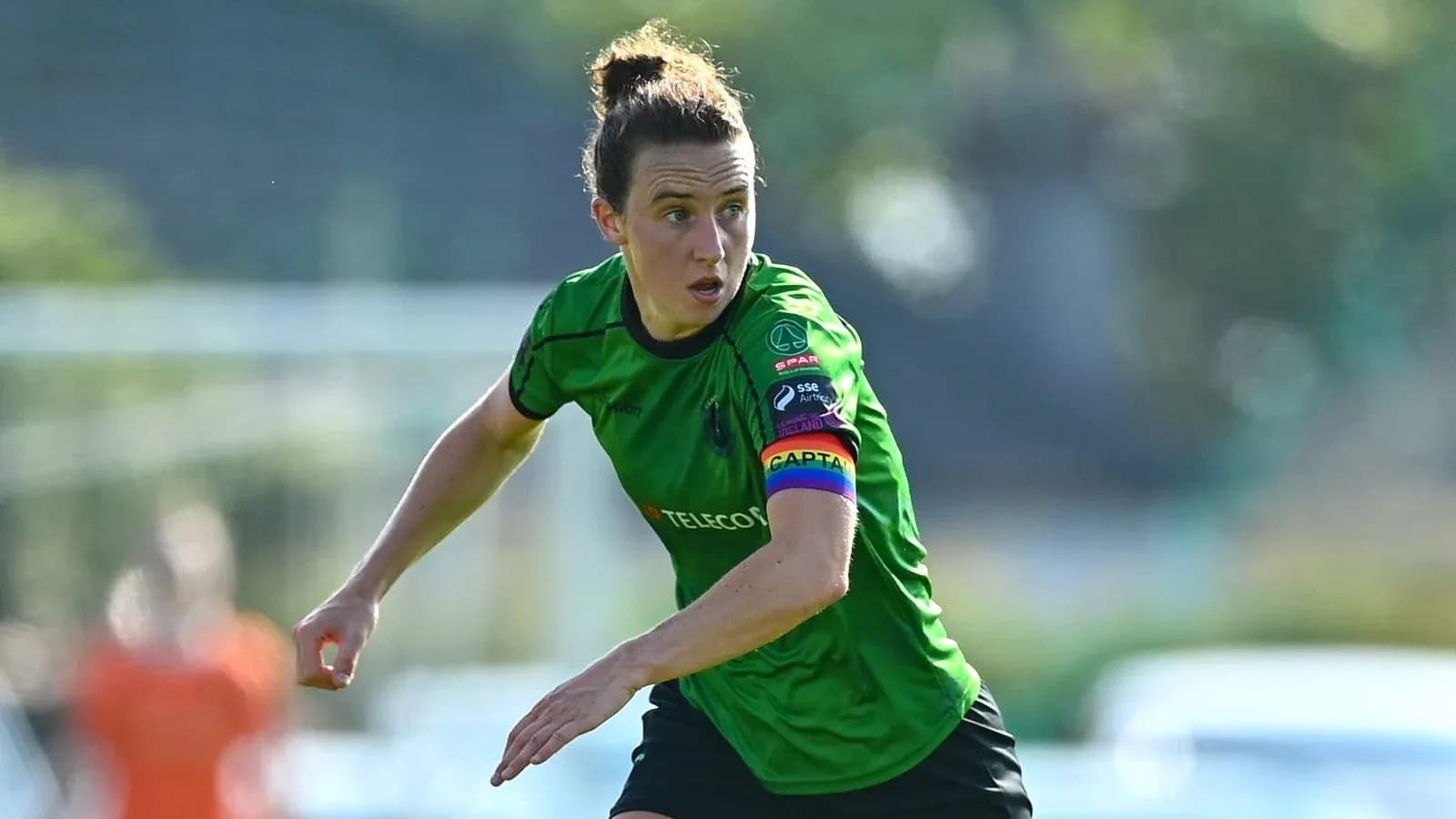
Karen Duggan has seen enough sports advertising to know a tired playbook when she sees one.
So when Sydney Sweeney appeared in a new campaign for US betting firm Novig – barely dressed, draped in sports equipment, and sold as a piece of “sports” content – the former Republic of Ireland international didn’t mince her words.
“I think it’s silly,” she told RTÉ Radio 1’s Morning Ireland. “I think it uses an outdated formula of, you know, attractive women, sports imagery, and a bit of controversy to sell a product.”
The ad has triggered a wave of anger across women’s sport. Australian four-time Olympic champion Ariarne Titmus, American gymnast Gracie Kramer and British sprinter Amy Hunt have all publicly criticised it, with Hunt warning it could become a “barrier” for young girls who might otherwise be drawn into sport.
Yet Duggan believes something unexpected has happened. The backlash, she says, has started to work in women’s sport’s favour.
“It’s flipped the script a bit in a positive way,” she said. “The response to me has been really, really interesting.”
‘Sydney Sweeney doesn’t represent me’
Duggan’s issue is not with Sweeney personally, but with what – and who – the ad chooses to represent.
“My biggest criticism of it is that I don’t think women were part of that conversation at all,” she said. “Sydney Sweeney doesn’t represent me as a normal woman or as a female athlete in any way.
“I don’t think it’s an ad made by people trying to understand what it takes to be a female athlete and the discipline and the sacrifice and the competitiveness and the physicality that goes with that.”
For Duggan, the spot isn’t aimed at sports fans in the stadiums or on the terraces. It’s aimed at a specific slice of the market.
“I think it’s largely just for men who consume sports through their phones, through social media, rather than even men who go out and engage in sports by going to the games, watching athletes, and appreciating what athletes do, both male and female.”
That, in her view, makes the advert not just out of touch, but irrelevant to the reality of elite women’s sport.
“I think it’s so outdated,” she said. “But the response has been really, really interesting.”
A backlash with purpose
What might once have been just another lazy piece of marketing has instead become a rallying point.
“I feel like there’s obviously been something bubbling under the surface where female athletes feel massively underrepresented in advertising, in social media, and under-celebrated,” Duggan said.
“And I love how they’ve used this ad as a means to go out there and highlight how the female athlete thinks, how hard they work.”
Her own social feeds tell the story.
“My algorithm isn’t coming at me with loads of Sydney Sweeney propaganda,” she said. “It’s coming at me with the likes of Amy Hunt using her platform after a race to celebrate her competitors.”
That shift matters. It changes the imagery young girls see when they open their phones: not a Hollywood star posed with props, but real athletes, exhausted, elated, and competing at the highest level.
‘This is what women in sport look like’
Hunt has become one of the defining voices in the debate.
Fresh from winning four gold medals at the World Athletics Ultimate Championship in Budapest, she directed a pointed message at Sweeney online: “This is what women in sport look like.”
Speaking on ITV’s Good Morning Britain, the British sprinter broadened the argument. Role models, she said, must be rooted in performance, not appearance.
“When we’re trying to provide role models for young people and young women in sport, we really want to show that it’s about what your body can do, not so much what it looks like,” she said.
The numbers back up her concern. Hunt highlighted research showing that 64% of girls drop out of exercise and sport before the age of 16.
“We don’t need to place any kind of barrier whatsoever in their way in terms of providing the opportunity and the empowerment for them to still exercise,” she said. That might mean chasing medals, or simply “going to do a park run with your friends”.
“So it’s about empowering young girls and young women and young people to show that you really can just get out there and you don’t have to worry what you look like, you don’t have to worry about what you’re wearing.”
A united front – and a warning to brands
Duggan sees something powerful in the way athletes across sports have moved in step.
“You don’t want an advertising campaign to define the conversation around women,” she said. “We want the women to use their platforms now, use their own voices, celebrate each other’s strength, athleticism, humour, ultimately real women. That’s what’s more powerful.”
Her hope is that the industry is paying attention.
“I’m hoping that other companies are seeing the reaction, the kind of visceral reaction that women and athletes are having to this ad, and it kind of clicks with them, that this is what women want to see.”
She accepts that Novig may be happy to speak only to “a certain cohort of men… who consume sports through their phones or through betting”. That, as she puts it, is their prerogative.
But for everyone else, she believes the lesson should be obvious.
“What companies should take from this is that we want to see strong, powerful women,” she said. “I would react to Amy Hunt in a Nike ad far more than I’d react to Sydney Sweeney in a betting ad.”
The controversy will fade. The question now is whether brands choose to chase the old fantasy, or finally catch up with the reality of women’s sport.