Bacary Sagna Questions Transfer Market Inflation
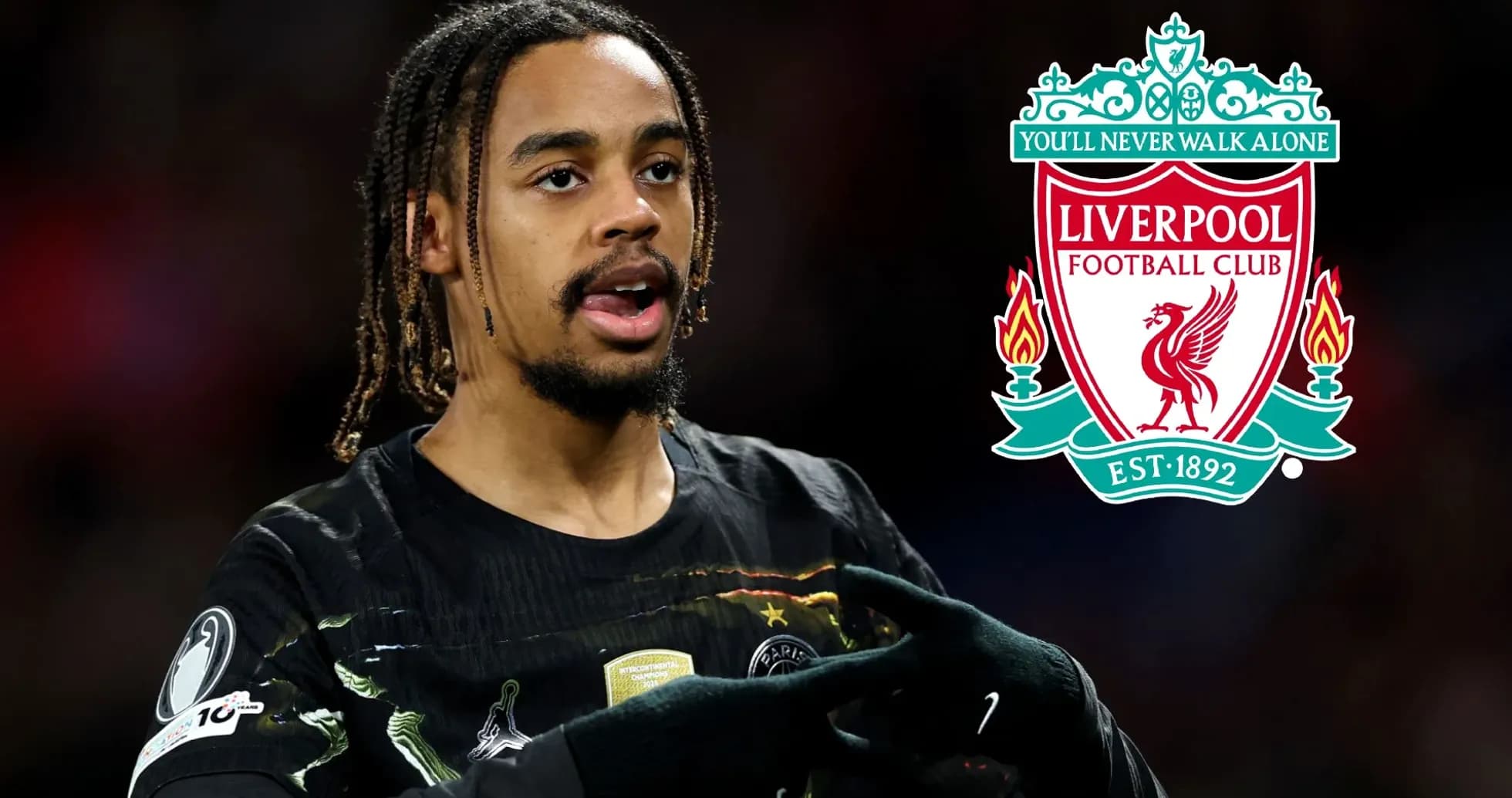
Bacary Sagna has watched this transfer window unfold with the same raised eyebrow as many former pros. The numbers keep climbing, the records keep tumbling, and the ex-Arsenal and Manchester City full-back is no longer impressed. He’s alarmed.
From Morgan Rogers and Enzo Fernandez to the latest headline-grabber, Champions League winner Bradley Barcola, English clubs have once again thrown staggering sums at talent. Chelsea remain at the heart of the market’s inflation, while Liverpool have joined them with another blockbuster outlay, adding Barcola to a year of heavy investment. Arsenal, City and Tottenham are all deep in the same game.
For Sagna, that game is drifting into dangerous territory.
This has to stop
Speaking to GOAL in association with BetVictor Online Casino, Sagna did not question Barcola’s pedigree. He questioned the price.
“Barcola is an amazing player but he's young, he's 24 now, he has proven himself at Paris and in Lyon previously but this has to stop,” he said. “He went for 123 million, no? That's a lot of money if he's evaluated now.”
Sagna accepts that football’s economy has changed, that comparisons with his own era only go so far. The logic of the current market is clear enough: once players of similar or lesser quality move for €100m, better ones are pushed above that line. That doesn’t mean he has to accept it.
“I know that we can't compare generations and I know the world is moving and economically it's not the same. Proportionally, yes it makes sense because you sell other players for 100 million and he's better than them, but it doesn't make sense.”
There, in that contradiction, lies his frustration. The internal logic of the market works. The bigger picture, he believes, does not.
“They should have limit,” Sagna continued. “For me it doesn't remove anything on his quality, he's a top player and I think he's going to be good at Liverpool, but for me this is crazy, this is 123 million. They should have a limit and they should set up a limit because in five years what's going to happen? Players will leave for 500 million?”
The question hangs heavy. With every record broken, the next one feels inevitable. Each nine-figure deal nudges the ceiling higher, pushing ticket prices, commercial deals and broadcast expectations up with it. Supporters feel it first. Sagna fears they will not be the last.
A business with a dark edge
Sagna has no issue with football becoming a business. He played at the sharp end of the Premier League boom, at Arsenal’s Emirates era and then in Manchester City’s age of acceleration. He understands the money. What troubles him is the lack of brakes.
“You know it's football, a business, it's good football became a business but any business going high also has its bad side and danger,” he said.
His warning is not just about transfer fees. It stretches into governance, regulation and the way the sport polices itself financially. FIFA’s recent scandals, including controversies around World Cup hosting and commercial decisions, sit in his mind as a clear signal of where unregulated ambition can lead.
“So to regulate football rules and football financial rules you have to be very smart because soon something like we saw with FIFA trying to sell the World Cup will happen and I'm not surprised. I'm not surprised because there is no limit, there is no financial rules anymore. Any player can leave for any kind of money.”
That phrase – “no limit” – runs through his argument. Without firm financial boundaries, Sagna sees a sport drifting away from its foundations.
Roots, rules and a fragile balance
The former France international reaches for something more fundamental when he talks about what football is losing.
“There have to be rules and roots,” he said. “When you were educated, you have 60 per cent from when you are little, you were grounded in that, and then of course you will develop yourself on the other 40. Football has to be the same.”
In his view, the game needs a core that does not shift with each new broadcast cycle or ownership model. Technique, competition, fair play, and a sense of proportion around money. Strip too much of that away and the structure starts to wobble.
“The basics will never change if you start touching the most important things and you get trouble,” Sagna said. “When I see all the problems with FIFA being attacked by everyone, I'm not surprised. And this is the same for players.”
He sees a future in which the current lack of restraint rebounds on both sides of the dressing-room door. Players, who today benefit from huge wages and transfer fees, could soon be the ones protesting against a system that has spiralled out of control.
“Soon you will have players complaining and clubs complaining and clubs being out of the financial fair play, so top clubs will control it and you'll have to bring other clubs that are not going to have the same quality.”
That, for Sagna, is the real threat. A landscape where a handful of super-clubs dictate the tempo, the fees and the standards, while the rest are dragged into a chase they cannot win or left behind entirely.
“The image rights will be damaged because if you don't have the same quality, then you don't have the same money, and when you start going down that path it is difficult to stop. We need to be careful.”
The latest nine-figure transfer into the Premier League will be celebrated on Merseyside and debated in boardrooms across Europe. Sagna’s words cut through that noise. The question is no longer whether a player is worth €123m. It is how long football can keep stretching the limits before something finally snaps.