
Austria vs Republic of Ireland: High Stakes Clash in Linz
By the time the temperature drops towards zero in Linz on Sunday night, the margins for error will have done the same for the Republic of Ireland.
Under the lights at the Raiffeisen Arena, Heimir Hallgrimsson’s side walk into a straight‑line equation: win in Austria, win at home to Kosovo on Tuesday, and they are guaranteed promotion to League A of the UEFA Nations League. No calculators, no ifs, no favours needed elsewhere.
Slip, and the picture changes fast.
Promotion, seedings and a narrow path
Ireland arrive in Austria third in Group B3, five points from four games, but with a crucial edge: their head‑to‑head record over the group leaders. Beat Ralf Rangnick’s team in Linz and then take care of business at the Aviva Stadium, and Ireland finish top, leapfrogging everyone and moving into the company of Europe’s elite in the next Nations League cycle.
Second place would still keep promotion hopes alive via the playoffs, where a third‑ or fourth‑placed League A side would await. But there is more than just the Nations League at stake.
Group position will feed directly into the Euro 2028 qualifying seedings. Every rung climbed now improves Ireland’s chances when the draw is made next month. Every dropped point risks a tougher path down the line. This window is not just about tonight; it shapes the next campaign.
Austria’s brief is simpler. Win, and they are done. Top spot secured, thanks to their own head‑to‑head advantage over Kosovo. In front of a sold‑out home crowd, they know exactly what is expected of them.
Lessons from Dublin – and a coach chasing “small gains”
The last meeting still stings in Dublin and in Linz, but for very different reasons.
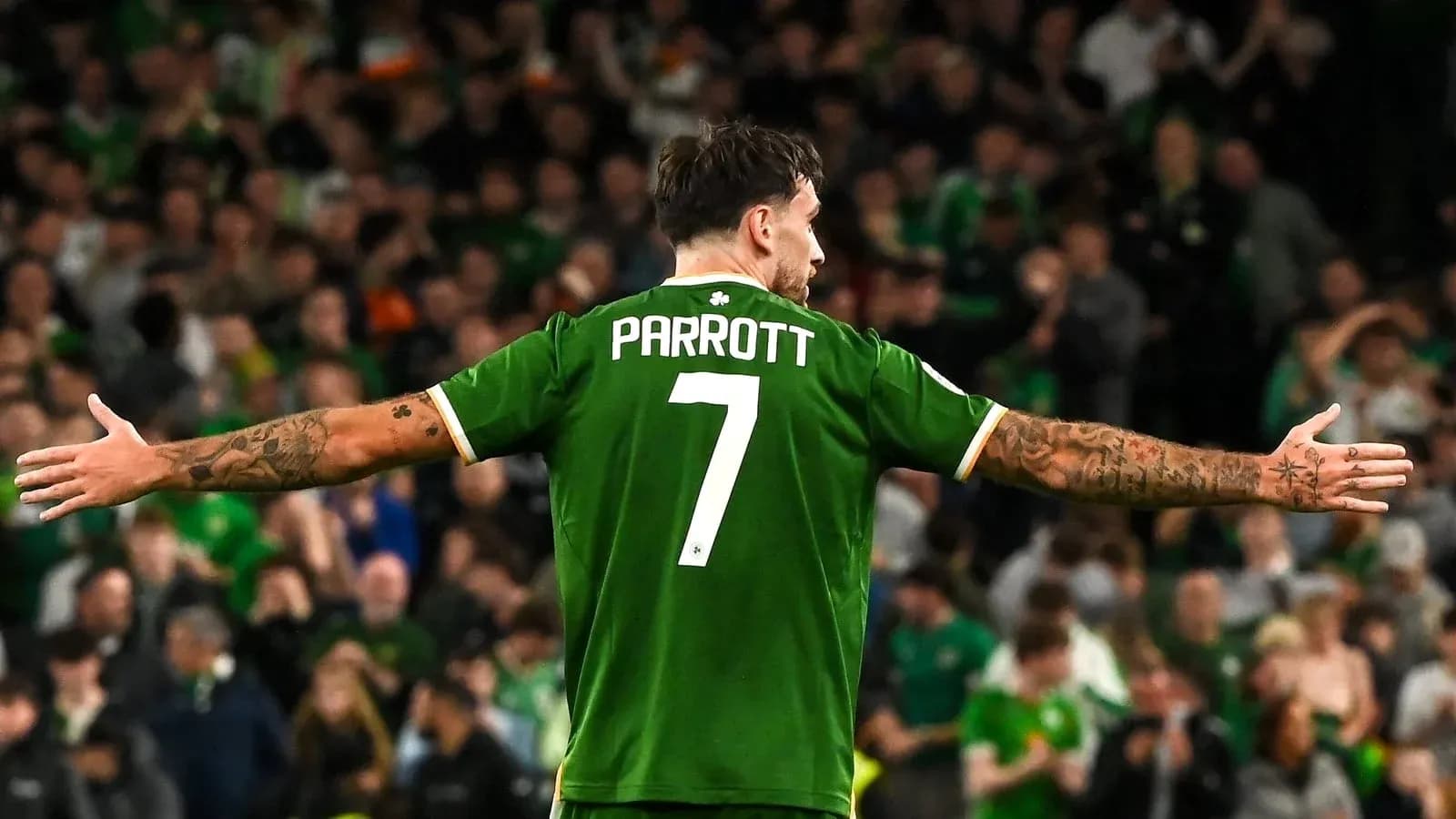
At the Aviva last month, Troy Parrott lit up the night. One stunning solo goal, one ice‑cold penalty, and Ireland were 2-0 up and cruising at half-time. Austria looked rattled, second best, and frankly fortunate to still be in the contest.
Then the game flipped.
Five chaotic second‑half minutes, two Austrian substitutes, and Ireland’s control vanished. Alexander Prass and Michael Gregoritsch came off the bench, scored, and left Hallgrimsson’s side with a 2-2 draw that felt like a defeat. The Irish manager pointed to fatigue, the game wedged between that mentally draining double header with Israel, and his squad running on fumes.
There are no such excuses available now. This camp has been built around freshness.
Hallgrimsson has tinkered with almost everything off the pitch to squeeze out marginal gains on it. Meetings moved. Schedules shifted. Players called in later to buy an extra day of recovery. Every department – from medical to kit room – asked to think differently, to push for what he calls a “growth environment”.
The message is clear: the structure around the team has changed. The mentality must follow.
What hasn’t changed is the man at the tip of the attack.
Parrott’s hot streak and Hallgrimsson’s attacking puzzle
Troy Parrott leads the line again, and right now he does it as a striker in form. Ten goals in his last seven competitive games is the kind of run that reshapes a forward’s career, never mind a campaign.
His performance in Dublin against Austria – that slaloming opener, the composure from the spot – underlined why Hallgrimsson has built so much of Ireland’s attacking plan around him. Austria know what is coming. Stopping it is another matter.
Behind and around Parrott, the options are more fluid. Jack Moylan and Adam Idah both impressed in the last international window, offering energy, movement and a willingness to stretch defences. The temptation to unleash all three in Linz is obvious.
Hallgrimsson, though, has kept his cards close. He has spoken about the need to rotate, to try players in unfamiliar roles, to be brave with his selections. That bravery might mean an aggressive front three. It might mean extra security in midfield and asking Parrott to carry the load again.
“We’ll see tomorrow,” was as far as he would go. On a night like this, that decision could define everything.
Austria’s fortress, their injuries, and a hint of revenge
Across the halfway line, Austria bring a different kind of certainty: they almost never lose at home.
They are unbeaten in their last 14 matches on their own turf, with 11 wins and just three draws in that run. You have to rewind to 2023 and a 3-2 defeat to Belgium in Euro 2024 qualifying to find the last time an away side left with all three points.
That record, plus a packed Raiffeisen Arena, piles the pressure on the hosts to deliver. They feel they underperformed in Dublin, that Ireland “caught them cold” in the first half. That sense of being ambushed has not faded.
“This time it will be a different game,” RB Leipzig midfielder Nicolas Seiwald promised. Austria intend to take control from the first whistle, to set the tempo rather than chase it, to ensure there is no repeat of Parrott slicing through them in transition.
Yet Rangnick’s squad is stretched.
Patrick Wimmer and Xaver Schlager, both starters in Dublin, are out. Prass, the impact substitute who dragged them back into that game, is missing as well. Add David Alaba, Paul Wanner, Carney Chukwuemeka and Marco Grüll to the absentee list and the depth that usually defines this Austria side suddenly looks thinner.
Rangnick still has enough quality to hurt Ireland, but he has had to dig deeper into his squad than he would like on a night of such importance.
A battle of styles in the cold
The clash of approaches is already mapped out.
Ireland will look to strike quickly, to drive the ball forward, to hit the spaces behind Austria’s defence with Parrott, Moylan and others racing onto passes. Austria know it, have seen it up close, and have spent the buildup plotting how to shut it down.
Centre‑back Philipp Lienhart spelled it out: Ireland’s front line brings quality and a robust edge, and they aim to exploit the space in behind. Austria, though, take confidence from their comeback in Dublin – from the refusal to fold at 2-0 down, from the belief that their mentality will carry them through again.
This time, Lienhart wants a clean sheet to go with the performance.
Ireland, for their part, want more than just improvement. They want a statement: that the collapse in Dublin was an aberration, not a habit; that Hallgrimsson’s tweaks and “growth mindset” are more than buzzwords; that this group can handle a cold, unforgiving night when promotion, seedings and momentum all sit on the line.
At kick-off, the temperature in Linz will hover close to freezing. The stakes will not.





