
Australia Dominates Qatar 3-0 in Strong Performance
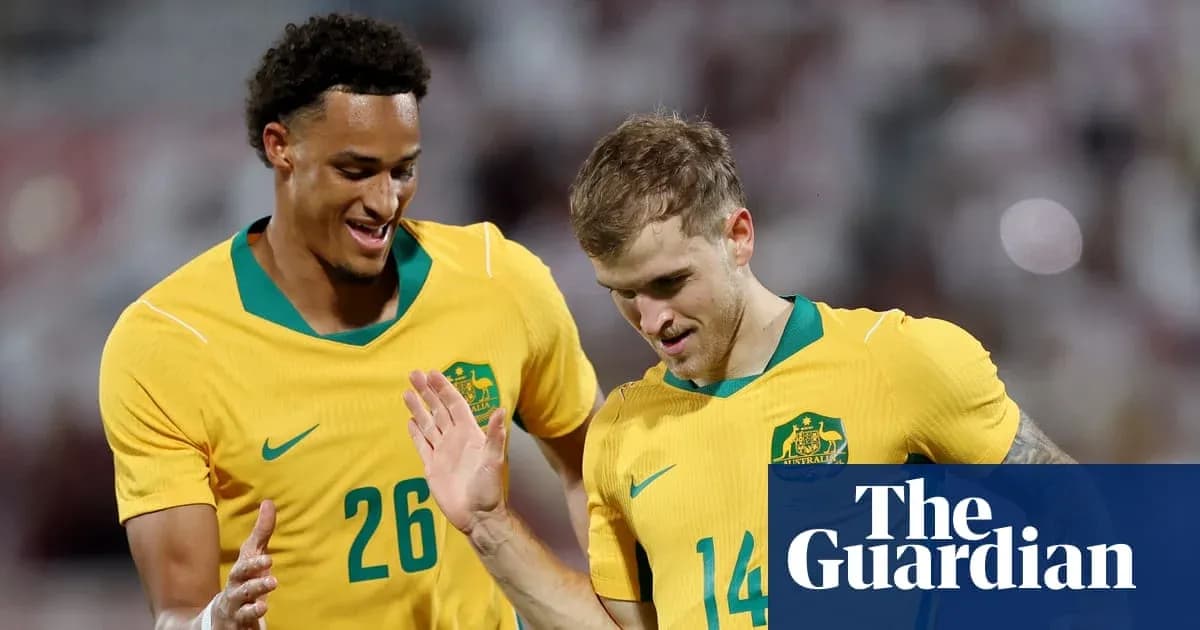
Australia silenced the noise with a performance that crackled from the first whistle, sweeping aside Qatar 3-0 in a night that said far more about the Socceroos’ future than the week of off-field wrangling that preceded it.
For days, the conversation had been dominated by logistics, not lineups – the late switch of next Tuesday’s clash with Jordan to Doha, the uncertainty, the politics. Five minutes into this game, Riley McGree cut straight through the static.
Ruthless from the front
Australia flew out of the blocks and never really let Qatar breathe. The press was high, aggressive, coordinated. Every Qatari touch in their own half felt like an invitation to trouble.
McGree delivered the first punishment. Tete Yengi harassed keeper Mahmud Abunada into hesitation, and McGree read it a split-second quicker than anyone else. He stepped in front of the attempted pass to Assim Madibo, collected, and rolled the ball into an empty net. Predatory. Clinical. A first Socceroos goal in more than four years, and a reminder of why Tony Popovic had restored him to the starting XI.
Qatar didn’t register a touch in Australia’s box until the 38th minute. By then, they were three down and staring at a long night.
The second goal came from the same source: pressure and panic. In the 32nd minute, Abunada shanked a clearance straight into danger. Connor Metcalfe pounced, drove forward and threaded a pass that begged to be finished. Yengi obliged, sliding his shot into the bottom corner.
The third was even more damning for the hosts. With five minutes left in the half, a bounced pass from Ahmed Fathy escaped Almoez Ali, and Metcalfe again snapped onto the loose ball. He fed Nestory Irankunda, the brightest star on the pitch, who lashed his finish beyond Abunada. Three goals, all born from the press. Exactly the brand of ruthlessness Popovic has been demanding.
By that stage, local Qatari media had turned from the match to the man on the home bench. Why, they asked, was Julen Lopetegui insisting his side play out from the back into a buzzsaw?
Popovic’s blueprint takes shape
This was not the backs-to-the-wall Australia that has so often defined itself by resistance. The September friendlies against Brazil had hinted at evolution – a team learning to do more than simply survive against elite opponents. Here, with the onus on them to dictate, they showed what that evolution might look like against Asian opposition.
They hunted in packs, squeezed the life out of Qatar’s build-up, and turned mistakes into chances with a cold efficiency. All three goals were a coach’s dream: structure and intent rewarded.
“It was good to see the players who scored,” Popovic said afterwards. “To see Riley back starting a game for Australia, which hasn’t happened in a while. Alessandro Circati could have scored as a centre-back. Young Paul Okon Jr went through as a No 6. So, we’re getting the players in the right areas. Still a lot of work to do for us, but that was pleasing.”
Popovic, under his own cloud of speculation after the postponement of the Asian Cup, had gone strong with his starting XI. If he was looking for evidence that this project is worth sticking with, the first half provided it in abundance.
Qatar drift, pressure mounts on Lopetegui
Qatar, for their part, were alarmingly flat. Even allowing for four debutants finishing the game, the reigning Asian champions offered next to nothing going forward. They did not force Patrick Beach into a single save. Their first shot came in the 72nd minute, by which time Popovic had emptied his bench and debutant Sam Klein was flinging himself in front of Ali’s effort before it could test the goalkeeper.
Ali had the ball in the net late on, but his 88th-minute strike was clearly offside. It summed up Qatar’s evening: too slow, too loose, too easily picked apart.
This comes on the back of a disappointing Arab Cup and a World Cup that failed to ignite. The fear around the program is stagnation; the evidence on this night did little to ease it. Lopetegui now walks into a potentially defining fixture against South Korea next Tuesday. Another meek home defeat, especially one that would make it back-to-back losses and further erode the aura of the two-time defending Asian champions, could push his tenure to the brink.
New faces, same intensity
If the second half lacked the same edge as the first, it still carried significance for Australia. With the game effectively put to bed by half-time, Popovic turned to youth.
Klein, Eli Adams, Kasey Bos and Diesel Herrington all made their debuts, stepping into a contest that had slowed but not lost its structure. The scoreline stayed intact, the standards didn’t slip, and the newcomers got a taste of senior international football in a side playing on the front foot.
“As a coach, I’m always proud to lead these boys,” Popovic said. “I know how special that is for them and their families, and I’m sure they’ll remember this day for a very long time. I don’t think I’ll ever forget it. It might be a long night for them; I don’t think they’ll sleep too much.”
On a week when the conversation kept drifting to venues, schedules and uncertainty, Australia found clarity in the one place it really matters. They pressed, they punished, they dominated. If this is the standard when the noise is at its loudest off the pitch, what might they look like when the path to Asian dominance truly clears?





