Aubameyang's Bitter Exit from Gabon National Team After AFCON Fallout
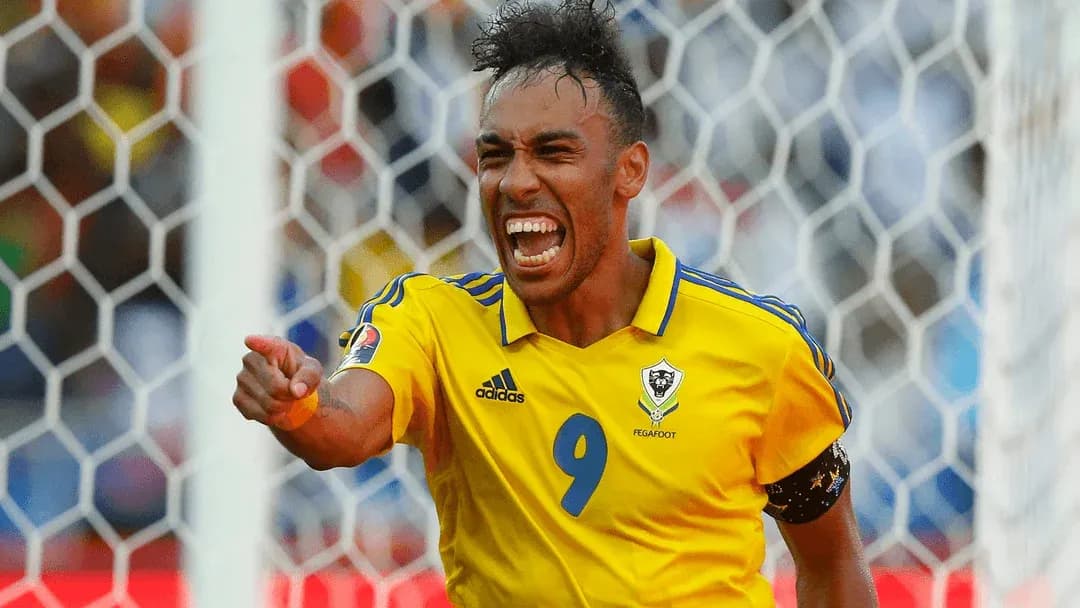
Pierre-Emerick Aubameyang did not slip quietly out of international football. He slammed the door on his way out.
At 37, Gabon’s all-time leading scorer has announced his retirement from the national team, drawing a definitive line under a turbulent final chapter marked by public blame, political pressure and what he calls a deep personal humiliation.
The breaking point came not on the pitch, but in the aftermath of Gabon’s disastrous 2025 Africa Cup of Nations campaign in Morocco.
“I was humiliated and my image was tarnished,” Aubameyang said in a television interview, explaining that he had played at AFCON while injured, only to be discarded when the post-mortem began. “It was the last straw and I’d rather leave it here.”
AFCON collapse sparks a national crisis
Gabon’s campaign unraveled quickly. Three games, three defeats, and a group-stage exit sealed by a 3-2 loss to Ivory Coast. For a team built around one of Africa’s most recognisable forwards, it was a collapse that cut deep at home.
The reaction was ferocious. Gabonese president Brice Clotaire Oligui Nguema went as far as to say that “a part of the national identity” had been weakened by the failure. Football, in Gabon, is not just a sport; the president’s words underlined how much this team had come to symbolise.
The response from the authorities was as drastic as the rhetoric. The entire coaching staff was dissolved. The national team itself was suspended until further notice. And two of the country’s most experienced figures, Aubameyang and Bruno Ecuele Manga, were dropped from the squad.
Those decisions lit the fuse. Singling out two veterans, both long-serving leaders, struck many supporters as a political gesture rather than a sporting solution. The storm that followed never really cleared.
Aubameyang refuses to be the scapegoat
At the centre of it all stood Aubameyang, a player who had carried Gabon’s hopes and profile for more than a decade. This time, he felt he was being asked to carry the blame as well.
“I think the national team’s problems run much deeper than the little part that I represent,” he said, pushing back against the idea that he was one of the main culprits in a crisis he sees as structural, not personal.
What stung most was the timing. By his account, he had forced himself through AFCON while carrying an injury, a decision he believed showed his commitment to the shirt. Instead of gratitude, he was met with exclusion. For a player who had spent years as the face of Gabonese football, the message felt brutal: you are expendable.
Even when the authorities eventually reinstated him, the damage was irreversible. Trust had gone. The bond between star and state, already strained, finally snapped.
So Aubameyang chose to walk away. No farewell tour, no testimonial atmosphere, no final lap of honour in front of the fans he had thrilled. Just a clean, cold break.
End of an era for the Panthers
His departure leaves Sébastien Migné, newly installed as head coach, to rebuild without the man who defined Gabon’s modern era. For years, Aubameyang was not just the country’s leading scorer; he was its attacking identity, its marketing face, its global reference point.
He captained a generation that looked to him for goals and guidance, and he gave Gabon a visibility on the international stage it had rarely known before. That legacy remains. The manner of his exit does not erase the numbers or the nights when he carried the Panthers almost single-handedly.
But it does change the mood. Instead of a legend eased into retirement with applause and gratitude, Gabon lose their greatest striker in an atmosphere of bitterness and accusation, the player feeling unfairly blamed for a collective failure and a deeper institutional malaise.
The Panthers now move on without their most famous predator. How long it takes to replace his goals is one question. How long it takes to repair the relationship between the national team and its icons is quite another.