Atlanta Hawks and Charlotte Hornets Trade: A Shift in Strategies
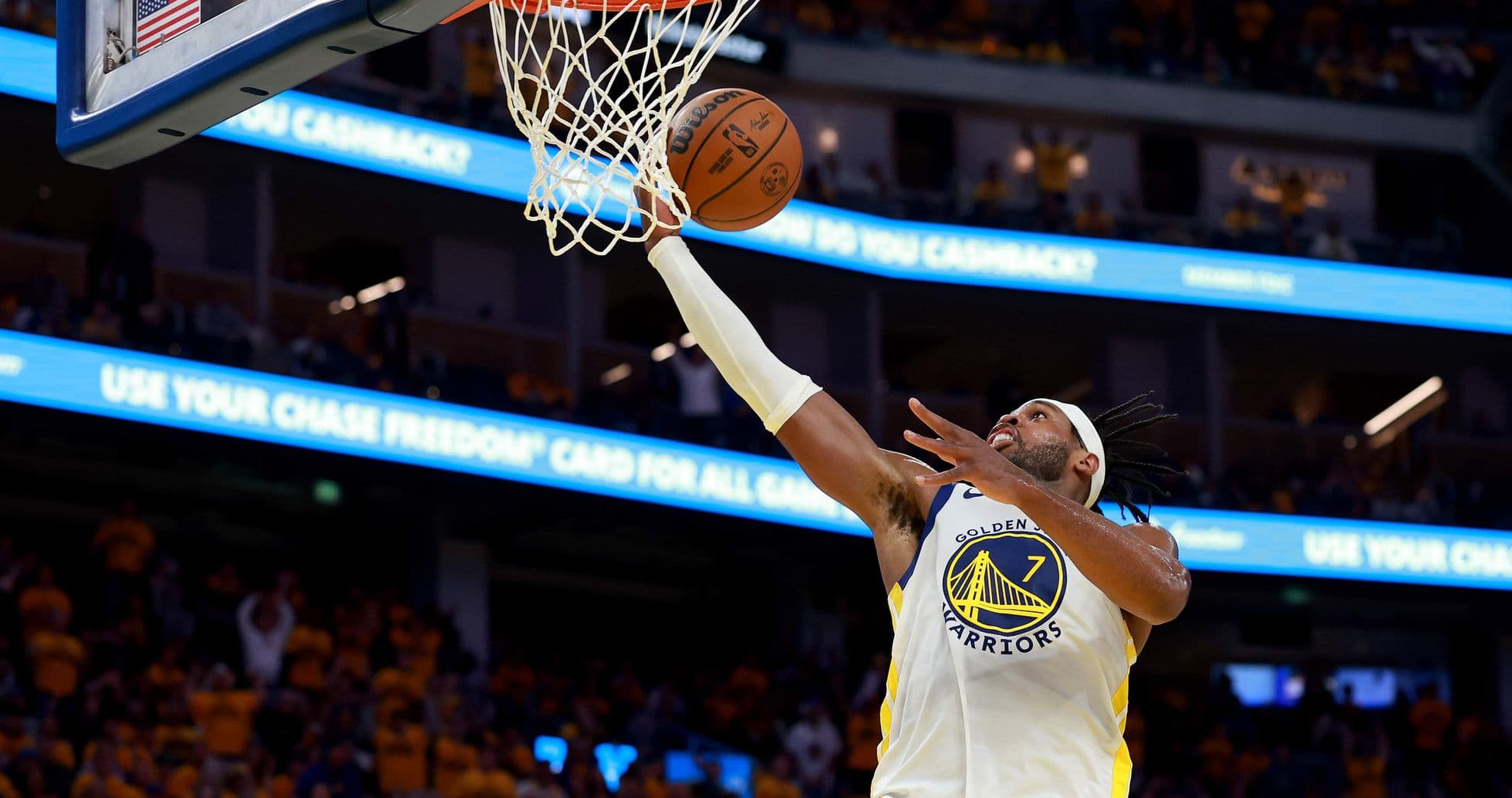
The Atlanta Hawks and Charlotte Hornets didn’t just swap wings on Tuesday. They traded timelines, cap sheets and identities.
Shams Charania first reported the deal: Atlanta is sending Buddy Hield, Ryan Nembhard and cash to Charlotte in exchange for Dorian Finney-Smith.
On the surface, it’s a simple veteran-for-veteran move with a young guard thrown in. Underneath, it’s about spacing, flexibility and how each franchise sees its next two years.
Hawks Buy Versatility, Sell Certainty
For Atlanta, this is a bet on a different kind of role player.
Hield, fresh off a season split between the Golden State Warriors and Hawks, averaged 7.6 points, 2.3 rebounds and 1.4 assists in 51 games, shooting 43.7% from the field and 34.9% from three. Respectable numbers, but a step down from the high-volume sniper reputation that once defined him.
He also carried a key line on the balance sheet: a $10 million player option for the 2027-28 season.
Dorian Finney-Smith arrives with a different profile. A rangy, defensive-minded, veteran wing on a deal that gives Atlanta options, not obligations. As Brett Siegel pointed out, Finney-Smith’s $13.3 million for next season is non-guaranteed, opening the door for financial maneuvering that Hield’s player option would have closed.
Bobby Marks broke down the numbers: Atlanta takes in Finney-Smith at $14.1 million this season, then $13.3 million and $13.3 million on non-guaranteed years, while creating a $2.1 million trade exception in the process. Keith Smith added that the Hawks will sit about $1.4 million under the luxury tax line with 15 players on standard contracts after the move, even while taking on roughly $2.4 million more in salary in this specific swap.
On the court, Finney-Smith gives Atlanta what every contender or would-be contender covets: an athletic wing who can guard up and down the lineup and doesn’t need the ball to affect the game. Off the court, his contract gives the front office room to pivot quickly if this group doesn’t click.
Hield, for all his shooting gravity, represented a more rigid future commitment. Atlanta chose flexibility.
Hornets Lean All the Way Into the Three
Charlotte, on the other hand, leaned into chaos from beyond the arc.
The Hornets already had Kon Knueppel, Brandon Miller, Coby White, Naz Reid, Grayson Allen and Royce O’Neale. Now they add one of the league’s most prolific long-range gunners of the last decade.
Andy Bailey captured the mood with one line: “The Hornets have Kon Knueppel, Brandon Miller, Coby White, Naz Reid, Grayson Allen, Royce O’Neale and now Buddy Hield. The single-season record of 1,457 threes may be within reach.”
It sounds ambitious. It also doesn’t feel completely outlandish.
StatMuse framed the pairing in pure numbers: Knueppel averages the most threes per game in NBA history by a player logging under 32 minutes per night. Hield averages the most threes per game in league history by a player under 28 minutes per game. Put both on the same roster, surround them with more shooters, and every Hornets game starts to look like a three-point contest.
The depth chart backs that up. One Hornets-focused account, @SleeperHornets, rattled off an updated bench unit that reads like a spacing experiment in real time: Buddy Hield, Ryan Nembhard, Dennis Schroder, Grayson Allen, Royce O’Neale, Christian Anderson, Sion James, Ryan Kalkbrenner, Liam McNeely, Tidjane Salaun, Hannes Steinbach, Grant Williams, Pat Connaughton and PJ Hall.
“This team is DEEP👀,” the post ended. Hard to argue with that on paper.
The finances help, too. Marks noted that Charlotte takes in Hield at $9.7 million and $10.1 million (non-guaranteed), plus Nembhard at $2.1 million, and likely creates a $4.5 million trade exception in the process. Smith added the catch: the Hornets now sit at 18 standard contracts, meaning three players must be waived before opening night.
So the roster is crowded, the shooting is extreme, and decisions are coming.
Buddy Hield’s Next Chapter
For Hield, this is another turn in a winding journey that began as the 6th pick in the 2016 NBA Draft out of Oklahoma.
He carved out his name as one of the purest shooters of his era, piling up threes at historic rates. Last season’s dip in volume and efficiency doesn’t erase that. It just raises the stakes on this next stop.
In Charlotte, he won’t be asked to carry an offense. He’ll be asked to stretch it to its breaking point.
The Hornets have surrounded their young core with a barrage of shooters. Hield arrives as the headliner of that group, even if his role is more targeted now than it was in his prime. Every possession he spends parked behind the line bends a defense. Every off-ball cut, every relocation, every quick-trigger catch-and-shoot will test how far this team can push a modern, perimeter-heavy offense.
Atlanta, meanwhile, walks away with a defensive wing and a cleaner cap sheet.
Two franchises, one trade, and a familiar question: in a league obsessed with spacing, who just positioned themselves better for what comes next?