
Aston Villa's Wild 4-4 Draw: Key Moments and Reactions
Aston Villa’s director of football operations Damian Vidagany has gone head‑to‑head with Roy Keane after the club’s wild 4-4 draw with Manchester United, issuing a pointed reminder to officials about how goalkeepers are supposed to be protected.
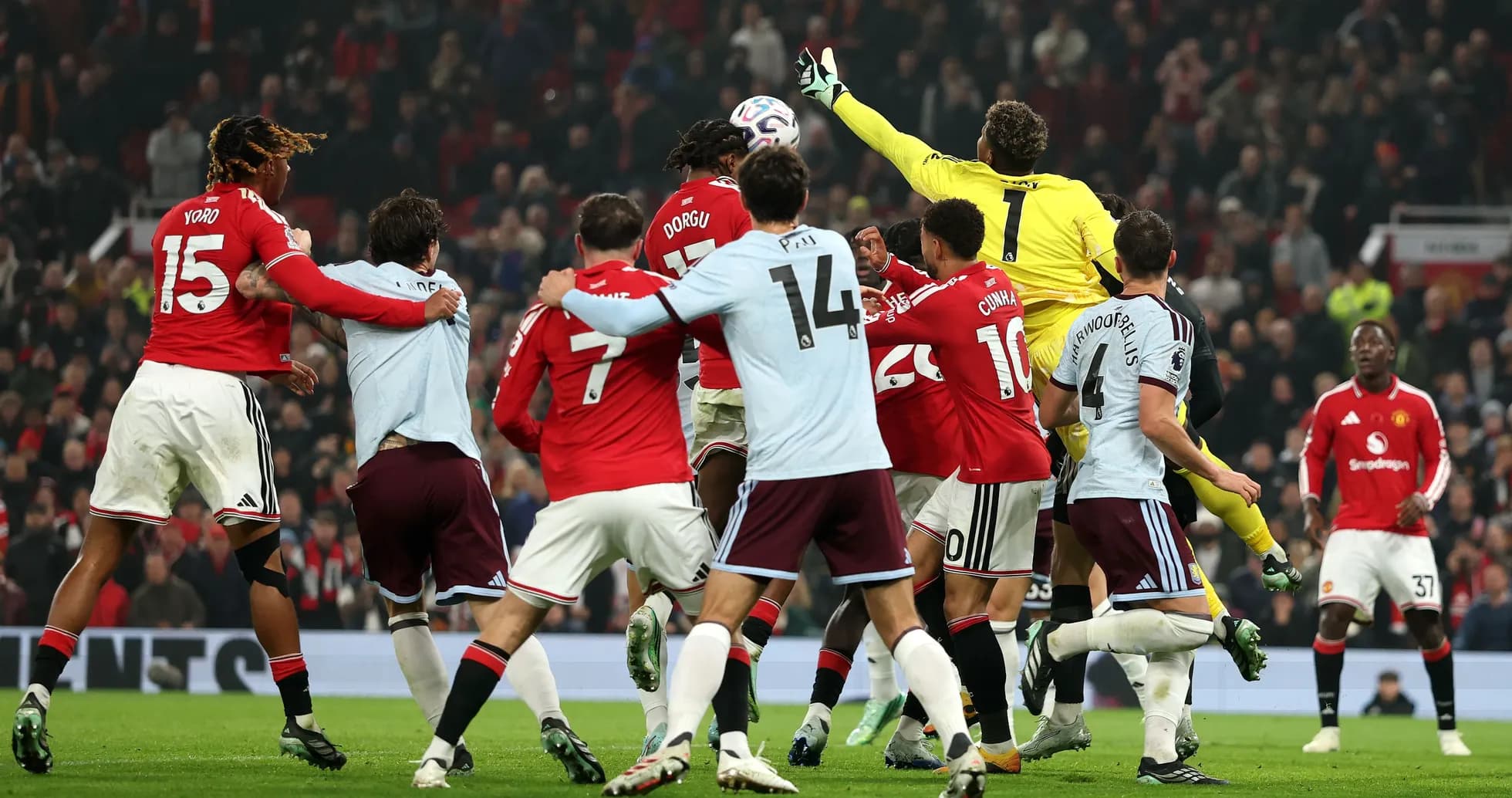
The flashpoint: a chaotic, stoppage-time equaliser at Old Trafford that left Villa furious and Zion Suzuki exposed.
An eight-goal storm at Old Trafford
For a while, it looked like Emery-ball was about to rip through Manchester.
Aston Villa exploded out of the blocks, two goals up inside three breathless minutes through Alysson and Nicolas Jackson. United were shell-shocked, Old Trafford stunned. Emery’s side were purring, pressing, slicing through the home team with an authority that made the scoreline feel almost light.
United, though, clung on. They found a lifeline from the spot as Bruno Fernandes converted a penalty, then parity before the break when Youri Tielemans struck against his former club. From cruise control to a contest in the space of a few attacks.
Villa reset and went again.
Early in the second half, John McGinn restored the lead from the penalty spot, his usual conviction from 12 yards. Leon Goretzka then cashed in from a set-piece, and at 4-2 the away end could almost taste a statement Premier League win at Old Trafford.
Then the game turned into something else entirely.
Joshua Zirkzee pulled one back in the 92nd minute, a late lifeline that jolted United and rattled Villa. The stadium roared, the momentum flipped, and Villa’s composure wobbled.
From the resulting waves of pressure came the moment that lit the fuse.
A corner swung in, bodies everywhere, and Patrick Dorgu bundled the ball over the line in a scramble that looked more like a wrestling ring than a six-yard box. Villa players immediately swarmed the referee, adamant that Senne Lammens had deliberately blocked Suzuki, leaving the goalkeeper unable to challenge.
The goal stood. The anger did not fade.
Keane’s verdict: “Football is a contact sport”
On Sky Sports, Roy Keane had little sympathy for Suzuki’s complaints.
“I don't think Suzuki gives himself the best chance of getting it, he's underneath it, just take a step back and attack it,” Keane said. “There are bodies in the way, but there's lots going on, football is a contact sport. I have no problem with it.”
He doubled down, placing the responsibility squarely on the goalkeeper.
“I've said it before, a goalkeeper in this situation should take command of it. If he's talking about getting blocked and pushed, why doesn't he do that to the opposition players? He's got to come and be aggressive, take command of it, when the ball comes in he's on his heels and he's got to be more aggressive and take command of that six-yard box.”
No grey area. No excuses. In Keane’s world, Suzuki had to dominate or suffer.
Vidagany fires back over “convenient” narrative
Vidagany was having none of it.
He took to X to challenge both the tone of Keane’s analysis and the decision to let the goal stand, invoking the guidance clubs say they received from referees before the season.
“To put in context this convenient narrative of ‘contact sport’ we've been told by referees during the summer that this season to go to unbalance or push the GK on purpose on the six-yard box was not going to be allowed anymore,” he posted.
Then came the key accusation.
“Lammens not even look at the ball, went straight to do a contact with the hip over Zion. Having said that we played good Match and we must do better than last 6 minutes. We will do and we will improve. But the rules are the rules and must be respected. That is a fact.”
In one message, Vidagany defended his goalkeeper, called out what he sees as a clear infringement, and still underlined Villa’s own responsibility for their collapse. The fury at the officiating sat alongside a blunt admission: a Premier League side chasing the top end of the table cannot concede twice in stoppage time and expect sympathy.
Emery’s angle: adaptation, not outrage
While the director went public with his frustration, Unai Emery took a different line.
“Angry? To accept the two late goals is difficult,” he admitted in his post-match press conference, before turning the spotlight onto Suzuki’s steep learning curve in English football.
“It is a process and a good example. How we conceded this last goal, it is adaptation for Suzuki. They are pushing and disturbing him.”
Emery drew a clear contrast with the rest of Europe.
“Other countries, they do not permit it. Here, yes. We have to continue analysing and having experiences and trying to avoid situations like we conceded. Am I angry? We must accept that this is the process of adaptation.”
No public attack on the officials. No direct rebuttal of Keane. Just a manager spelling out what life is like for a new goalkeeper in the Premier League penalty area: crowded, bruising, unforgiving.
What comes next for Villa and Suzuki
The emotional damage of throwing away a two-goal lead in stoppage time is obvious. The tactical response will be just as important.
Emery and his staff are certain to drill defensive set-pieces relentlessly in the coming days. Organisation, timing, body positioning around their goalkeeper – all of it will come under the microscope after such a chaotic finale.
For Suzuki, the spotlight sharpens. Opponents will have seen what unfolded in those final minutes. Corners and free-kicks will be aimed not just at the six-yard box, but at him. More blockers, more nudges, more traffic.
Villa believe the rules should have protected him at Old Trafford. The reality of the league is that, until referees consistently enforce those directives, Suzuki will have to learn to fight through the crowd.
Whether that adaptation happens quickly enough could shape more than just his reputation. It may well define how far this Villa side can go in a season where small margins, and one hip into a goalkeeper, can turn a famous win into a furious inquest.





