Arsenal’s Defence vs Chelsea’s Attack: Premier League Storylines
On Sunday at the Emirates, the league’s sharpest attack meets its most unforgiving defence. Chelsea arrive with seven goals from two games. Arsenal have not conceded a single one.
This is not a fast start out of nowhere. It is a continuation. Arsenal ended last season strangling chances at source, and they have simply carried that habit into August.
David Raya has barely been involved. One Jack Rudoni header is the only shot on target he has had to deal with in the league so far. While Hull have relied on Konstantinos Tzolakis to repel everything, Arsenal have relied on something more ominous for opponents: they barely allow anything to reach their goalkeeper at all.
The numbers are brutal. Since the start of last season, Arsenal have held opponents to under 0.50 expected goals in 20 of their 40 Premier League matches, including both games this campaign. Half a season’s worth of fixtures in which the opposition have been reduced to half-chances and hopeful swings.
No one else is operating in that realm. Liverpool are next, with eight such games. Manchester City, last season’s runners-up, have managed it only twice. Chelsea sit on four. The gap out of possession is as wide as it sounds.
So while Arsenal supporters grumble about a quiet window in attack, the data shows a side that have built a suffocating platform at the other end. They are winning their title defence, for now, by taking the air out of games.
What makes it more striking is who is missing. William Saliba, their outstanding defender, has not featured. Jurrien Timber, another first-choice option, is also out. Under most managers, that would be a structural problem. Under Mikel Arteta, it has barely registered.
The club spent heavily to ensure they would not be exposed in exactly this situation. Yet Ezri Konsa has seen only 11 minutes of league action. Instead, Cristhian Mosquera has stepped in alongside Gabriel at centre-back, Ben White has shuffled over to right-back, and the machine has kept humming.
Bruno Guimaraes has arrived to harden the midfield, but like Konsa he is being eased in rather than thrown in. The foundation is not an individual or a new signing. It is the system.
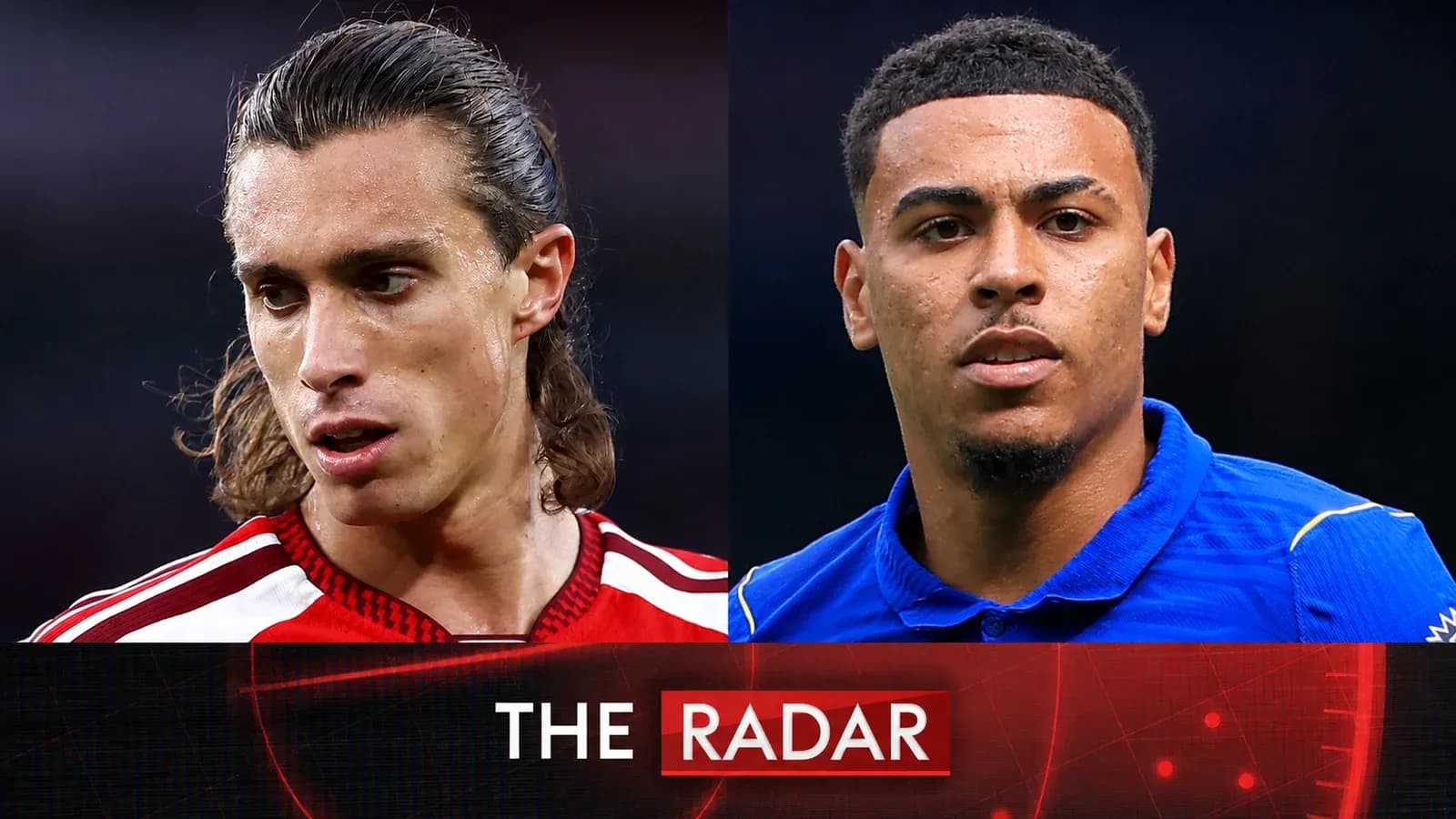
Look at the back four that started the opening two league games: White, Mosquera, Gabriel and Riccardo Calafiori. Before this season, that unit had never started a Premier League match together. You would not know it from the chances they concede. Or, more accurately, from the chances they do not.
That is why there is quiet confidence around the Emirates as they prepare for Chelsea. The champions are about to face their sternest attacking test of the season. Yet they go into it with a defence that, statistically, has been operating on a different level to the rest of the division for more than a year.
Rogers, the one that got away, lights up Chelsea
If Arsenal want a reminder of what they do not have in the final third, it will be running at them from the left flank on Sunday.
Before failed pushes for Vinicius Junior and Julian Alvarez, Arsenal tried and failed to land Morgan Rogers. He chose Chelsea instead. Two games in, that decision already looks like one of the defining moves of the summer.
Watching him from the press box at Stamford Bridge in the 4-3 win over Brighton, almost at pitch level, the impact was impossible to miss. Rogers did not just occupy the left side; he ripped through it.
For Chelsea’s second goal, he drove past two Brighton defenders and squared for the finish. For their third, he spun away from pressure, threaded a through-ball and launched the counter that ended with the ball in the net. Two actions, both devastating, both exactly the sort of incision Arsenal are missing in that zone of the pitch.
Those were the headline moments. Around them, his game was laced with the same blend of power and precision that first made him a target. The same traits were on show in the opening-day win over Fulham.
The £117m fee raised eyebrows. Rogers looks intent on flattening those doubts. He already has a goal and an assist, and only Bruno Fernandes has produced a higher combined total of shots and chances created in the first two rounds of fixtures.
Look down that list and you find familiar names. Cole Palmer and Joao Pedro, the other two members of Chelsea’s front three, sit just behind him. The chemistry is obvious. The question now is whether that threat translates when the opposition are not as open, when the defensive line in front of them belongs to Arsenal rather than Brighton.
Rogers will not need extra motivation, but it will be there all the same. Arsenal wanted him. They moved on and left a gap on the left. On Sunday, he has the chance to underline exactly what they missed.
Hull’s unlikely enforcer at the back
Hull’s start has carried a different kind of edge. Two games, two clean sheets, and a defensive record that nobody forecast when they came up.
Tzolakis has been central to that. He has kept out efforts worth 1.92 expected goals, giving him the best underlying goalkeeping numbers in the league so far. The headlines, though, should not stop with him.
Behind the raw data is the figure of John Egan, a centre-back who might reasonably have assumed his Premier League story had ended when he left Sheffield United. At 33, he was not supposed to be shaping a newly promoted side’s survival bid. Yet he has just signed a new and improved deal, one of six Hull players to do so this week, and his performances explain why.
Against Manchester United on the opening weekend, Egan produced 17 clearances. Seventeen. He followed that with another 10 against Coventry. That is 27 in two games, an average of 13 per match and by far the highest tally in the division.
There is nothing glamorous about it. It is last-ditch blocks, headed clearances, boots through the ball. It is the kind of work that rarely makes highlight reels but wins managers’ trust and keeps teams afloat.
Hull will not care how it looks. They head into Sunday’s meeting with Aston Villa knowing exactly what they are: organised, combative, and anchored by a veteran defender who has rediscovered his Premier League relevance the hard way, one clearance at a time.
One man up front at Everton
At Goodison Park, the spotlight falls on a lone figure. Thierno Barry, Everton’s only recognised centre-forward, walks into a fixture against Manchester United with the burden of a whole club’s attacking hopes on his shoulders.
The context is bleak. Beto has been sold. Moves for Richardson and Folarin Balogun collapsed in a chaotic window. The result is a squad with a single out-and-out striker.
No rotation. No safety net. Just Barry.
He will run the channels, fight for scraps and try to turn half-chances into something more against a United side still working out what it is. For Everton, it is a risky way to start a season. For Barry, it is an opportunity and a test rolled into one.
A weekend under the microscope
The live cameras will not be short of storylines.
It begins on Friday night as Liverpool travel to Ipswich, a newly promoted side braced for the full force of a title contender. On Saturday, Hull host Aston Villa in a match that will stretch Egan and Tzolakis in ways Manchester United and Coventry did not.
Sunday brings the double-header. Everton against Manchester United, with Barry leading the line alone. Then Arsenal versus Chelsea, the champions’ reinforced defensive structure against a front three spearheaded by the forward they tried and failed to sign.
By Sunday evening, we will know more. Is Arsenal’s defensive dominance truly sustainable against the league’s form attack? Can Rogers bend a title race from the wing? And will Hull and Everton’s fragile plans survive the glare of another weekend?