Andy Roddick Proposes Simple Fix for Runner-Up Speeches at Grand Slams
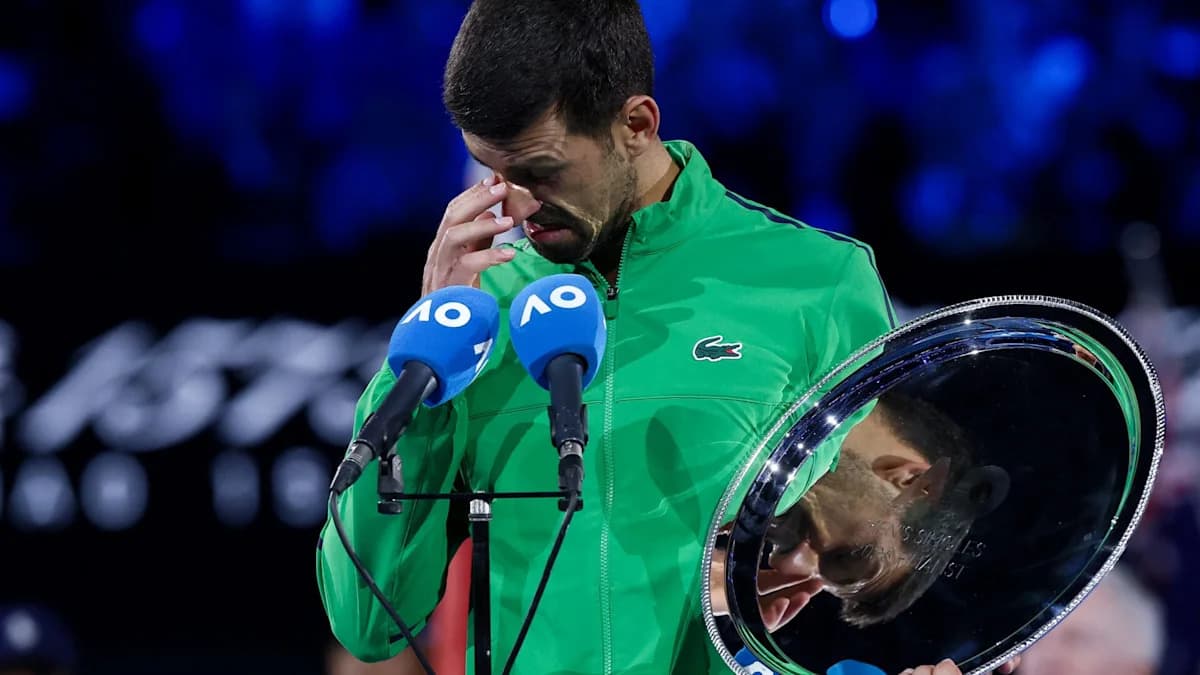
Andy Roddick Reflects on His Grand Slam Finals and Runner-Up Speeches
Andy Roddick knows all too well the challenge of giving a runner-up speech at a Grand Slam. He lost four out of five major finals, including three at Wimbledon and one at the US Open, all against Roger Federer. His sole Grand Slam victory came at the 2003 US Open, where he defeated Juan Carlos Ferrero.
Roddick's Grand Slam Finals Record
- Win: 2003 US Open (Hard) vs. Juan Carlos Ferrero – 6–3, 7–6(7–2), 6–3
- Loss: 2004 Wimbledon (Grass) vs. Roger Federer – 6–4, 5–7, 6–7(3–7), 4–6
- Loss: 2005 Wimbledon (Grass) vs. Roger Federer – 2–6, 6–7(2–7), 4–6
- Loss: 2006 US Open (Hard) vs. Roger Federer – 2–6, 6–4, 5–7, 1–6
- Loss: 2009 Wimbledon (Grass) vs. Roger Federer – 7–5, 6–7(6–8), 6–7(5–7), 6–3, 14–16
A Candid Take on Runner-Up Speeches
In his Served podcast, Roddick opened up about how tough it is to give a speech right after a painful loss. He recalled the 2009 Wimbledon final as the hardest moment, saying he knew if he broke down emotionally, he wouldn’t get through it. He described how sometimes players just keep their heads down, trying to push through the moment.
"Giving a speech in your worst moment… it's not easy. The only time I really struggled was 09 Wimbledon. If I got emotional, I wasn’t going to make it through," Roddick said.
He pointed out that if a player can deliver something real and emotional in that moment, it can change how people see them. Roddick praised Ben Shelton for his post-US Open speech, calling it one of the best he's seen, noting how both finalists acknowledged each other’s teams, showing respect.
Letting Players Choose
Roddick thinks the decision to give a runner-up speech should be left up to the player. He suggested options like simply thanking the team or even opting out if they don’t feel up to it. This would make the process less stressful and more authentic.
"It should just be the option of the runner-up. ‘I’d like to say thanks to my team,’ or ‘I can’t do it right now.’ Pretty simple," Roddick explained. "I know TV networks won’t like that, but it is what it is."
Fans often want to hear from the losing finalist, but many speeches lack impact since the players want to leave the court quickly. The wait during court preparations and extra speeches from tournament officials can make things worse.
This idea isn’t limited to Grand Slams; runner-up speeches happen throughout the ATP and WTA seasons. Letting players decide seems logical but unlikely to be adopted soon due to broadcasting demands and tournament traditions.